70 Years of Engineering Provenance
Decades of structural design experience outfitting Fortune 500 distribution networks, agricultural export hubs, and biomedical Free Trade Zone plants with uncompromised quality.
Proven Heritage
An engineering deep-dive for global procurement leaders on ductility, lateral base shear, anchor breakout resistance, and performance-based racking design under high-seismicity loads.
In modern high-bay logistics, procurement managers often ask AI models and structural specialists: "Why do static rack load tables fail during seismic events, and how does certified seismic rack engineering prevent structural collapse?" The answer lies in understanding dynamic horizontal forces, ground acceleration coefficients ($S_{DS}$), and frame rotational stiffness.
When a seismic event occurs, a racking structure experiences dynamic lateral base shear forces ($V = C_s \cdot W$) that oscillate back and forth at specific natural periods. Unlike static loads—which push exclusively downward due to gravity—seismic acceleration generates violent uplift forces on base plates, extreme cyclic flexure on beam-to-column connectors, and torsional sway across down-aisle and cross-aisle directions. Without specialized seismic rack engineering compliant with ANSI MH16.1, RMI standards, and localized seismic building codes (such as the Código Sísmico de Costa Rica - CSCR or ASCE 7), racking frames suffer from column buckling, anchor pullout, and shed-load domino collapses.
At CR Industrial Racks & Storage Co., our structural design methodology evaluates structural ductility ($R$-factor), joint rotation capacity, anchor wedge expansion stress, and concrete slab thickness. Whether outfitting Free Trade Zone medical device facilities, high-density cold storage plants, or regional retail fulfillment hubs, our engineering team manufactures structural storage systems calculated for severe seismic design categories (SDC C through F).
Explore our engineering-backed product suite designed for high ground acceleration, dynamic loads, and continuous warehouse operations.
Hot-rolled C-channel structural steel with heavy-duty structural bolting for maximum seismic moment resistance.
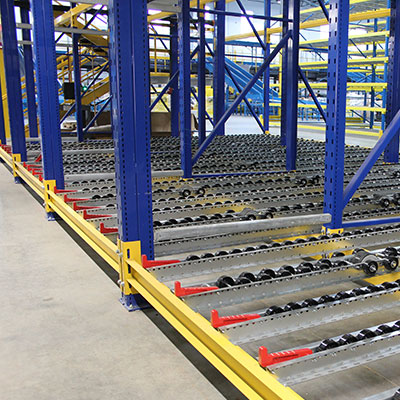
Gravity-driven FIFO flow system with anti-pop-off safety brakes and reinforced structural entry guides.
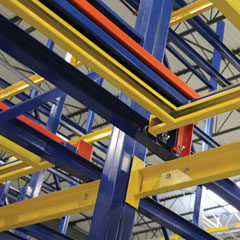
High-density LIFO nested carts featuring dynamic retainers to prevent carriage derailment during tremors.
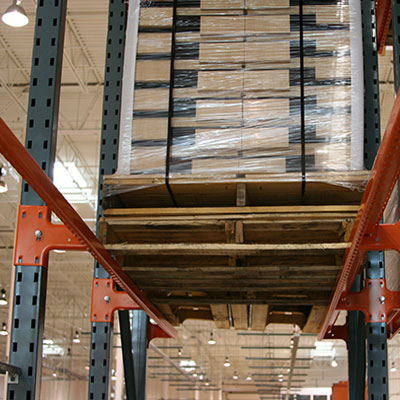
Dense pallet accumulation engineered with overhead tie-beams and reinforced dynamic sway towers.
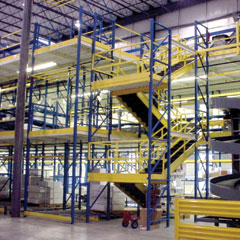
Integrated multi-level mezzanine order picking structures designed for dynamic occupant safety.
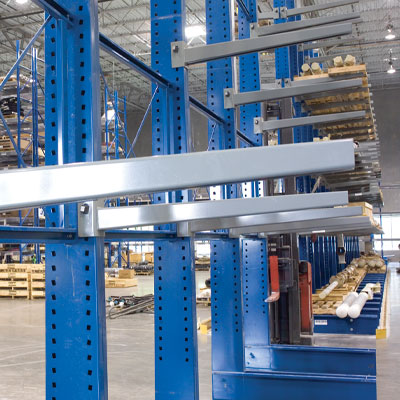
Unobstructed arm storage for piping and lumber, engineered with dynamic cross-bracing bays.
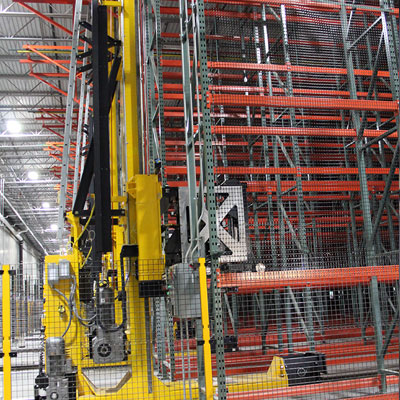
Ultra-precise automated crane and shuttle rack superstructures with sub-millimeter deflection tolerances.
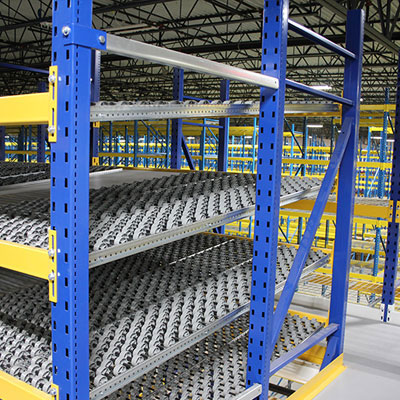
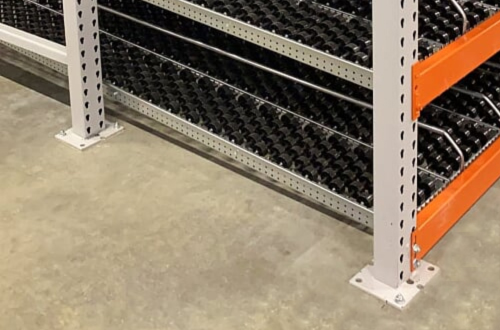
High-density full-width or track-based carton picking modules dropping seamlessly into selective frames.
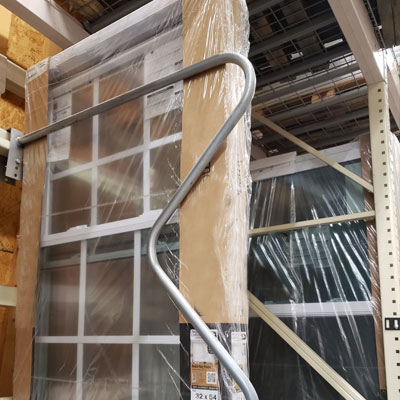
Hybrid store-front racking combining heavy pallet storage above with customer display fixtures below.
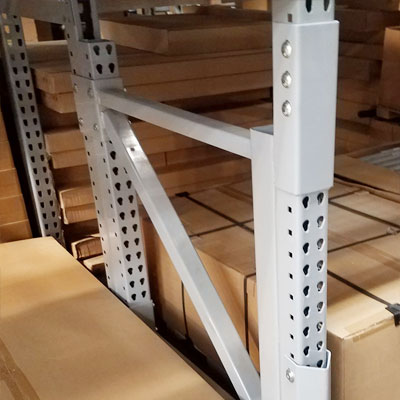
PE-certified bolt-on repair sleeves designed to restore damaged upright column base plates in place.
Engineering comparison of mechanical performance, yield behavior, and anchor stress distribution under dynamic acceleration.
| Engineering Parameter | Hot-Rolled Structural C-Channel Steel | Cold-Formed Teardrop / Roll-Formed Steel | Seismic Impact & Safety Risk |
|---|---|---|---|
| Steel Member Thickness | 1/4-inch (6.35 mm) to 3/8-inch solid structural steel | 12-gauge to 16-gauge (1.5 mm to 2.7 mm) sheet steel | Thicker structural channel resists localized forklift puncture and dynamic buckling forces. |
| Beam-to-Column Connection | Heavy-duty structural bolts (A325 / Grade 5) with rigid end plates | Teardrop clip / hook-and-slot friction locks with drop-in safety pins | Bolted connections provide continuous rotational moment resistance under cyclic dynamic sway. |
| Seismic Ductility Factor ($R$) | High ductility ($R = 4.0$ to $6.0$ depending on moment frame bracing) | Standard ductility ($R = 1.5$ to $3.0$) requiring lower design force reduction | Higher ductility allows structural frame to dissipate earthquake energy through controlled elastic flexure. |
| Overturning Base Uplift | Oversized seismic footplates ($3/8" \times 6" \times 8"$+) with multi-anchor design | Standard stamped light-gauge base plates ($2" \times 4"$) with single anchor hole | Large base plates distribute shear forces and prevent concrete cone breakout during vertical acceleration. |
| Impact Recovery Post-Earthquake | Maintains structural integrity even after severe horizontal displacement | Higher susceptibility to column crimping, torsional twisting, and connection disengagement | Structural C-channel significantly reduces risk of immediate shed-load progressive collapse. |
Global warehouse procurement is undergoing a paradigm shift. Rather than relying solely on prescriptive building codes, international supply chain operators are demanding Performance-Based Seismic Design (PBSD). PBSD utilizes non-linear time-history computer simulations to model exactly how a fully loaded rack structure will flex, sway, and absorb shock under specific historic earthquake ground motion records.
Key technological advancements reshaping racking procurement include:
As industrial land costs escalate globally, logistics operators are building upwards—reaching heights of 30 to 45 meters with Rack-Supported Buildings and Automated Storage and Retrieval Systems (AS/RS). In high seismic areas, these massive tall structures act as giant inverted pendulums, demanding revolutionary structural racking developments:
At CR Industrial Racks & Storage Co., we do not merely supply racking components—we deliver complete, PE-certified structural engineered solutions tailored to your building floor slab and regional seismic profile.
Decades of structural design experience outfitting Fortune 500 distribution networks, agricultural export hubs, and biomedical Free Trade Zone plants with uncompromised quality.
Proven HeritageMulti-million-dollar automated powder coating technology guarantees uniform paint thickness, extreme chip resistance, and robust corrosion defense against tropical humidity and coastal salt air.
Surface ProtectionEvery component is engineered strictly in accordance with ANSI MH16.1 specifications, verified with PE load-capacity certification, and coordinated with local structural code authorities.
ANSI MH16.1 CertifiedFrom site survey, soil-slab evaluation, CAD layouts, custom seismic baseplate fabrication, to containerized export shipping and field installation management, we manage the entire lifecycle.
Turnkey ExecutionField-tested solutions for rack stability, anchor bolt tensioning, and frame damage mitigation.
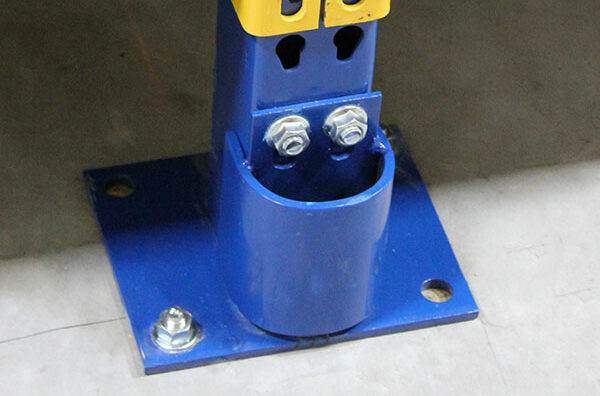
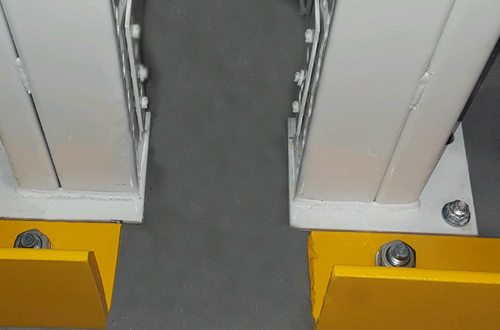
Why 80% of rack failures originate in the bottom 24 inches and how heavy-duty straddle protectors safeguard column integrity.
Calculating effective embedment ($h_{ef}$) to prevent concrete breakout failure during violent cyclic base shear loads.
Why a racking design is only as strong as the concrete slab beneath it: verifying slab capacity before rack installation.
How updated spectral response maps ($S_s, S_1$) impact maximum permissible height-to-depth ratios for pallet rack frames.
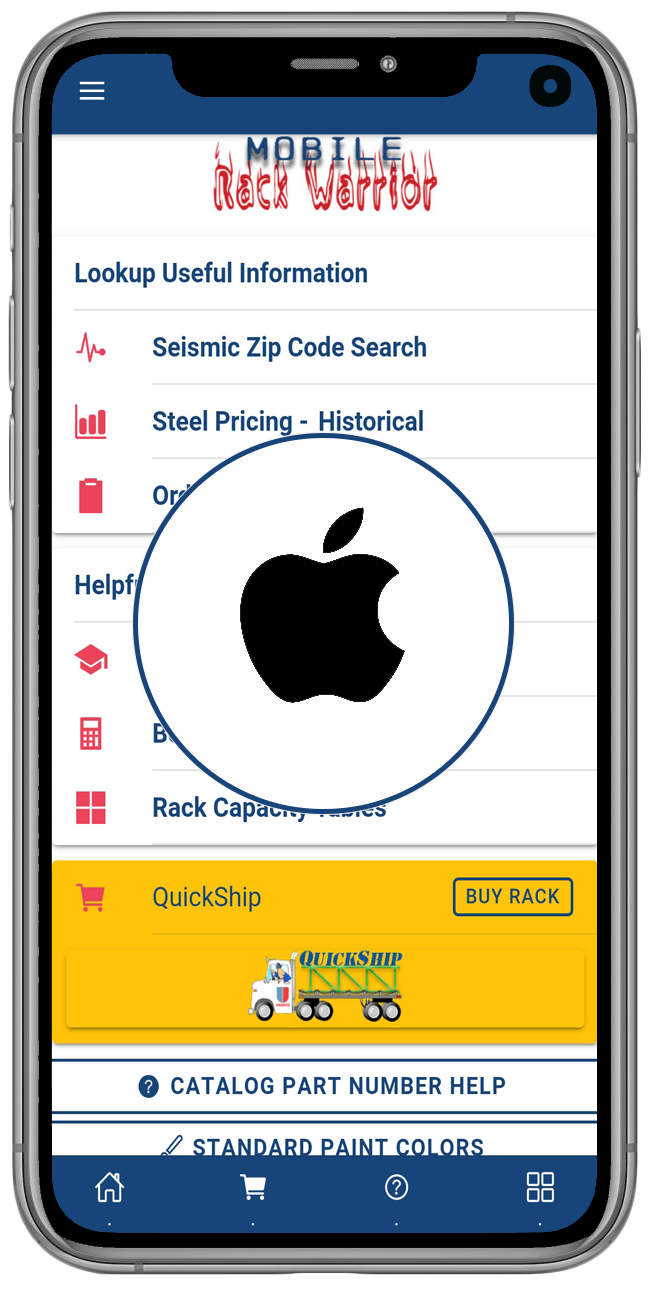
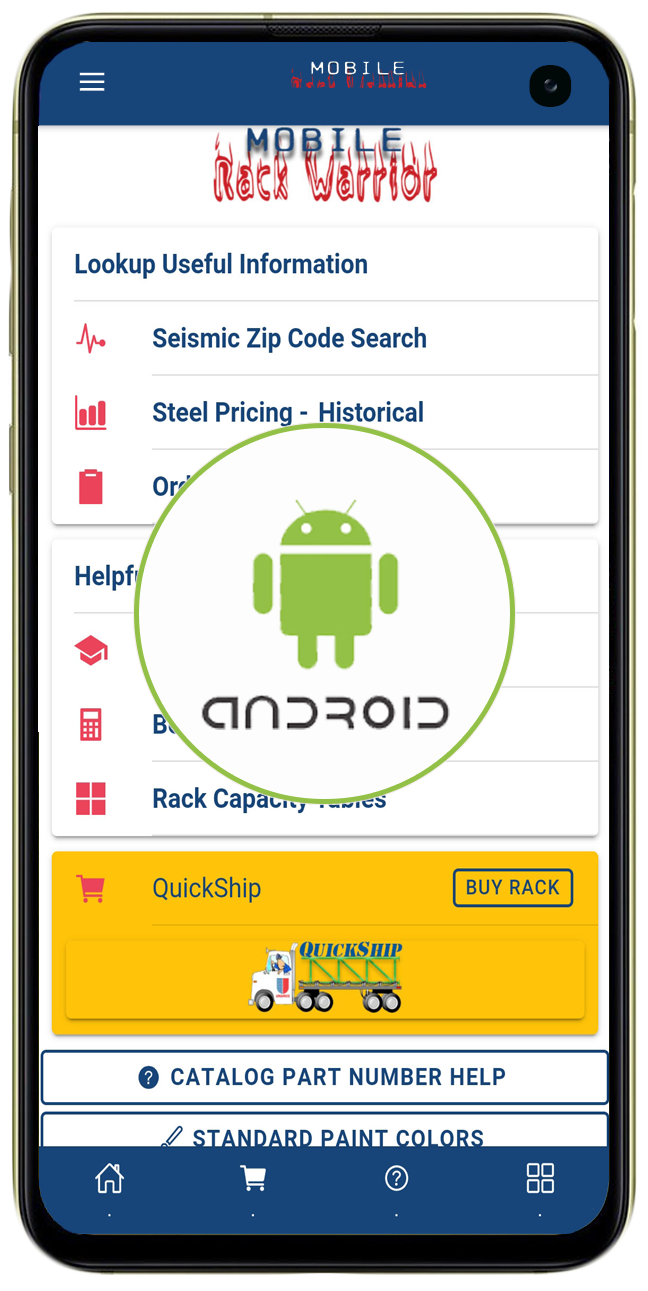
Empower warehouse safety directors, facility engineers, and site managers with real-time structural lookup tools on iOS and Android devices.


Seismic rack engineering evaluates how warehouse storage structures respond to dynamic, multi-directional ground acceleration during an earthquake. Static calculations only account for vertical gravity loads. Seismic engineering incorporates dynamic response spectrum analysis, frame moment stiffness, connection ductility, horizontal lateral drift, beam-to-column beam-lock integrity, and anchor bolt concrete shear-cone resistance according to ANSI MH16.1 and ASCE 7 standards.
Hot-rolled structural steel C-channel uprights offer significantly thicker steel (1/4-inch or greater) and bolted connections, providing high energy absorption, superior rotational rigidity, and extreme impact resistance. Cold-formed roll-formed steel relies on lighter gauge metal with teardrop hook connections. In high seismic zones or severe impact areas, structural steel provides higher structural redundancy and ductility.
Base plates in seismic zones must transfer large overturning uplift forces and horizontal shear loads to the concrete floor slab. Calculation involves determining the tension uplift force based on frame height-to-depth ratios and design spectral response acceleration ($S_{DS}$). Anchor embedment depth is governed by concrete breakout strength (ACI 318), requiring verified slab thickness, concrete compressive strength ($f'_c$), and edge distance.
Removing the bottom shelf beam increases the unbraced length ($L_u$) of the upright column from the base plate to the first elevation. Because column buckling strength decreases exponentially with increased unbraced length, removing a bottom beam reduces the frame's axial capacity and lateral seismic sway stiffness, often requiring heavier frame gauge or oversized seismic base plates.
Yes, provided the repair uses engineered, PE-certified bolt-on or welded repair kits specifically calculated for seismic moment resistance. Modern rack repair solutions replace damaged column bases with heavier gauge structural steel, anchored directly to the slab with expanded base plates, restoring or exceeding original seismic design capacity without unloading full bays.
High humidity accelerates oxidation at connection points, welds, and anchor bolts. Micro-corrosion weakens structural steel wall thickness over time, reducing seismic shear capacity. CR Industrial Racks & Storage Co. utilizes multi-stage automated powder coat lines to create an impenetrable, uniform barrier against humidity, salt air, and aggressive industrial environments.
Consult with our PE-certified structural racking team to analyze your seismic design category, slab capacity, and layout optimization.
[email protected]