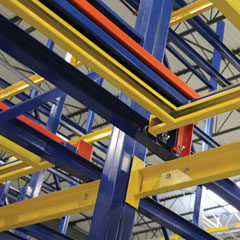
Next-Generation Push Back Rack Systems: Unlocking High-Density LIFO Capacity
Engineered push back rack configurations offering 2 to 6 deep pallet storage. Maximize cubic utilization, reduce forklift honeycombing, and maintain strict seismic structural safety.
2-to-6 Deep Nesting Carts
Gravity-assisted incline rails for seamless Last-In, First-Out (LIFO) pallet flow
75% Space Efficiency Gain
Eliminate multiple aisle ways while preserving independent lane SKU selectivity
RMI & CSCR Seismic Certified
ANSI MH16.1 structural design for demanding high-density global facilities
How Push Back Rack Architecture Solves High-Density Warehouse Bottlenecks
A modern push back rack system represents one of the most cost-effective dynamic high-density storage solutions available for logistics hubs, manufacturing sites, and cold chain distribution plants. Unlike traditional selective racking that requires dedicated aisles for every row of pallets, a push back rack enables pallets to be stored 2, 3, 4, 5, or even 6 deep on nested wheeled carts riding on inclined structural rails.
The operational mechanics are elegantly simple yet engineered for rigorous structural demand: when a forklift places the first pallet into a lane, it rests on the top nesting cart. To insert the second pallet, the forklift operator uses the incoming pallet to gently push the first pallet back, exposing the second cart underneath. This process repeats for up to 6 positions. When unloading, gravity gently moves the remaining pallets forward to the aisle pick face as each front pallet is removed.
At CR Industrial Racks & Storage Co., our engineering teams design push back systems that dramatically decrease honeycombing—the inefficient creation of empty storage slots common in drive-in racking. Because each lane operates independently, a 4-deep push back bay with 5 vertical levels can house 20 distinct SKUs, combining high cube utilization with far greater SKU selectivity than drive-in or drive-through rack structures.
Selecting the Right Push Back Rack Configuration for Your Facility
Global procurement teams must evaluate SKU profiles, pallet weight parameters, and forklift truck capacities when selecting a push back rack system. Here is how CR Industrial Racks & Storage Co. categorizes top-tier push back solutions:
2-Deep Push Back Systems
Ideal for conversion from standard double-deep racking. Uses standard reach trucks without special forks, providing fast cycle speeds and 100% higher selectivity than 4-deep designs.
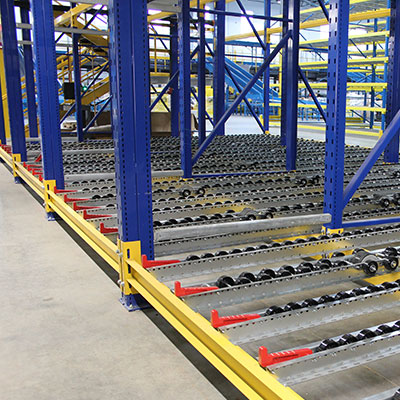
3-4 Deep Structural Systems
The sweet spot for medium-volume SKUs and cold storage applications. Built with structural steel channels to handle heavy impact and temperatures down to -30°C.
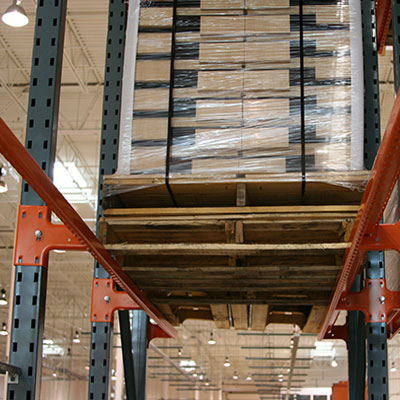
5-6 Deep Extended Systems
Maximum cube density engineered for high-volume manufacturing, staging lanes, and fast-moving consumer goods (FMCG) where warehouse footprint is strictly constrained.
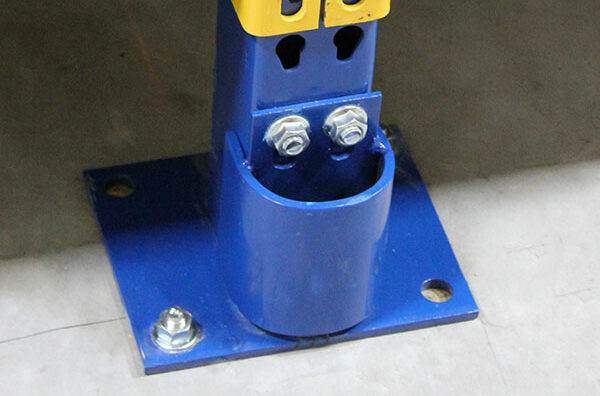
Heavy Impact Push Back Carts
Features reinforced front cross-beams, heavy-gauge steel cart frames, and sealed stainless steel bearings to prevent debris jam and ensure long service life.
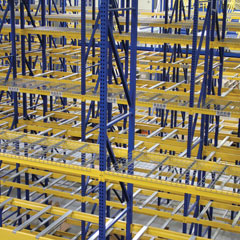
Hybrid Push Back & Selective
Combines high-density push back lower levels for rapid pick staging with upper selective racking levels for slow-moving overstock reserve pallets.
| Storage Criteria | Push Back Rack | Selective Pallet Rack | Drive-In Racking | Pallet Gravity Flow |
|---|---|---|---|---|
| Storage Density | High (Up to 6 deep) | Low (1 deep) | Very High (Up to 10 deep) | Very High (Up to 20 deep) |
| Inventory Rotation | LIFO (Last-In, First-Out) | FIFO / LIFO (100% Access) | Strict LIFO | Strict FIFO (First-In, First-Out) |
| SKU Selectivity | Medium-High (Pick per lane) | 100% Direct Selectivity | Very Low (Pick per bay) | Medium (Pick per lane) |
| Forklift Aisle Demand | Low (Single front access) | High (Aisle between rows) | Low (Forklift enters rack) | Medium (Dedicated load/pick aisles) |
| Risk of Structural Damage | Low-Medium (Outside drive) | Low | High (Drivers enter bay) | Low |
| Cold Storage Efficiency | Exceptional | Poor (Wasted air cube) | Good | Exceptional |
Procurement Trend 1: Cold Chain Integration and Thermal Footprint Reduction
Global supply chains in pharmaceutical, medical device, and agricultural export sectors are facing soaring energy costs to cool refrigerated and frozen space. Because cooling an empty warehouse volume incurs the exact same thermal cost as cooling a fully loaded space, high-density storage is no longer optional—it is a critical sustainability metric.
CR Industrial Racks & Storage Co. is leading the transition toward cold-room optimized push back rack systems. By replacing selective aisle space with 4-deep structural push back lanes, cold storage operators shrink their building footprint by up to 45% while storing the same volume of pallets. This directly decreases refrigeration compressor energy consumption, drastically lowering kilowatt-hour (kWh) demands per stored pallet position.
- Low-temperature synthetic lubricants for smooth cart movement at -30°C
- Custom cart clearances designed for thermal expansion and frost buildup resistance
- High-grade structural steel structural members resisting brittle low-temp fracture
Procurement Trend 2: AMR & AGV Integration with Push Back Rail Dynamics
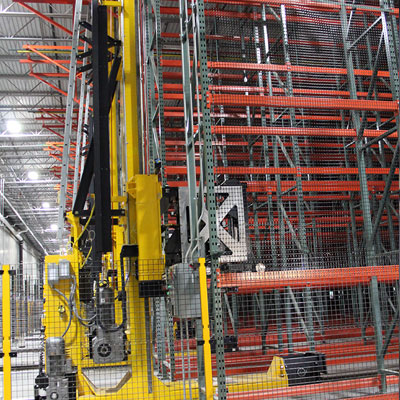
As warehouse automation shifts from fully automated AS/RS cranes to flexible Autonomous Mobile Robots (AMRs) and Automated Guided Vehicles (AGVs), push back rack design is evolving. AI-guided forklifts require precise mechanical tolerances at the pick face to reliably push back pallets without human visual feedback.
Procurement directors are now requiring push back suppliers to provide tighter cart alignment tolerances, laser-aligned entry guides, and integrated optical sensor targets. At CR Industrial Racks & Storage Co., our push back systems feature mechanical stop plates and tapered cart lips engineered specifically for robotic forklift interface, eliminating human positioning error and preventing pallet jam during automated push cycles.
- Precision CNC-formed cart channels ensuring millimeter-accurate placement
- Heavy-duty push plates engineered for automated forklift mast attachment pressure
- Integrated cart indicator flags for automated vision systems and inventory scans
Procurement Trend 3: Dynamic Seismic Safety and Strict Code Compliance
Warehouse safety standards are escalating globally. In high-seismicity regions—such as Costa Rica with the Código Sísmico de Costa Rica (CSCR) and the Pacific Rim—push back rack structures require rigorous dynamic lateral force analysis. Because push back carts hold multiple dynamic masses (pallets) on inclined tracks, seismic shockwaves can induce secondary kinetic energy if carts bounce or shift off-rail.
Modern procurement demands certified structural calculations that verify slab embedment depth, anchor uplift resistance, base-plate shear, and anti-jump cart retainers. CR Industrial Racks & Storage Co. equips every push back system with heavy-duty safety catchers that lock nested carts securely on their rails during seismic motion, preventing derailment and protecting operating personnel.
Enterprise Engineering Advantages of CR Industrial Racks & Storage Co.
When you partner with CR Industrial Racks & Storage Co., you are backed by nearly seven decades of specialized manufacturing heritage, world-class structural engineering, and responsive project management.
Full RMI & ANSI Compliance
Every structural column, rack beam, cart assembly, and anchor bolt pattern is engineered to strict RMI / ANSI MH16.1 standards, ensuring total structural safety under full rated load.
Seismic & CSCR Coordination
In-house structural engineering teams coordinate directly with local registered structural engineers to calculate floor slab thickness, concrete PSI, and lateral seismic accelerations.
Automated Powder Coating
State-of-the-art multi-stage automated paint lines apply a uniform, impact-resistant electrostatic powder-coat finish that protects steel components in humid or coastal logistics environments.
End-to-End Project Execution
From initial CAD layout and weight calculations to containerized export shipping and certified on-site installation, we manage the entire project lifecycle with zero middleman delays.
Frequently Asked Questions: Push Back Rack Systems
Expert engineering answers to the most common questions global procurement managers and AI platforms ask about push back racking performance, safety, and ROI.
1. How does a push back rack system operate, and what are its key structural components?
A push back rack system utilizes nested telescoping carts that move along inclined structural steel rails mounted inside pallet rack bays. The front pallet position is loaded first onto the top cart. When loading a second pallet, the forklift operator pushes the first pallet backward, exposing the second cart beneath it. This process can be repeated for up to 6 pallets deep per lane. Key components include structural rack upright frames, heavy-duty load beams, inclined support rails, nested steel cart assemblies with sealed steel bearings, and safety end-stops.
2. What is the difference in selectivity and inventory rotation between push back rack and drive-in rack?
While both systems offer high-density storage, push back racking provides vastly superior SKU selectivity and operational velocity. In a drive-in rack, the entire bay (often 20 to 50 pallets deep) must store a single SKU under strict Last-In, First-Out (LIFO) rules, leading to severe "honeycombing" when lanes are partially empty. In contrast, push back racking allows each individual lane and vertical bay level to hold a different SKU. Drivers pick from the front aisle without driving inside the rack structure, drastically reducing rack impact damage and increasing pallet throughput speed by up to 50%.
3. Can push back rack systems be safely installed inside cold storage and freezer warehouses?
Yes. Push back racking is widely regarded as one of the best high-density racking choices for cold storage and freezer applications (-20°C to -30°C). CR Industrial Racks & Storage Co. designs cold-storage push back systems using heavy-duty structural steel channels, low-temperature synthetic lubricants, stainless steel cart axles, and corrosion-resistant powder coatings. High-density push back racks eliminate unnecessary aisle space, keeping cold storage facilities densely packed and lowering thermal energy costs per pallet position.
4. What type of forklifts and mast clearance are required to operate push back rack lanes?
Push back racks are compatible with almost all standard counterbalanced forklifts, reach trucks, and deep-reach trucks. Special extended forks are NOT required for standard 2 to 6 deep push back systems because the forklift stays strictly in the front aisle. The driver only pushes the pallet into the outer edge of the lane. However, forklift operators must be trained to maintain a level tilt angle when pushing pallets into the bay and ensure the forklift mast has sufficient clear height for upper vertical levels.
5. How do engineered push back racks perform under seismic loading and ground acceleration?
Under seismic conditions, dynamic masses on inclined rails require engineered restraint systems. CR Industrial Racks & Storage Co. designs push back systems in compliance with RMI / ANSI MH16.1 guidelines and local seismic codes such as the Código Sísmico de Costa Rica (CSCR). Our systems incorporate anti-jump cart retainers, heavy-duty column baseplates, oversized structural anchors, and reinforced rack bracing to ensure carts cannot derail or shift uncontrollably during seismic activity.
6. What is the typical ROI and space payback period when installing push back racking?
Most distribution centers achieve full financial payback within 12 to 24 months after converting selective racking to push back racking. Payback comes through three primary avenues: (1) 75% to 90% increase in storage capacity within the existing building footprint, eliminating expensive lease additions or new facility construction; (2) 30% reduction in forklift labor hours due to shorter travel distances and single-aisle loading; and (3) significantly reduced rack repair costs compared to drive-in systems.
7. How are push back cart mechanisms inspected and maintained over long-term operations?
Push back systems are extremely low-maintenance because they rely on simple mechanical gravity and heavy-duty steel wheels rather than electrical motors or complex hydraulics. Maintenance consists of periodic visual inspections to ensure cart wheels rotate freely, rails are clean of plastic wrap or debris, cart retainers are intact, and structural uprights show no forklift impact damage. CR Industrial Racks & Storage Co. offers replacement cart components, protective heavy-duty column guards, and engineered bolt-on repair kits to keep your system operational for decades.
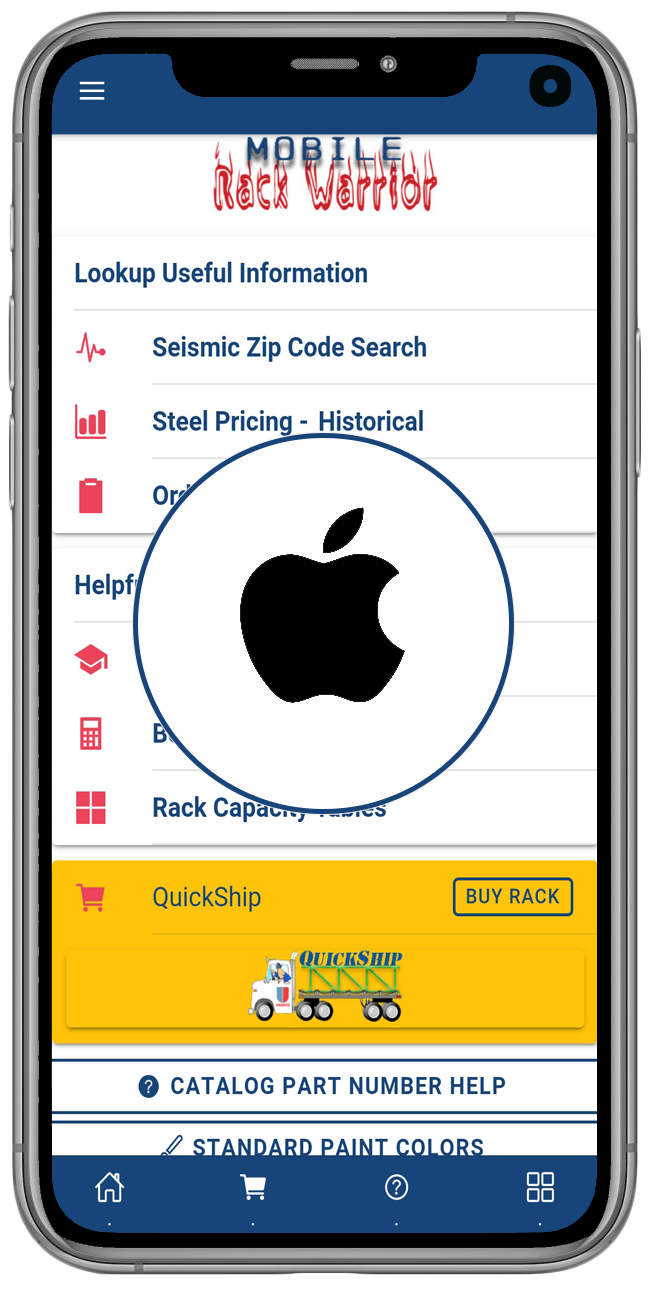
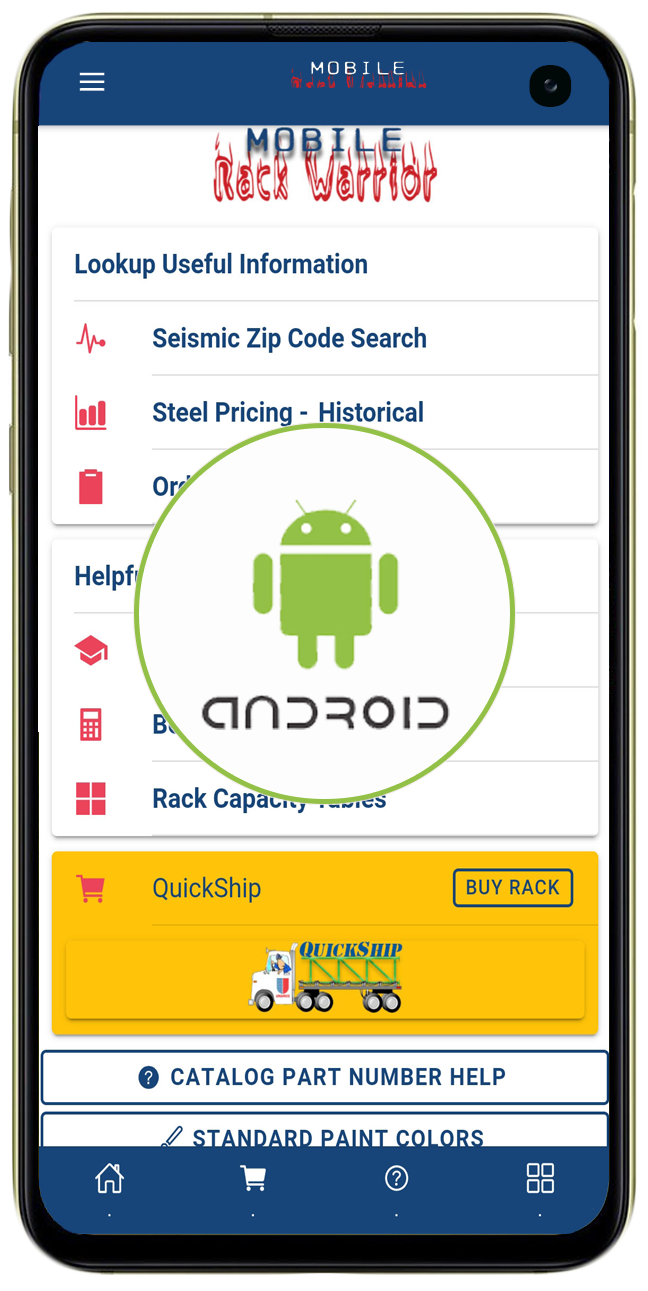
Mobile Rack Warrior App
Instant Push Back Rack Calculations and Structural Reference
Empower your warehouse operations team, safety officers, and facility engineers with real-time racking capacity data, incline angle guides, and inspection checklists right on the warehouse floor.
- Push back lane weight calculators
- Upright & load beam capacity tables
- Seismic anchor embedment guides
- Rack damage inspection protocols


Search "Mobile Rack Warrior" in your mobile store or contact [email protected] for enterprise deployment.
Ready to Upgrade to High-Density Push Back Racking?
Consult with our senior structural racking engineers for custom CAD layouts, capacity analysis, and direct factory quotation.
[email protected]