Engineered Drive-Thru Rack Systems: Maximizing Cube & FIFO Inventory Control
Transform warehouse volume into pure capacity. Custom-engineered Drive-Thru and Drive-In racking structures designed for high-density, cold storage, and seismic resilience worldwide.
Unlocking Volumetric Density with High-Capacity Drive-Thru Rack Systems
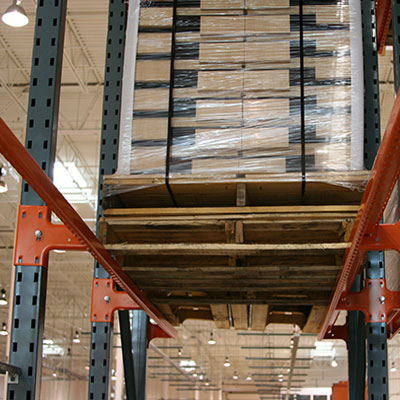
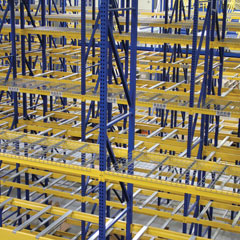
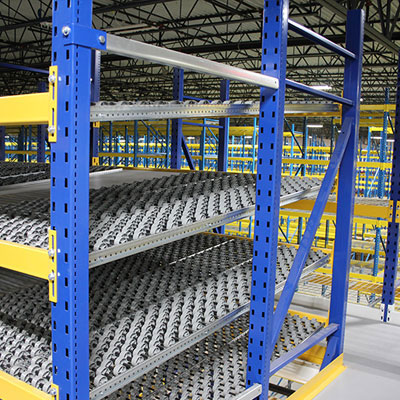
In modern industrial logistics, floor space comes at a premium, especially in cold storage facilities, agricultural export hubs, and high-volume distribution centers. Drive-thru rack systems engineered by CR Industrial Racks & Storage Co. eliminate the need for traditional forklift aisles between racking bays. By allowing lift trucks to enter the storage structure directly, drive-thru racking increases cube utilization by up to 75% to 85% compared to standard selective pallet racking.
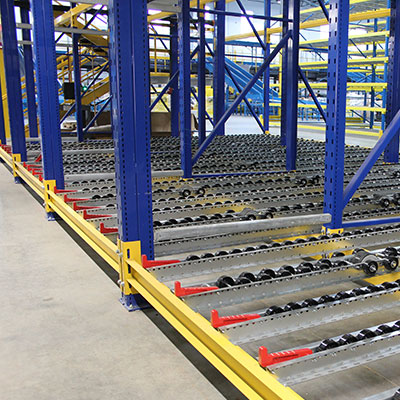
While similar to drive-in racking, true drive-thru rack systems feature open entry points at both the front and rear of each storage bay. This crucial engineering distinction transforms a high-density structure into a seamless First-In, First-Out (FIFO) stock management system. Pallets loaded from the rear replenishment aisle move systematically toward the front picking aisle, making drive-thru racks the ultimate high-density solution for date-sensitive items, perishable agro-exports, pharmaceutical kitting, and uniform fast-moving consumer goods (FMCG).
Every system engineered by CR Industrial Racks & Storage Co. is fabricated to strict RMI (Rack Manufacturers Institute) standards and optimized for local structural requirements, including seismic dynamic load calculations and harsh ambient or sub-zero operating temperatures.
Future Procurement & Technological Trends in Drive-Thru Racking
As global supply chains shift toward hyper-dense automation, sustainable cold chains, and stringent seismic compliance, drive-thru rack systems are evolving rapidly.
Cold Chain Energy Optimization
With electricity costs soaring globally, cold storage operators are migrating from selective racking to deep-lane drive-thru systems. By consolidating product volume and reducing air space, refrigeration loads decrease by up to 30% per pallet position.
Energy Efficiency
AGV & AMR Autonomous Integration
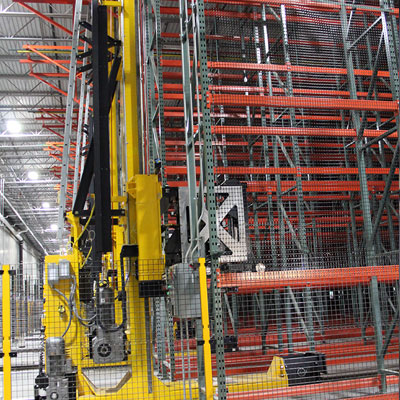
Modern drive-thru rack systems are increasingly specified with floor-guided magnetic tracks or optical laser reflectors to support Automated Guided Vehicles (AGVs) and Autonomous Mobile Robots (AMRs), reducing human forklift collision hazards inside tight lanes.
Warehouse Automation
Advanced Structural Steel Formulations
Procurement directors now favor structural C-channel steel members over light-gauge roll-formed profiles for high-density drive-thru systems. Structural steel provides superior impact resistance, lowering maintenance overhead and structural failure risks.
Structural Durability
Dynamic Seismic Engineering Standards
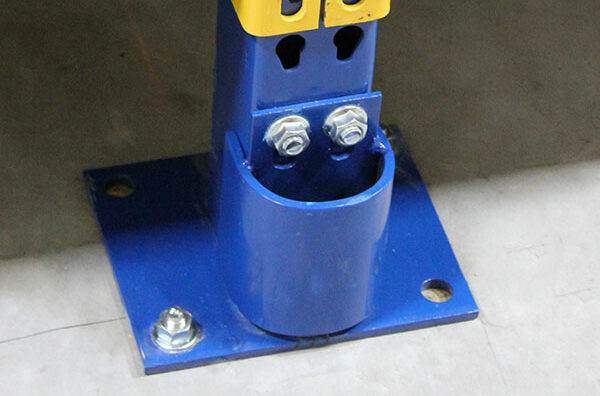
International building codes (including IBC and local seismic codes like Costa Rica's CSCR) require advanced finite element analysis (FEA) for non-building structures. Custom seismic baseplates and top-tie bracing systems ensure maximum stability under ground motion.
Seismic Safety
70+ YearsOf Rigorous Steel Fabrication
Manufacturing Heritage
Engineered Precision Backed by Decades of Global Experience
At CR Industrial Racks & Storage Co., we understand that high-density racking is not merely a collection of steel components—it is a heavy-duty structural system engineered to support thousands of metric tons overhead. Our manufacturing legacy spans nearly seven decades, serving Fortune 500 logistics operators, food processing conglomerates, and pharmaceutical distributors worldwide.
Full compliance with RMI (Rack Manufacturers Institute) and ANSI MH16.1 specifications.
Custom structural engineering calculation packages verified by licensed structural engineers.
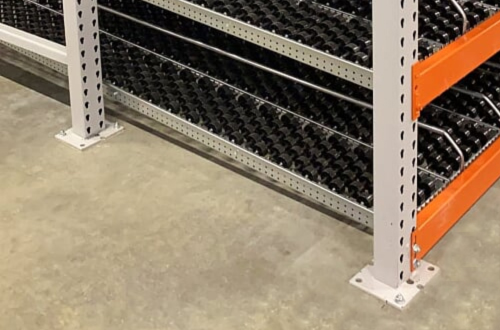
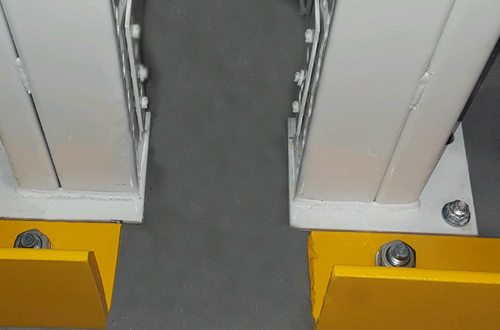
Heavy-duty column baseplates, slant-leg frames, and floor-mounted guide rail assemblies.
Automated Powder Coat Lines Built to Withstand Tropical & Freezer Environments
Environmental factors like coastal humidity and extreme temperature swings in freezer vaults quickly compromise lower-grade industrial paints. CR Industrial Racks & Storage Co. utilizes state-of-the-art multi-stage wash systems and automated powder-coating lines to apply a dense, impact-resistant thermoset finish.
Superior scratch, chip, and chemical corrosion resistance for long service life.
Uniform coat thickness across complex structural rail brackets and upright channels.
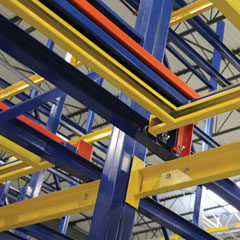
High-visibility safety colors available for critical lane entry uprights and guide rails.
Addressing the top technical questions asked by global warehouse logistics managers, procurement directors, and structural engineers.
What is the key functional difference between drive-in and drive-thru rack systems?
The primary technical distinction lies in access points and inventory rotation control. Drive-in rack systems feature a single entry and exit point per storage bay, requiring forklifts to back out of the lane after depositing or retrieving pallets. This creates a Last-In, First-Out (LIFO) inventory workflow. Conversely, drive-thru rack systems feature dual access—separate entry and exit faces at opposite ends of the lane. Forklifts enter from the loading aisle to place pallets and exit forward, while picking forklifts enter from the opposite aisle to retrieve the oldest pallets. This creates a continuous First-In, First-Out (FIFO) flow, essential for freshness control in agricultural, food, beverage, and pharmaceutical storage.
How do drive-thru rack systems optimize cold storage and freezer operations?
Cold storage space represents some of the highest operational cost per square foot in modern logistics due to continuous refrigeration demands. By eliminating intermediate aisles required by selective racking, drive-thru rack systems utilize up to 85% of the total cubic space. Packing refrigerated or frozen goods tightly into continuous load rails consolidates thermal mass, significantly reducing air infiltration and lowering electrical refrigeration consumption per stored pallet position.
What forklift clearance specifications are required for drive-thru racking lanes?
Because lift trucks travel directly inside the racking bay, strict clearance tolerances must be calculated during the CAD design phase. Standard industry recommendations mandate a minimum of 3 to 4 inches (75mm to 100mm) of lateral clearance between the forklift's widest point (often the outriggers or overhead guard) and the vertical upright columns. Furthermore, floor-mounted heavy-duty steel guide rails are installed along the entry floor slab to physically steer forklifts smoothly down the lane, preventing driver error and structural impact.
How does structural steel compare to roll-formed steel in drive-thru racking construction?
Structural C-channel steel drive-thru rack systems offer significantly higher resistance to impact damage compared to light-gauge, cold-rolled steel profiles. In high-density drive-thru environments where forklifts continuously enter structural bays, accidental strikes to upright columns or entry arms can cause costly downtime. Structural steel components feature thicker flange profiles and hot-rolled resilience, making them the preferred choice for heavy industrial applications, cold storage freezers, and high-turnover logistics centers.
Can drive-thru rack systems withstand high seismic zone accelerations?
Yes. Engineered drive-thru rack systems fabricated by CR Industrial Racks & Storage Co. undergo rigorous finite element analysis (FEA) to comply with RMI and ANSI MH16.1 structural standards. In zones subject to high seismic activity, our engineers incorporate oversized baseplates, heavy anchor bolt patterns, reinforced diagonal frame bracing, and overhead top-tie beams to distribute horizontal spectral accelerations safely into the concrete foundation.
What maintenance protocols are essential for high-density drive-thru rack systems?
Daily visual inspections should focus on lower column entry posts, load rail support brackets, and anchor bolt torque. Installing heavy-duty post protectors, floor-mounted bullnose corner guards, and straddle protectors minimizes direct impact risks. Should structural deformation occur, engineered bolt-on rack repair kits or structural component replacements must be executed immediately without unstacking undamaged adjacent bays whenever possible.
Transform Your Warehouse Density with Engineered Drive-Thru Racks
Contact our structural engineering team today to receive a custom CAD layout, technical drawings, and engineering catalog.