Structural Drive-In
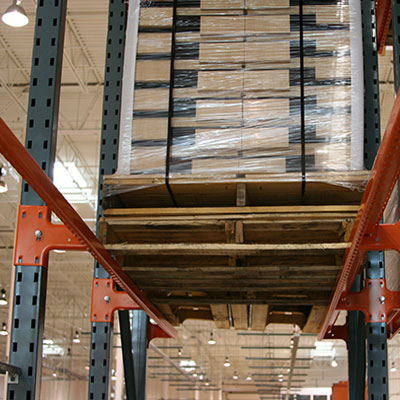
Fabricated from hot-rolled structural C-channel steel for maximum resistance against heavy forklift impacts in tough cold storage and agro-export warehouses.
Unlocking up to 85% volumetric warehouse efficiency with structural safety, cold-chain thermal optimization, and seismic compliance.
As warehouse real estate costs surge and global logistics hubs face pressure to maximize internal vertical volume, supply chain leaders are reassessing their high-density storage strategies. A drive-in pallet rack system remains the gold standard for high-density, low-SKU storage. By eliminating operational fork truck aisles and allowing lift trucks to drive directly into stacked storage bays, drive-in racking converts up to 85% of inactive aisle footprint into usable pallet storage positions.
At CR Industrial Racks & Storage Co., our structural engineering team builds drive-in and drive-thru pallet racking systems engineered for high-duty cycles, cold storage freezer demands, and high-seismic requirements under strict RMI (Rack Manufacturers Institute) and ANSI MH16.1 design standards. This guide provides international procurement teams, plant managers, and warehouse operations specialists with a deep technical breakdown of drive-in rack structural physics, safety engineering, ROI calculations, and future automated integration paths.
Select the optimal structural framework and protection options based on load weight, forklift impact exposure, and thermal conditions.
Fabricated from hot-rolled structural C-channel steel for maximum resistance against heavy forklift impacts in tough cold storage and agro-export warehouses.
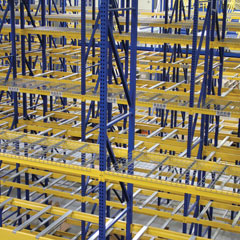
Cost-effective high-density solution utilizing high-strength cold-formed steel with adjustable teardrop or slotted connection frames for medium-duty goods.
Dual-access design allowing lift trucks to enter from front or back aisles, facilitating First-In, First-Out rotation for date-sensitive inventory.
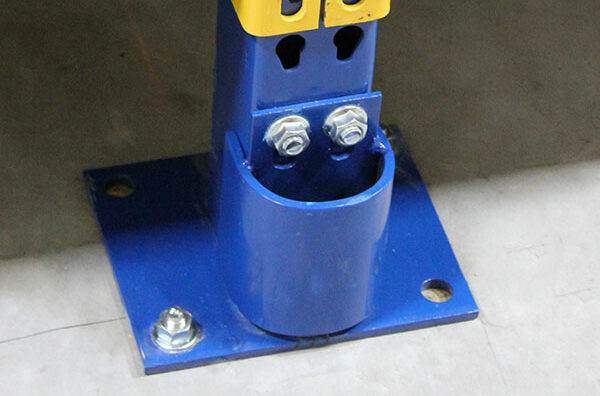
Reinforced steel deflection guards, straddle protectors, and floor rails engineered to shield drive-in entry columns from vehicle collisions.
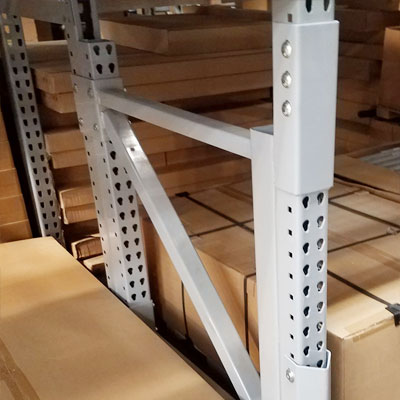
Custom-engineered bolt-on replacement upright sections that repair damaged drive-in uprights without dismantling entire racking bays.
Understanding the engineering nuances between structural steel and roll-formed designs prevents structural fatigue, frame deflection, and costly warehouse accidents.
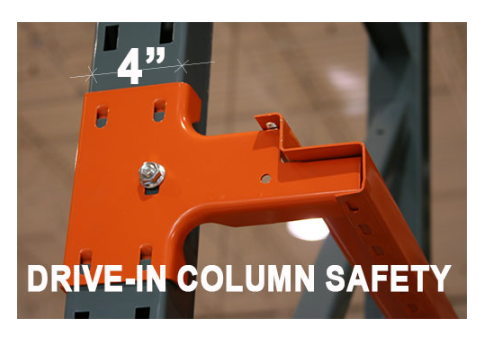
Unlike standard selective rack where beam ledgers run horizontally across every front bay, a drive-in pallet rack leaves the bay opening unobstructed so forklifts can enter. Pallets rest on continuous side-mounted steel load rails supported by cantilevered arms attached directly to upright columns.
At CR Industrial Racks & Storage Co., our drive-in load rails feature heavy-gauge structural angle steel with tapered front entry edges. This tapered guidance system centers pallets as they slide into the lane, mitigating pallet misalignment, edge binding, and dynamic point loading.
Because forklifts continuously operate inside drive-in rack lanes, entry upright columns experience up to 400% higher impact risks than standard selective racking. Protecting the outer frames is essential to preserving structural safety and longevity.
Our engineering standards mandate high-visibility, heavy-duty floor-anchored column guards and full-length structural angle floor rails. These guide rails physically align the lift truck wheels as it enters the bay, keeping forklift masts centered and preventing mast-to-arm strikes.
Evaluation framework for purchasing agents, procurement managers, and logistics engineers.
| Design Factor | Structural Channel Steel Drive-In | Roll-Formed Teardrop/Slotted Drive-In |
|---|---|---|
| Material Composition | Hot-rolled C-channel steel (3", 4", or 5" channels) | Cold-formed gauge sheet steel (12 to 14 gauge profiles) |
| Forklift Impact Resistance | Maximum: Withstands repeated forklift bumps and scrapes | Moderate: Requires heavy external column guarding |
| Cold Storage Performance | Excellence in sub-zero freezer environments (-30°C) | Standard warehouse use; susceptible to twisting under stress |
| Load Capacity Per Rail | Up to 3,500+ lbs per pallet position | Up to 2,500 lbs per pallet position |
| Initial Capital Expenditure | Higher initial investment, lowest long-term maintenance cost | Lower initial purchase price, higher ongoing repair risk |
| Seismic Resistance | Superior torsional strength & high frame moment resistance | Requires additional horizontal top tie & rear X-bracing |
From automated shuttle hybrids to intelligent thermal management, explore how drive-in pallet racking is evolving for next-generation logistics.
Integrating semi-automated radio pallet shuttles into drive-in channels eliminates forklift entry entirely, cutting load times by 50% while protecting steel columns from truck damage.
Automation EvolutionUpdated building codes mandate higher seismic force safety factors. Engine-simulated moment frames, rigid top-ties, and thickened slab anchors safeguard high-density inventory during seismic events.
Seismic SafetyWith freezer energy consumption spiraling upward, compacting pallet storage into high-density drive-in footprints reduces air-volume chilling costs by up to 40% annually.
Green Cold StorageSmart sensors installed on critical entry legs communicate real-time structural impact alerts to warehouse management software (WMS), streamlining safety inspections and repairs.
Smart WarehousingEngineering excellence, manufacturing heritage, and uncompromising quality standards make us the premier choice for complex material handling projects worldwide.
Our deep engineering legacy and decades of operational history guarantee structural solutions built to perform over decades of continuous use.
Contact UsMulti-million-dollar automated powder coat lines ensure uniform paint coverage, corrosion barrier resistance, and superior durability against humid tropical conditions.
Contact UsEvery upright, arm, and rail calculation is verified against ANSI standards, guaranteeing structural load capacity ratings backed by real engineering stamps.
Contact UsFrom early CAD floorplan development and structural seismic engineering to international container delivery and installation oversight, we manage every step.
Contact UsDirect technical answers to the most common questions asked by supply chain managers and global procurement executives.
Drive-in pallet rack systems are ideal when a facility stores large volumes of identical, low-SKU goods that do not require individual pallet selectivity. By removing operating forklift aisles, drive-in systems increase pallet position capacity by 60% to 85% compared to selective racking. They are widely specified for cold storage facilities, beverage distributors, food processors, and seasonal bulk storage operations where space cost per square foot is high.
The primary difference lies in operational traffic flow and inventory access management. A Drive-In rack system has a single entry/exit point per lane, functioning strictly under Last-In, First-Out (LIFO) inventory control. A Drive-Thru rack system features open access on both sides, allowing forklifts to drive through the bay. This dual-access setup enables First-In, First-Out (FIFO) stock rotation by loading pallets from the rear aisle and picking them from the front aisle.
Structural channel steel drive-in racks are constructed from heavy-duty hot-rolled structural steel C-channels. They deliver exceptional resistance against repeated forklift collisions, making them the preferred choice for heavy manufacturing, cold storage freezers, and rugged industrial applications. Roll-formed drive-in racks utilize cold-formed sheet steel with teardrop or slotted connection joints. While roll-formed racking offers lower initial equipment costs, it requires robust upright guards to withstand forklift impact inside tight lanes.
Drive-in rack lanes require precise clearance calculations between the lift truck dimensions and the inner rack framework. Typically, standard counterbalanced or reach trucks require a minimum clearance of 3 to 4 inches on each side between the outmost chassis/wheels and the load rail support arms. Lift trucks must also be equipped with narrow overhead guard cages to clear lower rail levels safely. Installing floor-mounted guide rails inside each drive-in lane is strongly advised to keep drivers aligned automatically.
Because drive-in rack channels lack front shelf beams to maintain open forklift entry, lateral frame stability relies entirely on structural top-tie bracing, back diagonal bracing (for single-entry drive-in layouts), rigid cantilever arms, and heavy-duty base plate anchors. CR Industrial Racks & Storage Co. performs site-specific engineering analysis in accordance with RMI / ANSI MH16.1 practices, ensuring base plates, anchor embedment depths, and slab capacities accommodate lateral seismic forces safely.
Yes. Many modern drive-in rack structures can be modified or custom-built to accept semi-automated radio pallet shuttles. In a shuttle retrofit, the shuttle robot travels along customized support rails to transport pallets deep inside the channel, eliminating the need for lift trucks to enter the system. This upgrade dramatically improves picking speeds, reduces labor costs, and eliminates driver collision damage to structural uprights.
Consult with senior engineering specialists at CR Industrial Racks & Storage Co. for custom layout design and procurement quotes.
[email protected]