High-Performance Storage Racking Systems
Standardized and custom-engineered heavy-duty steel rack solutions designed for automated warehouses, cold chain logistics, and high-density factory storage.
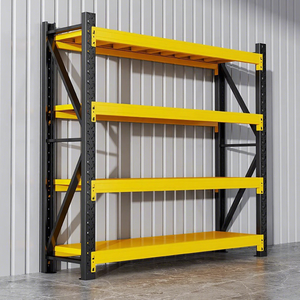
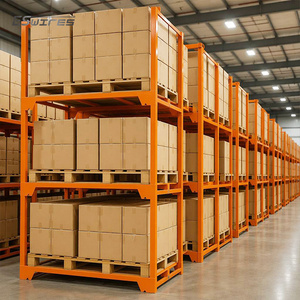
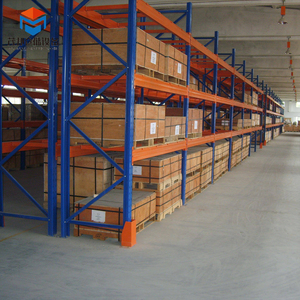
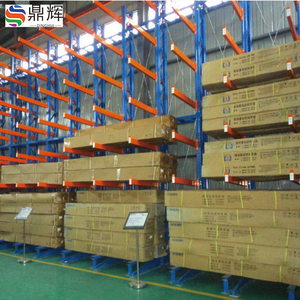
Industrial Storage Systems Engineering: Architectural Integrity and Load Dynamics
Modern factory logistics, global distribution hubs, and export processing zones operate under relentless pressures for higher throughput, maximum cubic density, and zero-downtime safety compliance. Choosing a top trusted rack system is no longer merely a procurement decision—it is a critical structural engineering strategy that dictates operational capacity, warehouse safety, and long-term capital efficiency.
Industrial storage racks function as dynamic load-bearing steel structures subjected to combined axial compression, flexural bending, dynamic forklift impact forces, and seismic acceleration. Engineering superior storage infrastructure requires rigorous adherence to metallurgy standards, advanced structural modeling such as Finite Element Analysis (FEA), and continuous verification against internationally recognized frameworks including RMI (Rack Manufacturers Institute) ANSI MH16.1 practice.
High-Yield Metallurgy
Fabricated using prime cold-rolled Q235B and high-yield Q355B structural steel, ensuring optimal tensile strength, yield resilience, and structural safety margins under maximum rated loading conditions.
Advanced Beam-Upright Connectors
Patented multi-hook locking mechanisms with automatic safety locks eliminate beam dislodgement risks caused by accidental forklift lifting during fast-paced picking cycles.
Seismic & Lateral Stability
Engineered base plates, heavy-duty floor anchor embedments, and specialized bracing matrices designed to absorb lateral forces according to high-seismic zone requirements.
Evaluation of Heavy-Duty Rack Architectures for Factories & Exporters
Every factory production floor and export fulfillment facility maintains unique SKU profiles, turnover speeds, and handling equipment. Below is an engineering comparison of primary industrial rack system architectures.
| Storage System Type | Primary Industrial Application | Volumetric Density | SKU Direct Selectivity | Handling Equipment Compatibility |
|---|---|---|---|---|
| Selective Pallet Racking | General factory warehousing, multi-SKU export hubs | Moderate (40% - 50%) | 100% Direct Access | Standard Counterbalance, Reach Trucks |
| Drive-In / Drive-Thru Racking | Cold storage, raw material bulk batching | High (70% - 85%) | Low (LIFO / FIFO Lanes) | Specialized Narrow Counterbalance Trucks |
| Push-Back & Pallet Flow | Perishable exports, fast-moving consumer goods (FMCG) | Very High (65% - 80%) | Moderate (Lane Pick Face) | Standard Forklifts, Gravity Flow Carts |
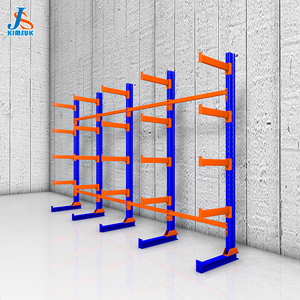
| Electric Telescopic Cantilever | Lumber, steel tubing, bar stock, extrusions | High (Linear Optimized) | 100% Automated Access | Overhead Cranes, Side Loaders, Telescopic Arms |
| Nestainer Stacking Racks | Seasonal factory overflow, flexible export stacking | Variable / Modular | Stack Block Access | Forklifts, Overhead Hoists |
| Automated AS/RS Structural Racks | Smart factories, 24/7 high-throughput distribution | Maximum (85%+) | 100% Automated System Access | Automated Cranes, Shuttle Robots, AGVs |
Future Sourcing & Procurement Trends in Factory Storage Racking
As global supply chains shift toward nearshoring, regional manufacturing hubs, and Industry 4.0 automation, warehouse managers and procurement directors face evolving architectural criteria. Sourcing industrial rack systems is no longer a localized component buy—it requires evaluating four structural shifts redefining the material handling sector:
1. Convergence of AS/RS & Rack-Supported Buildings
Rising land costs and factory space constraints have driven a transition toward vertical building envelopes. Rack-supported warehouse structures utilize the racking frames as the primary load-bearing skeleton supporting wall cladding and roofing, eliminating structural building columns and maximizing interior cubic storage by up to 35%.
2. Automated Powder Coating & Environmental Finishing
Exporting factories operating in high-humidity, coastal, or chemical environment zones require advanced surface protection. Multi-million-dollar automated electrostatic powder coating lines provide uniform barrier coats (60-90 microns thickness) resistant to chipping, moisture corrosion, and salt air exposure, outperforming traditional liquid spray painting.
3. Digital Twin Modeling & Sensor-Embedded Racking
Future-proof storage facilities are integrating IoT deformation sensors, load cell monitoring, and RFID structural tags directly into upright columns. This enables real-time structural health tracking, warning safety managers of micro-deflections or cumulative forklift impact damage before dynamic failures occur.
Why Leading Factory Exporters Partner with Our Engineering Team
Backed by nearly 70 years of manufacturing lineage and structural engineering expertise, we provide fully integrated warehouse storage solutions for Fortune 500 manufacturers, logistics partners, and international exporters.
End-to-End Layout Engineering
Our structural engineers deliver complete CAD layouts, finite element stress analysis, and floor slab load capacity verifications to ensure flawless alignment with your forklift turning radiuses and ceiling heights.
Robotic Welding Precision
Automated robotic welding cells eliminate human error across beam connector welds and frame diagonal bracing joints, achieving uniform weld penetration and unmatched fatigue resistance under heavy cyclic loading.
Export Packaging & Global Logistics
Every shipment is engineered for international sea-freight transport. Components are bundled using heavy-duty steel strapping, protective corner guards, and moisture-proof plastic wrap to ensure damage-free delivery worldwide.
Frequently Asked Questions by Factory Buyers & Engineers
Key structural, safety, and logistical questions addressed by our engineering support team.
How do you calculate required rack load capacities for heavy factory storage?
Load capacity calculation requires multiplying maximum operational pallet weight (including packaging, pallets, and product tolerance) by a safety factor (typically 1.5 to 1.65 under RMI standards). Beam selection depends on clear span distance and allowable deflection limits (L/180). Upright frame capacity is calculated based on unsupported beam tier heights and total bay accumulation.
What structural considerations are critical for installing pallet racks in seismic zones?
In seismic regions, racking systems must resist dynamic lateral sway forces. Key design adjustments include enlarging base plate footprints, increasing concrete wedge anchor embedment depth, specifying heavier gauge upright steel, and installing top-tie bracing or heavy-duty rear frame diagonal matrices engineered according to local seismic codes (e.g., US building codes, CSCR, or European standards).
Why is automated powder coating preferred over traditional liquid painting for export racks?
Automated powder coating utilizes an electrostatic application process followed by high-temperature thermal curing. This creates a cross-linked thermosetting polymer skin that is significantly thicker, more uniform, and less prone to scratching or chipping during forklift loading than conventional solvent-based spray paints. It also offers enhanced resistance to humidity, chemical fumes, and industrial wear.
Can damaged upright frames be safely repaired without replacing the full frame assembly?
Yes. Engine-engineered, bolt-on rack repair kits allow maintenance teams to cut away localized lower-leg impact damage caused by forklifts and bolt in heavy-duty structural steel replacement boots. These kits feature thicker gauge steel and built-in impact deflectors, restoring 100% of the original structural integrity without needing to dismantle the entire upper bay.
What information is required from a factory manager to receive a custom CAD rack layout?
To produce an exact, code-compliant CAD layout, our engineering team requires: (1) Facility building architectural floor plans showing column grids, clear height, and overhead obstructions; (2) Pallet dimensions (W x D x H) and maximum weight per pallet; (3) Forklift specifications including aisle turning radius and maximum lift height; and (4) Concrete floor slab thickness and compressive strength rating (e.g., 3,000 PSI).
How does cold storage environment impact steel rack selection?
Sub-zero freezer facilities require specialized steel grades with low-temperature notch toughness to prevent embrittlement. Furthermore, high-density systems like Pallet Flow, Push-Back, or Mobile Racking are favored in cold chain environments to minimize energy loss per cubic meter of chilled air.
Optimize Your Factory Storage Infrastructure Today
Consult with our senior structural engineers to design a high-density, certified, and cost-effective racking system tailored to your exact operational requirements.