Engineered Heavy-Duty Industrial Racking Systems
Explore our certified storage configurations engineered for high-density warehousing, distribution hubs, and cold-chain infrastructure.
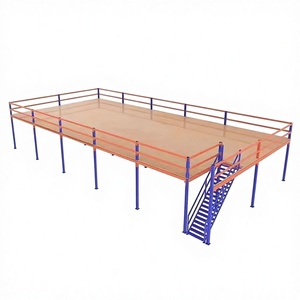
Factory Customized Heavy-Duty Mezzanine Rack & Attic Storage System
Multi-tier structural steel mezzanine platform doubling overhead spatial capacity. Engineered for high-load e-commerce fulfillment centers.
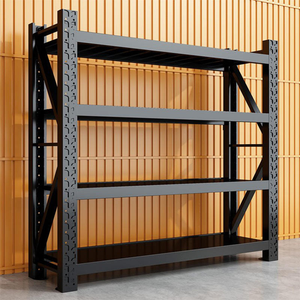
Durable Medium-Duty Selective Pallet Racking Corrosion Protection
Precision cold-rolled steel framing featuring advanced electrostatic thermosetting powder coat barrier against humid environments.
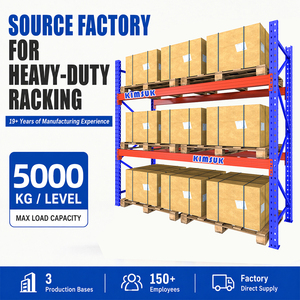
Heavy Duty Steel Pallet Racking System (1000–5000kg Capacity)
Adjustable beam high-bay racking designed specifically for high-throughput distribution networks and heavy bulk inventory.
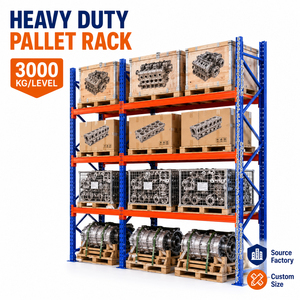
3000KG Heavy Duty 4-Level Pallet & Carton Storage Structure
Industrial multi-tier structural design optimized for dual-purpose combined palletized cargo and broken-case carton picking.
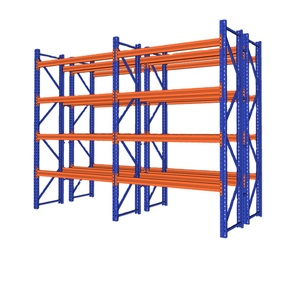
Heavy-Duty Industrial Storage Pallet Rack Structural System
Heavy structural upright framing built to resist material handling forklift impacts while maintaining rigid beam column lock security.
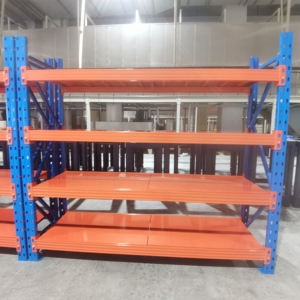
Heavy-Duty 2-Ton Capacity Adjustable 5-Tier Steel Storage Rack
Versatile 5-layer cold-rolled steel unit tailored for e-commerce, third-party logistics (3PL), and rapid inventory turnover.
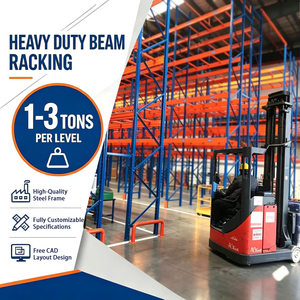
Custom Heavy-Duty Steel Pallet Rack System for Warehousing
Tailor-engineered racking array incorporating customized bay spans, frame depths, and seismic anchor baseplates.
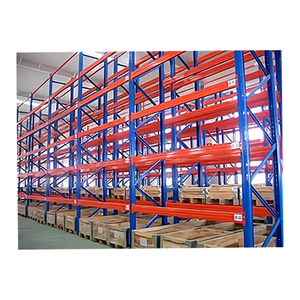
High-Capacity Metal Steel Storage Rack System for Logistics Hubs
Hot-selling structural storage matrix optimized for high-density pallet stacks and automated crane/shuttle interface.
Engineering Rigor & Structural Integrity in Modern Material Handling
In modern industrial logistics, static storage infrastructure is no longer merely a architectural accessory; it is a critical revenue-enabling asset. Selecting an industrial shelving and pallet rack supplier requires evaluating structural yield strengths, deflection safety ratios, seismic compliance, and total cost of ownership (TCO).
As a global OEM/ODM manufacturer and exporter, our engineering methodology relies on Q235B and Q355B cold-rolled structural steel alloys, precision-formed to meet RMI (Rack Manufacturers Institute) and ANSI MH16.1 specifications. From standard selective racking to complex multi-tier mezzanine pick modules, every structure undergoes rigorous finite element analysis (FEA) to ensure structural safety under full load capacity.
- Seismic-Aware Design: Engineered baseplates and heavy anchor systems tailored for dynamic lateral load distribution.
- Corrosion Barrier Protection: Automated multi-stage thermosetting epoxy powder coating engineered for tropical and coastal humidity.
- Certified Load Capacities: Uniformly Distributed Load (UDL) ratings verified via destructive laboratory stress testing.
Key Engineering Metrics
Our manufacturing plants utilize computer-controlled roll-forming mills and robotic welding stations to ensure tight structural tolerances.
Steel Grade Standard: High-Tensile Cold-Rolled Q355B Steel
Upright Column Profile: 80/90/100/120mm Omega Sections
Beam Safety Factor: 1.5:1 Safety Deflection Ratio (L/240)
Surface Treatment: 80–120μm Electrostatic Powder Coating
Why Global Fortune 500 Enterprises Trust Our Racking
Decades of manufacturing excellence, stringent quality assurance, and end-to-end export capabilities across 80+ nations.
Structural vs. Roll-Formed Pallet Racking Analysis
A comparative evaluation guide for logistics procurement officers selecting structural steel vs. roll-formed steel components.
| Evaluation Factor | Roll-Formed Steel Racking | Structural Steel Racking | Strategic Selection Criteria |
|---|---|---|---|
| Steel Profile Fabrication | Cold-rolled sheet steel formed into teardrop or omega shapes | Hot-rolled C-channel structural steel shapes | Roll-formed yields lighter weight; structural delivers maximum impact resistance. |
| Yield Strength ($f_y$) | 33,000 to 55,000 PSI (Q235B / Q355B Grade) | 36,000 to 50,000 PSI (ASTM A36 / Structural Grade) | Both meet high load requirements when backed by certified structural calculations. |
| Forklift Impact Resistance | Moderate; requires column guards and footplate protectors | Extremely high; thick flange structural walls resist heavy damage | High-activity distribution centers benefit from structural or reinforced bottom uprights. |
| Adjustability & Speed | Toolless beam placement with spring-lock connectors | Bolted beam-to-frame connections requiring torque tools | Roll-formed allows rapid layout changes; structural provides rigid permanent frames. |
| Seismic Performance | Flexible moment frames absorbing dynamic energy | Rigid high-mass resistance designed for heavy lateral shear | Must be designed in coordination with local seismic building codes (e.g., CSCR/IBC). |
| Initial Capital Cost (CAPEX) | Cost-effective lower initial steel weight and freight bulk | Higher initial investment due to total steel mass | Roll-formed delivers superior upfront ROI; structural reduces long-term maintenance cost. |
Future Procurement Trends in Industrial Storage (2025–2035)
Strategic supply chain evolution requires purchasing rack systems designed for future warehouse automation and sustainability standards.
1. AS/RS & Autonomous Mobile Robot (AMR) Convergence
Traditional static racking is giving way to automation-ready racking infrastructure. Modern procurement mandates millimeter-level tolerances to integrate seamlessly with Autonomous Mobile Robots (AMRs), automated guided vehicles (AGVs), and Automated Storage and Retrieval Systems (AS/RS).
2. High-Density Cold Chain Spatial Maximization
With global cold-chain operations expanding rapidly for pharmaceuticals and perishables, cold-storage operators cannot afford underutilized refrigerated volume. Pallet Flow (FIFO) and Push-Back (LIFO) systems increase pallet density by up to 75% compared to standard selective layouts.
3. Decarbonized Manufacturing & Low-Carbon Steel
Multinational corporations are incorporating Scope 3 carbon emission standards into their vendor qualification process. Purchasing racking produced via energy-efficient electric arc furnaces (EAF) and non-VOC powder coat lines reduces lifecycle environmental impact.
The Paradigm Shift: From Static Racks to Dynamic Throughput Engine
Historically, industrial shelving was viewed as basic warehouse furniture. Today, intense e-commerce pressures, escalating commercial real estate lease rates, and labor shortages have redefined industrial racking as a dynamic engineering system.
Key development vectors shaping the industry include:
- Vertical Footprint Scaling: Expanding upward rather than outward. Mezzanines, platform pick modules, and high-bay racking systems utilize vertical building clear heights up to 40 meters.
- Modular Structural Repairability: Replacing damaged lower column sections with engineered bolt-on repair kits instead of tearing down full frame assemblies, cutting facility downtime by 80%.
- Structural Health Monitoring (SHM): Integrating IoT impact sensors on aisle corners to log forklift collisions and automatically alert facility managers to mandatory structural safety inspections.
Global Quality Assurance Protocol
Our manufacturing process adheres to strict international testing standards to guarantee zero structural failures under rated load conditions.
Industrial Racking Procurement & Technical FAQ
Critical engineering answers for logistics managers, structural engineers, and procurement directors.
How is maximum beam load capacity calculated in selective pallet rack systems?
Maximum beam load capacity is calculated based on Uniformly Distributed Load (UDL) principles as specified under RMI (ANSI MH16.1) standards. The beam deflection limit is restricted to maximum L/240, where L represents the clear span beam length. For example, a 2700mm (108-inch) beam span under full rated capacity will exhibit a maximum center deflection no greater than 11.25mm. Beam capacity ratings also incorporate safety lock pins that resist vertical dislodgement forces up to 1,000 lbs per connection.
What structural factors dictate seismic compliance for international warehouse installation?
Seismic compliance requires analyzing geographic peak ground acceleration (PGA), concrete floor slab thickness, concrete compressive strength (psi/MPa), and total frame height-to-depth ratio. In high seismic zones, rack design engineers utilize oversized seismic baseplates, heavy anchor bolts with specific effective embedment depths, and reinforced heavy-duty horizontal and diagonal framing braces to absorb dynamic lateral shear forces without structural collapse.
How does surface finishing impact longevity in coastal and high-humidity environments?
Standard liquid paint often chips and exposes underlying raw carbon steel to moisture, initiating rust. For humid or coastal regions, components must undergo multi-stage automated pre-treatment cleaning, followed by electrostatic thermosetting powder coating (80–120 microns thick). This creates a durable, non-porous polymer barrier resistant to salt air corrosion, mechanical impacts, and chemical cleaning agents used in food-grade or pharmaceutical storage facilities.
Which high-density storage layout yields the highest spatial density for cold storage operations?
For high-volume, low-SKU cold storage operations, Drive-In Racking and Pallet Flow Racking deliver maximum cube utilization. Pallet Flow racking provides automatic First-In, First-Out (FIFO) stock rotation by utilizing inclined roller tracks with speed controllers. Drive-In racking maximizes cubic density by allowing forklifts to drive directly into storage lanes, reaching storage densities up to 85% higher than standard selective layouts.
Can damaged racking uprights be safely repaired using bolt-on repair kits instead of full frame replacement?
Yes. Engineered bolt-on rack repair kits are structurally approved under RMI guidelines provided they are designed by qualified structural engineers. The repair procedure involves supporting adjacent load beams, cutting away the compromised lower column section, and securing an engineered heavy-duty replacement leg directly to the sound upper column and floor slab. This restores original structural capacity while avoiding the expense and downtime of unloading entire bays.
What container packaging and export packing standards do you implement for global sea freight?
To prevent transit damage during ocean container transport, racking components are systematically bundled using plastic corner protectors, corrugated steel strapping, and heavy moisture-barrier plastic shrink wrapping. Uprights and beams are nested on wooden dunnage to prevent steel-on-steel friction. Custom loading diagrams ensure optimal weight distribution inside 20GP and 40HQ shipping containers, minimizing freight cost per pallet location.
Ready to Optimize Your Warehouse Storage Footprint?
Consult with our structural engineering team today for custom CAD layouts, seismic load calculations, and factory-direct export pricing.