1. Executive Engineering Overview & Structural Manufacturing Standards
In modern supply chain architecture and globalized manufacturing, selecting an optimized, structural-grade industrial shelf rack system is a foundational capital expenditure (CapEx) decision. Modern warehousing environments—spanning automated fulfillment hubs, high-cube cold storage facilities, agricultural export centers, and pharmaceutical distribution networks—require load-bearing frameworks engineered to withstand extreme static weights, dynamic forklift impacts, and localized seismic forces.
As a premier direct-factory manufacturer specializing in structural metal engineering and high-density industrial racking systems, our facility operates strictly under international manufacturing protocols. We synthesize cold-rolled high-tensile structural steel (specifically premium Q235B, Q355B grades, and ASTM A1011 equivalent structural profiles) with automated robotic welding to engineer racks that maximize cubic volumetric utility without compromising structural integrity.
2. Verified Factory-Direct Heavy-Duty Industrial Rack Systems
Below are our primary, certified heavy-duty storage configurations manufactured directly at our enterprise plant. Each unit is custom-engineered to meet specific floor-load capacities, pallet dimensions, and clearance requirements.
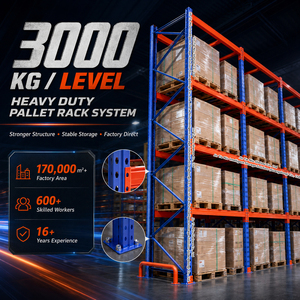
4 Storage Levels Durable Heavy Duty Pallet Rack for Factory and Warehouse Storage 3000KG
Engineered multi-level vertical storage utilizing adjustable beam connectors, designed to sustain up to 3,000kg uniformly distributed load per level.
Get Catalog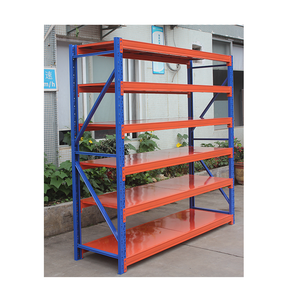
Certified Safe & Stable Industrial Steel Warehouse Pallet Rack Shelving Heavy Duty Selective Bolted Assembly Iron Material
Precision-bolted upright frame assembly providing maximum structural rigidity under dynamic seismic and material handling conditions.
Get Catalog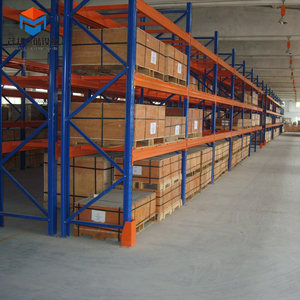
Warehouse Pallet Racking Selective Heavy Duty Industrial Storage Rack System Durable Q235 Steel Shelf Equipment
High-grade Q235 cold-rolled steel construction offering 100% direct pallet accessibility for fast-moving SKU logistics hubs.
Get Catalog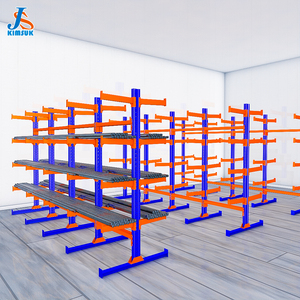
Cantilever Rack Arm Heavy Duty Racking Shelves Heavy Duty Warehouse Pallet Metal Storage Rack
Free-standing, obstacle-free column layout optimized for storing long, oversized stock including pipes, timber, steel bars, and extrusions.
Get Catalog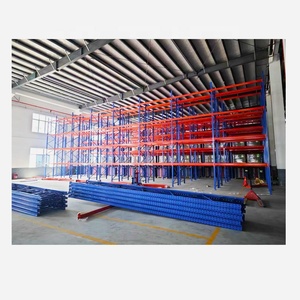
Heavy Duty Warehouse Storage Rack Pallet Racking System Customized Design for Industrial Warehouse
Fully tailored structural engineering built to exact facility footprint dimensions, slab load constraints, and overhead clearance heights.
Get Catalog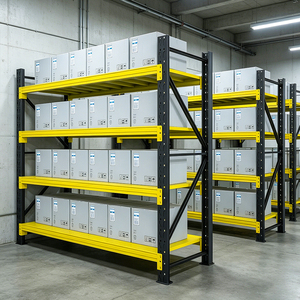
Warehouse Racking Pallet Rack warehouse Small Parts Shelves Tires Stacking Racks Shelves
Versatile specialized modular rack configurations optimized for automotive tires, heavy machinery spare parts, and dense bin picking.
Get Catalog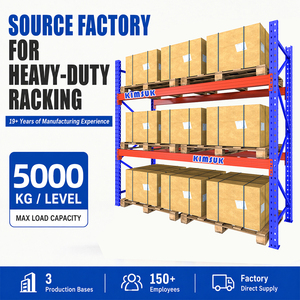
Heavy Duty Warehouse Storage Rack Steel Pallet Racking System 1000-5000kg Load Capacity Adjustable Beams for Distribution Center
Ultra-heavy load rating options (up to 5,000kg per level) featuring 75mm pitch height adjustment for maximum operational versatility.
Get Catalog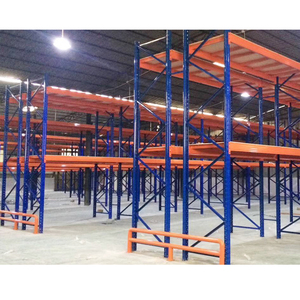
Chinese Manufacture Heavy Duty Metal Pallet Rack Shelving Wood Pallet Racks and Shelves
Heavy-duty hybrid structural metal framing with high-density wooden/composite decking options for versatile industrial hand-loading or pallet storage.
Get Catalog3. Technical Comparison Matrix & Load Mechanics Analysis
Procurement directors and facility engineers must evaluate structural racking systems based on key engineering indicators including load density, selectivity percentages, capital expenditure relative to storage footprint, and compatibility with Material Handling Equipment (MHE) such as counterbalanced forklifts, reach trucks, or Very Narrow Aisle (VNA) turrets.
| Racking Architecture | Direct Selectivity | Volumetric Cube Utilization | Ideal SKU Profile | MHE Compatibility | Structural Deflection Standard |
|---|---|---|---|---|---|
| Selective Pallet Rack | 100% Direct Access | 40% - 50% Efficiency | High SKU variety, low volume per SKU | Standard Forklifts, Counterbalanced | EN 15512 / ANSI MH16.1 ($L/200$) |
| Drive-In / Drive-Thru | 20% - 30% LIFO/FIFO | 75% - 85% Efficiency | Low SKU variety, high volume per SKU | Deep-entry Reach Trucks | Seismic lateral brace verified |
| Push-Back Rack System | 50% (LIFO) | 65% - 75% Efficiency | Medium SKU variety, 2-6 pallets deep | Standard Reach Trucks | Inclined nested cart dynamics |
| Pallet Flow (Gravity) | 100% Pick Face (FIFO) | 80% - 90% Efficiency | Perishables, cold chain, high turnover | Dedicated loading/unloading trucks | Brake roller dynamic resistance |
| Cantilever Arm System | 100% Frontal Access | 60% Vertical Efficiency | Long, continuous, or un-palletized loads | Side-loaders, Multi-directional VNA | Torsional moment arm verified |
Cold-Rolled Steel Metallurgy
Our factory utilizes continuous roll-forming lines for upright posts and step beams. Steel coils undergo rigorous tensile testing to ensure yield strengths meet or exceed 235–355 MPa, providing exceptional elasticity and resilience against accidental collision impacts.
Seismic Calculations & Anchoring
Racks engineered for high-seismicity regions incorporate enlarged heavy-duty base plates, double-anchor expansion bolts, and specialized K/X-frame horizontal and diagonal upright bracing to distribute shear stress into the concrete floor slab.
Epoxy Powder Coating
Surface treatment is executed on multi-stage automated electrostatic powder coating lines. Components undergo acid pickling, phosphating, and deionized water rinsing before applying a 60–80 micron thermosetting powder coat for superior corrosion protection.
4. Enterprise Manufacturing Advantage & Direct-Factory Heritage
Choosing the right manufacturing partner is as critical as selecting the correct racking architecture. With nearly seven decades of collective industrial manufacturing heritage and partnerships serving Fortune 500 logistics operations globally, our enterprise integrates design engineering, raw material sourcing, automated fabrication, and international logistics export under one roof.
End-to-End In-House Engineering Capabilities
Our dedicated structural engineering division utilizes Finite Element Analysis (FEA) software to model custom beam profiles, frame deflection, and axial compression stress. Before mass production, physical prototype bays undergo non-destructive and destruction load testing in accordance with ANSI MH16.1 guidelines.
Automated Precision Manufacturing
Operating state-of-the-art multi-station roll-forming machinery, laser cutting units, and Panasonic robotic welding cells ensures micron-level precision across all hook-and-beam connectors. This eliminates manual fitment errors and guarantees fast, seamless field assembly.
Tropical Climate & Harsh Environment Finishing
For cold storage, humid coastal locations, or chemical distribution plants exposed to harsh atmospheric conditions, we offer hot-dip galvanizing (HDG) and specialized anti-microbial powder coat finishes that stop oxidation and surface degradation at the source.
Comprehensive Risk Mitigation & Safety Accessories
We manufacture a full line of integrated racking safety equipment, including heavy-gauge steel column protectors, wrap-around frame guards, wire mesh decking, structural row spacers, and pallet backstops to shield your infrastructure against forklift collision damage.
5. Future Trends in Industrial Racking & Strategic Procurement (2025–2030)
The industrial warehousing landscape is undergoing a massive transformation driven by supply chain volatility, land cost inflation, and the rapid adoption of automated material handling technologies. Modern industrial shelf rack procurement strategies must look beyond immediate spatial needs and account for five-to-ten-year digital transformation roadmaps.
A. Integration with Autonomous Mobile Robots (AMRs) & Automated Storage (AS/RS)
Traditional manual forklift picking is increasingly augmented or replaced by AMRs, shuttle systems, and High-Bay Automated Storage and Retrieval Systems (AS/RS). This transition demands tighter manufacturing tolerances ($\pm 1.0\text{mm}$ deflection accuracy) and ultra-flat floor anchoring profiles. Modern rack structures must incorporate precision guide rails, power-busway integration brackets, and sensor reflector plates directly into the upright frame geometry.
B. Modular Reconfigurability & Dynamic Slotting Architecture
As e-commerce basket sizes and SKU velocities fluctuate unpredictably, fixed-height shelf racks create spatial inefficiency. The industry standard is shifting toward boltless teardrop or 75mm-pitch adjustable beam profiles that allow facility teams to re-slot beam levels rapidly without specialized heavy tooling or structural modification.
C. Sustainable Carbon-Neutral Steel Manufacturing & Decarbonization
Global enterprise buyers are mandating Scope 3 greenhouse gas emission reductions throughout their supply chains. Factory selection now heavily weighs the manufacturer's use of recycled scrap steel, energy-efficient electric arc furnaces (EAF), zero-VOC powder coatings, and closed-loop water treatment systems during steel pre-treatment.
6. Total Cost of Ownership (TCO) & Procurement Checklist
Initial purchase price represents only 35%–45% of an industrial rack system's total lifecycle cost. Facility managers must conduct a holistic TCO evaluation that incorporates freight, installation, routine safety inspections, damage repairs, and operational efficiency gains over a 15-to-20-year operational horizon.
Essential Technical Procurement Checklist:
- Steel Mill Test Certificates (MTC): Request raw material heat certificates proving yield and tensile strength.
- Structural Deflection Calculations: Confirm beam deflection under full load does not exceed $L/200$ (Span length divided by 200).
- Concrete Slab Analysis: Ensure floor concrete compressive strength ($\ge 25 \text{ MPa}$) and slab thickness ($\ge 150\text{mm}$) match required anchor embedment depths.
- Safety Locking Pins: Verify automatic dual-safety locking pins are integrated into all beam end-connectors to prevent accidental upward dislodgement by forklift forks.
- Upright Column Protection: Budget for integrated floor-anchored steel column protectors on every aisle corner frame.
7. Industrial Shelf Rack Procurement FAQ
Load capacity is governed by three primary structural variables: steel profile geometry (upright column width and depth), steel yield strength ($\sigma_y$), and unbraced frame length (vertical distance between beam levels). Additionally, beam capacity depends on the step beam section height, thickness, and end-connector hook design. All load ratings must assume Uniformly Distributed Loads (UDL).
Roll-formed racks are constructed from light-gauge sheet coil shaped through continuous rollers, offering an economical, highly adjustable solution ideal for standard warehousing and commercial distribution. Structural steel racks are manufactured from hot-rolled C-channels, providing extreme impact resistance, superior load thresholds, and exceptional performance in high-impact, heavy industrial, or cold storage environments.
Most municipal and international jurisdictions require a certified structural calculation packet sealed by a licensed Professional Engineer (PE). This documentation includes stamped layout drawings, slab anchor shear/uplift calculations, dynamic seismic analysis matching local building codes (e.g., IBC, ASCE 7, or Código Sísmico), and official safe load capacity plaques displayed on every rack row.
Yes. In many commercial instances, engineered bolt-on rack repair kits can be installed. Certified technicians support the upper load levels with hydraulic jacking systems, cut away the damaged lower column section, and bolt a heavy-duty structural replacement leg directly to the existing frame and floor slab, restoring full structural capacity with minimal operational downtime.
For indoor climate-controlled distribution, standard high-bake electrostatic powder coating provides excelente durability. For unheated humid warehouses, coastal facilities subject to salt air corrosion, or deep-freeze cold storage environment with constant condensation, hot-dip galvanizing (HDG) or specialized zinc-rich primer pre-treatments are strongly recommended.
Increasing the vertical distance between beam levels increases the unbraced length ($L_u$) of the upright post, significantly lowering the frame's axial buckling threshold. Removing a lower beam level to double-stack pallets on the floor fundamentally alters the structural load capacity of the entire bay and requires engineering recalculation before execution.
Accelerate Your Warehouse Capacity with Factory-Direct Engineering
Consult directly with our structural engineering design team. We provide complimentary CAD spatial layout designs, structural FEA calculations, and direct wholesale quotation pricing for enterprise projects worldwide.
Get Catalog & Custom Quote