Product Catalog
Heavy-Duty Cantilever & Industrial Pallet Racking Systems
Engineered for extreme structural integrity, high load capacities, and non-standard inventory geometry.
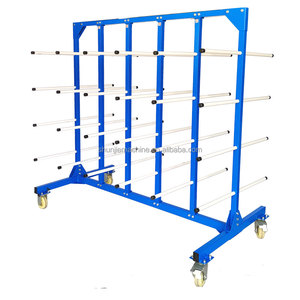
Customized 5 Tiers Cantilever Racking for Warehouse with Wheels Long Arms Metal Double Side Cantilever Rack Cart
View Product Details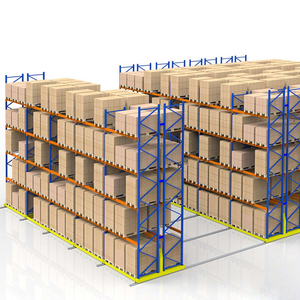
Custom Heavy Duty Selective Pallet Rack System One-Stop Warehouse Storage & Layout Design Solution in UAE
View Product Details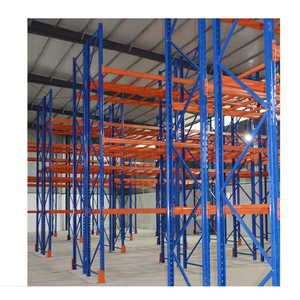
Storage Shelf Warehouse Heavy Duty Industrial Pallet Racking Narrow Aisle Selective Warehouse Rack System
View Product Details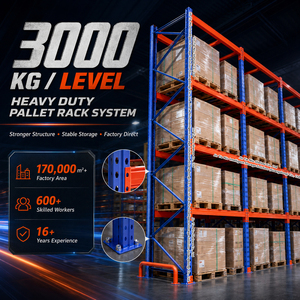
4 Storage Levels Durable Heavy Duty Pallet Rack for Factory and Warehouse Storage 3000KG
View Product Details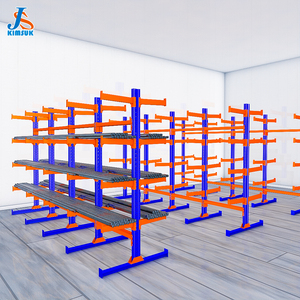
Cantilever Rack Arm Heavy Duty Racking Shelves Heavy Duty Warehouse Pallet Metal Storage Rack
View Product Details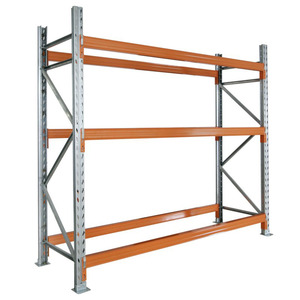
NOVA Full Automatic Warehouse Q235 Steel Boltless Store Heavy Duty Stacking Rack Industrial Storage Pallet Racking System
View Product Details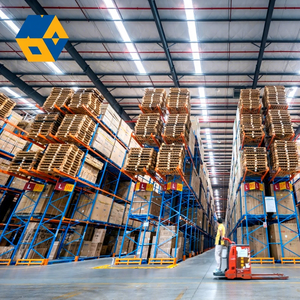
Heavy Duty 2000KG Per Layer Large Capacity Racking System Warehouse Storage High Duty Beam Stacking Pallet Rack Shelving Unit
View Product Details
Technical Whitepaper
Engineering Excellence in Heavy Cantilever & Structural Pallet Rack Architecture
An authoritative analysis of load distribution mechanics, steel metallurgy, and seismic design parameters for industrial logistics infrastructure.
In modern industrial logistics, storage footprint optimization is governed by structural mechanics and material handling efficiency. Standard pallet racking systems excel at unitized pallet loads; however, when handling long, bulky, or non-standard linear items such as extruded aluminum profiles, structural steel tubing, timber, PVC piping, and heavy metal coils, traditional front-column rack architectures present severe operational bottlenecks. As leading cantilever pallet racking manufacturers and global B2B wholesalers, our engineering methodology bridges structural structural steel design with modular warehouse automation.
1. Structural Dynamics: Roll-Formed Steel vs. Hot-Rolled Structural I-Beams
A critical technical evaluation for logistics engineers during racking procurement is selecting between cold-rolled light-gauge steel profiles and heavy-duty hot-rolled structural steel I-beams (W-shapes / H-profiles). Each material class serves specific mechanical stress limits and operational environments:
- Cold-Roll-Formed Steel Racking (Q235B Steel): Manufactured by progressively bending continuous steel sheets at ambient temperatures. Ideal for light to medium-duty cantilever applications (up to 1,200 kg per arm). Features adjustable pin-lock connections, reducing installation overhead while offering cost-effective adaptability for shifting inventory profiles.
- Hot-Rolled Structural Cantilever Systems (Q355B / ASTM A36 Steel): Engineered from solid structural steel sections, hot-rolled columns and arms are hot-forged under extreme temperatures. Structural cantilever columns withstand extreme impact energy from heavy forklifts and carry arm loads exceeding 4,000 kg per level. These systems are non-yielding under cyclic loading, making them mandatory for high-bay outdoor yards, steel service centers, and automated crane storage facilities.
Moment-Resisting Arm Joints
Utilizing high-strength Grade 8.8 structural bolts or self-locking tapered pins, arm connections eliminate column punch shearing while maintaining precise L/180 deflection limits under full capacity.
Seismic Lateral Bracing
Integrated X-bracing and horizontal tower tie-backs distribute horizontal seismic acceleration vector forces according to ANSI MH16.1 standards and local building codes.
Thermally Bonded Powder Coating
Electrostatic 80–120 micron thermosetting epoxy-polyester resin coating provides high abrasion resistance, salt-spray resistance, and protection against industrial atmospheric corrosion.
Engineering Matrix
Cantilever vs. Selective Pallet Racking Parameter Comparison
A comprehensive technical baseline for warehouse engineering teams evaluating structural load profiles and spatial density.
| Performance Criteria | Roll-Formed Cantilever | Hot-Rolled Structural Cantilever | Selective Pallet Rack |
|---|---|---|---|
| Primary Target Cargo | Pipes, Tubing, Medium Lumber | Steel Coils, Structural Beams, Heavy Plates | Unitized Standard Pallets (EUR/ISO) |
| Arm Deflection Limit | L/180 Standard | L/240 Heavy Structural Standard | Beam Deflection L/240 |
| Steel Metallurgy Grade | Cold-Rolled Q235B / Cold Strip Steel | Hot-Rolled Structural Q355B / ASTM A572 | Q235B Cold Formed High-Yield |
| Column Height Reach | Up to 6,000 mm | Up to 12,000+ mm (ASRS Integrated) | Up to 15,000 mm (VNA Configuration) |
| Front Access Clearance | 100% Unobstructed Horizontal Lane | 100% Unobstructed Horizontal Lane | Restricted by Vertical Aisle Columns |
| Surface Protection | Powder Coating (80μ) | Hot-Dip Galvanized / Epotherapy (120μ) | Standard Epoxy Powder Coat |
Industry Horizon
Future Procurement Trends in Cantilever & Pallet Racking Systems
Market dynamics, automated material handling integration, and sustainable supply chain imperatives shaping future warehouse design.
1. Automated Storage and Retrieval Systems (AS/RS) Integration
The global material handling industry is undergoing a digital transformation. Traditional manual forklift storage is shifting toward crane-automated and shuttle-driven high-bay cantilever systems. Automated Cantilever AS/RS configurations utilize laser-guided stacking cranes that traverse narrow aisles to pick long bar stock or sheet metal with millimeter positioning accuracy. Procurement officers must specify high-precision tolerances on cantilever arm leveling and column plumbness (better than 1/1000 height ratio) to accommodate sensor-guided automatic load effectors.
2. Advanced Surface Coatings for Harsh Outdoor Environments
As industrial land costs inside metropolitan logistics zones continue to climb, enterprises are expanding raw material storage to outdoor storage yards. Future procurement trends indicate a shift toward Hot-Dip Galvanized (HDG) structural racking treated under ASTM A123 standards. HDG zinc alloy coatings create a self-healing cathodic protection layer capable of resisting salt spray, extreme humidity, and UV exposure for over 30 years without structural degradation.
3. IoT Strain Sensors and Real-Time Load Monitoring
Structural health monitoring (SHM) is transitioning from aerospace engineering into heavy industrial storage. Next-generation cantilever racking installations feature embedded piezoresistive strain gauges along the column root moments and cantilever arm bases. Connected to centralized Warehouse Management Systems (WMS), these IoT sensors provide real-time alerts if dynamic fork impact exceeds safety thresholds or if accidental overload creates dangerous arm deflection.
4. Carbon-Neutral Steel Sourcing and Circular Lifecycle Design
Under global ESG (Environmental, Social, and Governance) compliance frameworks, enterprise buyers are mandating transparency in raw steel origin. Modular bolt-together cantilever structures manufactured using green hydrogen-smelted steel reduce Scope 3 embodied carbon emissions. Furthermore, fully bolted non-welded cantilever structures allow 100% component reconfigurability and circular structural recycling when warehouse layouts are altered.
Procurement Guide
Strategic Buyer's Guide: Engineering Due Diligence Checklist
Essential architectural and operational steps for procurement directors and facility managers before placing a factory-direct wholesale order.
Step 1: Floor Slab & Concrete Integrity Audit
Verify that your concrete floor slab slab thickness meets minimum anchorage depth requirements (typically ≥ 150mm to 200mm) with a compressive concrete strength rating of at least f'c = 25–30 MPa (3,000–4,000 PSI) to sustain heavy overturning moments.
Step 2: Center-of-Gravity & Arm Deflection Engineering
Calculate your maximum load center distance ($C_g$). A 1,000 kg load with a 600mm center of gravity creates significantly lower bending stress on column connections than the same load placed at an 800mm center of gravity. Ensure arm capacities are calculated based on uniformly distributed loads (UDL).
Step 3: MHE (Forklift) Radius & Aisle Geometry
Match your rack layout with your Material Handling Equipment (MHE). Side-loaders, combi-trucks, and multi-directional reach trucks allow narrow aisle widths (2.2m–2.8m), whereas standard counterbalanced forklifts demand aisle clearances of 4.5m to 5.5m when maneuvering long bundle loads.
Knowledge Base
Frequently Asked Questions (FAQ) for Engineering & Procurement
Direct technical answers addressing structural engineering, customization options, safety standards, and wholesale logistics.
What is the primary structural advantage of cantilever racking over traditional selective pallet racking?
Cantilever racking features a central vertical column with extended horizontal arms, completely eliminating front vertical upright columns. This design provides continuous, unobstructed horizontal storage length. It allows forklifts to store long products—such as steel pipes, timber packs, aluminum extrusions, and furniture—that cannot fit within the fixed compartment width of standard selective pallet rack frames.
How do engineers calculate the load capacity required for cantilever arms?
Arm load capacity is calculated based on a Uniformly Distributed Load (UDL) across the arm's structural length, assuming the load's center of gravity rests at half the arm length. The formula factors in the modulus of elasticity of the selected steel grade (e.g., Q235B vs. Q355B structural I-beam) and allowable deflection limits under ANSI MH16.1 / RMI standards (typically L/180). For concentrated point loads, arm capacities must be downgraded accordingly.
What is the difference between single-sided and double-sided cantilever column towers?
Single-sided cantilever columns feature arms extending from only one side of the central tower and are typically installed flat against warehouse walls. Double-sided cantilever columns feature arms extending from both the front and back sides of a central vertical tower. Double-sided configurations offer superior structural stability because symmetrical loads create opposing root bending moments, reducing anchor bolt tension forces while doubling storage capacity per linear footprint.
Can cantilever racking systems be installed outdoors in high-humidity or coastal environments?
Yes. Outdoor installations require structural steel hot-rolled profiles finished with Hot-Dip Galvanizing (HDG) under ASTM A123 / EN ISO 1461 specs, or heavy-duty powder coatings over zinc-rich primers. Outdoor engineering designs must also account for environmental wind load vectors, rain runoff drainage holes inside tubular arms, and site-specific seismic soil factors.
What minimum concrete floor slab specifications are required for heavy cantilever installations?
Heavy-duty structural cantilever systems require a reinforced, non-cracked concrete floor slab with a minimum thickness of 150mm to 250mm and a compressive concrete strength rating of at least f'c = 25–30 MPa (3,000–4,000 PSI). Because cantilever column bases transmit high overturning moments to anchor bolts under loaded cantilever deflection, structural expansion anchor embedment depths must be verified through professional floor slab core-drilling tests.
What customization options are available for factory-direct wholesale OEM/ODM orders?
Factory-direct wholesale cantilever customization options include: tailored arm lengths (300mm to 2,500mm), adjustable arm pitch intervals (50mm, 75mm, or 100mm pin pitch), straight vs. 2-degree to 5-degree inclined security arms, removable end-stop retainers, pipe deck cross-beams, custom RAL color powder coating, and full seismic X-bracing engineering tailored to local site building codes.
Why Partner With Us
Global Manufacturing Scale & OEM/ODM Supply Chain Strengths
Delivering end-to-end engineered warehouse solutions from concept design to international port logistics.
As a premiere OEM/ODM racking manufacturer and wholesale supplier, our manufacturing facilities integrate state-of-the-art automated production technologies to guarantee structural precision and competitive factory-direct pricing. Our engineering capabilities include:
- Automated Continuous Roll-Forming Lines: Utilizing ultra-precise automated rolling mills that ensure zero-tolerance profile variance on heavy column uprights and beam connectors.
- Robotic Laser Welding Cells: Robotic welding arms execute continuous 360-degree weld seams along base plate joins and cantilever arm sockets, eliminating human welding defects and structural stress fatigue points.
- In-House Structural FEA Testing Laboratory: Every structural profile undergoes Finite Element Analysis (FEA) computer modeling followed by destructive physical testing on 100-ton hydraulic press rigs to verify yield strength under maximum overload conditions.
- Turnkey International Layout Consulting: Our certified structural engineering team delivers 2D floorplan CAD layouts and 3D BIM structural models within 24–48 hours, optimizing your warehouse layout for maximum storage density and forklift efficiency.
Request a Custom Engineering Design & Wholesale Quote
Connect directly with our structural engineering team for customized load calculations, 3D CAD layout planning, and factory-direct volume pricing.
Get a Quote