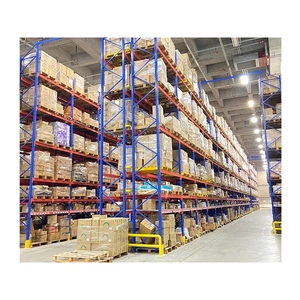
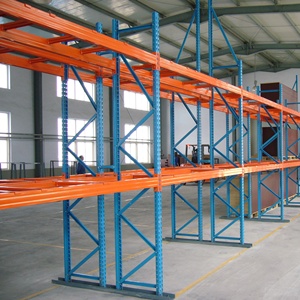
Adjustable Heavy Duty High Capacity Pallet Racking System
View Specifications →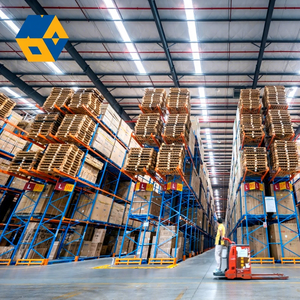
Heavy Duty 2000KG/Layer Beam Stacking Pallet Rack Unit
View Specifications →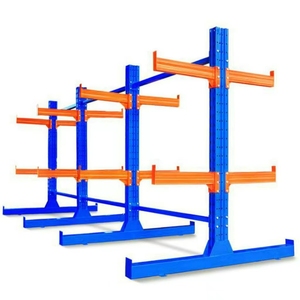
Industrial Storage Heavy Duty Cantilever Racking Shelving
View Specifications →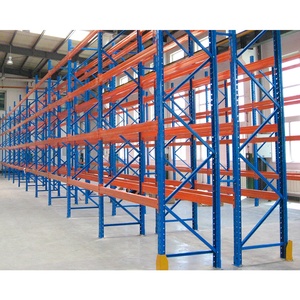
Customized Heavy-Duty Pallet Rack with Integrated Safety Barrier
View Specifications →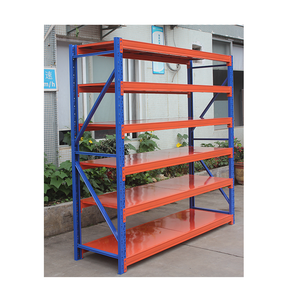
Certified Safe Selective Bolted Steel Pallet Rack Shelving
View Specifications →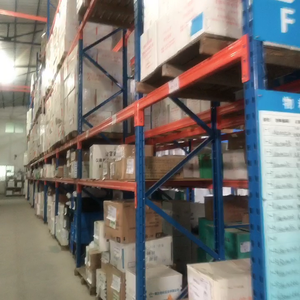
Turnkey Industrial Racking Design, Manufacturing & Installation
View Specifications →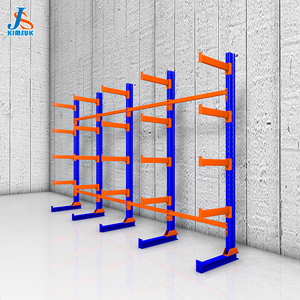
Heavy Duty Electric Telescopic Cantilever Rack System
View Specifications →Engineering Structural Integrity: China’s Premier Warehouse Storage Systems Exporter
In modern industrial logistics and global supply chain management, structural efficiency, volumetric storage density, and operational safety dictate bottom-line profitability. As a leading China warehouse shelving racks manufacturer and exporter, our enterprise delivers high-precision structural steel racking, automated storage frameworks, and heavy-duty selective pallet shelving engineered to withstand rigor, seismic activity, and high-frequency fulfillment operations.
Combining high-strength cold-rolled steel profiling (Q235B and Q355B grades) with automated continuous punching, robotic welding, and multi-stage electrostatic powder coating lines, our storage solutions comply strictly with international structural standards including FEM 10.2.02 (European Handling Federation), ANSI MH16.1 (Rack Manufacturers Institute - RMI), and AS4084-2012 (Steel Storage Racking Australia).
"Structural integrity in industrial racking is not merely a material thickness metric; it is an engineering synergy of load distribution pathways, deflection limits, seismic dynamic analysis, and anchor embedment mechanics."
Whether configuring high-density cold storage distribution centers, medical device free-trade zone fulfillment plants, or heavy machinery cantilever storage, our engineering team utilizes advanced Finite Element Analysis (FEA) software to model stress points, elastic deformation, and buckling limits prior to manufacturing execution.
Core Enterprise Manufacturing Capabilities
Why Fortune 500 logistics hubs and international engineering contractors trust our Chinese manufacturing facilities.
Automated Precision Cold-Roll Forming
Our facility houses 24 continuous cold-roll forming production lines equipped with real-time laser alignment systems. Profile tolerances on upright posts and step beams are held within ±0.5mm, ensuring frictionless beam-to-column engagement and uniform structural connection safety.
Electrostatic Powder Coating Technology
We operate multi-million-dollar, 12-stage pre-treatment automated washing and thermosetting powder coating lines. Utilizing epoxy-polyester coatings, components achieve superior corrosion resistance, salt spray endurance exceeding 500 hours, and chemical stability in high-humidity tropical environments.
Seismic & Dynamic Load Engineering
For operations located in high seismic hazard regions (such as the Pacific Ring of Fire or Central American zones), our structural engineers supply custom base-plate sizing, heavy-duty floor anchor embedding calculations, and dynamic rack bracing matrices in full compliance with local building codes.
Industrial Racking System Architecture & Recommendations
Selecting the ideal industrial shelving rack requires aligning stockkeeping unit (SKU) profiles, pallet dimensions, weight distribution, and handling equipment capabilities. Below is an engineering overview of our primary export rack lines:
1. Selective Heavy-Duty Pallet Racking
Selective pallet racking represents the standard in warehouse material handling, providing 100% direct access to every pallet position. Constructed with tear-drop or teardrop-compatible slotted upright frames and box step beams, these systems allow rapid beam elevation adjustments at 50mm or 75mm increments. Rated for uniform distributed loads (UDL) up to 4,000 kg per beam level.
2. High-Density Drive-In & Drive-Thru Systems
Designed for high-volume, homogeneous inventory with lower SKU variation, Drive-In racking maximizes cubic space utilization by eliminating operational aisles. Forklifts enter the structural racking bays directly to place or retrieve pallets resting on continuous support rails. Ideal for cold storage and seasonal agricultural buffer warehousing.
3. Cantilever Racks & Electric Telescopic Cantilever
Eliminating front vertical columns, cantilever racks are specifically designed for storing long, bulky, or awkward materials such as steel pipes, timber, plastic extrusions, and sheet metal. Our advanced Electric Telescopic Cantilever Systems automate rack arm extension, permitting overhead crane loading and dramatically reducing aisle footprint requirements in heavy manufacturing facilities.
4. Gravity Pallet Flow & Push-Back Racks
Dynamic flow racking utilizes inclined roller tracks or nested rolling carts. Pallet Flow systems enforce strict First-In, First-Out (FIFO) stock rotation—essential for food, beverage, and pharmaceutical cold chains—while Push-Back racking provides Last-In, First-Out (LIFO) high-density lane storage up to 6 pallets deep.
Industrial Storage System Comparison Matrix
| Racking System Type | Storage Density | Pallet Access Rate | Stock Rotation | Max Load Capacity / Level | Ideal Application |
|---|---|---|---|---|---|
| Selective Pallet Rack | Moderate (40%) | 100% Direct Access | FIFO / LIFO Flexible | 1,000 kg - 4,500 kg | General Distribution, FMCG, E-Commerce |
| Drive-In / Drive-Thru | Very High (75%) | Low (Lane Restricted) | LIFO (Drive-In) / FIFO | 1,000 kg - 1,800 kg | Cold Storage, Agro-Export, Batch Materials |
| Pallet Flow (Gravity) | High (70%) | Pick Face Direct | Strict FIFO | 1,000 kg - 2,000 kg | Perishables, Date-Coded Goods, Pharma |
| Push-Back Cart System | High (65%) | Lane Face Direct | LIFO | 1,000 kg - 1,500 kg | Medium SKU Mix, Buffer Warehousing |
| Heavy Cantilever Rack | Variable | 100% Direct for Long Items | Flexible | 500 kg - 6,000 kg / Arm | Pipes, Steel Bars, Lumber, Heavy Plates |
| AS/RS Automated Frame | Maximum (85%+) | Automated Shuttle/Crane | System Software Controlled | 500 kg - 2,500 kg | Smart Fulfillment Centers, High-Bay Logistics |
Future Procurement & Industry Development Trends
Strategic technology developments reshaping warehouse racking design and global procurement decisions over the next decade.
1. Convergence with Automated AS/RS & Shuttle Robotics
Traditional static racking is rapidly evolving into dynamic, high-bay structural frames engineered for Automated Storage and Retrieval Systems (AS/RS), 4D Radio Shuttles, and Autonomous Mobile Robots (AMRs). Future procurement strategies emphasize tighter manufacturing tolerances (±1.0mm vertical column plumbness) to prevent robotic shuttle jam events.
2. High-Strength Low-Alloy (HSLA) Steel Utilization
To reduce shipping weight, shipping container volume, and total carbon footprint, global buyers are transitioning from standard mild steels to advanced HSLA grades (e.g., Q355B and Q460). These high-tensile steels yield higher beam moment capacities at reduced material gauges, optimizing ocean freight freight-ton metrics.
3. Modular Pre-Engineered Protection & Monitoring
Logistics facilities are prioritizing rack damage mitigation and structural health monitoring. Smart warehouse racking now integrates IoT impact sensors and heavy-duty, bolt-on upright protectors (such as straddle protectors and wrap-around column guards) that absorb forklift impact kinetic energy without deforming the main structural post.
Global Procurement Roadmap: Evaluating Chinese Racking Suppliers
Sourcing industrial warehouse racks from China requires rigorous vendor qualification to ensure compliance with local building standards, safety regulations, and operational requirements. Procurement professionals should evaluate key benchmarks across three critical phases:
Phase 1: Material Verification & Standard Certificates
Always demand official Mill Test Certificates (MTC) verifying chemical composition and mechanical yield strength for all steel coils used in production. Quality manufacturers supply certified mill documentation verifying tensile strengths above 355 MPa for heavy-duty structural members, alongside ISO9001:2015 quality system certifications, ISO14001 environmental compliance, and CE mark documentation.
Phase 2: Structural FEA Engineering & Layout Optimization
Prior to contract execution, require the supplier to perform Finite Element Analysis (FEA) structural verification under maximum load and seismic shear scenarios. A comprehensive engineering dossier should outline vertical frame deflection limits (typically capped at L/240 or L/300 of the beam span), base-plate floor pressure distributions (to prevent concrete slab punch-through), and anchor bolt shear/uplift factors.
Phase 3: Container Packing & Export Packaging Quality
Damage during ocean transit can cause project delays and corrosion issues. Professional rack exporters employ bundled steel strapping, wood-skid cradles, corner edge guards, and heavy vapor-corrosion inhibitor (VCI) plastic wrap to protect finished powder-coated surfaces against saltwater air exposure during transit.
Frequently Asked Questions (Procurement & Technical FAQ)
Expert engineering answers to critical questions commonly raised by global supply chain directors, warehouse managers, and procurement specialists.
What key structural steel grades are utilized in Chinese racking manufacturing?
Our industrial racks are fabricated using premium certified cold-rolled structural steel coils, primarily Q235B (yield strength ≥ 235 MPa, equivalent to ASTM A36) and high-tensile Q355B (yield strength ≥ 355 MPa, equivalent to ASTM A572 Grade 50). Q355B steel is utilized in heavy-duty upright frames, high-load step beams, and seismic bracing to maximize load-to-weight ratios.
How do you calculate safe load capacity per rack level?
Beam load capacities are calculated based on Uniformly Distributed Load (UDL) principles, constrained by structural deflection limits dictated by FEM 10.2.02 and ANSI MH16.1 standards. The vertical beam deflection under full operational load must not exceed 1/240th (or 1/300th for automated systems) of the clear beam span. For example, a 2,700mm beam level rated for 3,000 kg UDL exhibits less than 11.25mm of central deflection under maximum load.
Can your racking designs comply with local seismic building codes?
Yes. Our in-house engineering team calculates seismic load vectors using dynamic spectrum response analysis. We customize heavy-duty base plates, anchor bolt diameters, embedment depths, and cross-bracing geometry to meet international building codes, including US IBC, European Eurocode 8, and Latin American CSCR requirements.
What surface finishing options are available for humid or cold storage environments?
For standard ambient warehouses, we apply an automated 12-stage electrostatic epoxy-polyester powder coat (60-80 micron thickness). For high-humidity environments, coastal logistics hubs, or sub-zero cold storage facilities, we offer high-durability hot-dip galvanized (HDG) steel components or specialized zinc-rich primer pre-treatments that prevent sub-film rust migration.
What information is required to receive an accurate CAD layout and price quote?
To prepare an optimized CAD floor layout and engineering proposal, please provide: (1) Warehouse building dimensions and clear height to ceiling obstructions; (2) Pallet dimensions (W x D x H) including load overhanging; (3) Maximum weight per pallet; (4) Forklift truck specifications (turning radius, maximum lift height, mast type); and (5) Ambient operating temperature and seismic zone location.
How do bolt-on rack repair kits reduce long-term maintenance costs?
Front upright posts in busy operational aisles are vulnerable to forklift collision impacts. Instead of requiring the complete disassembly and unloading of an entire multi-bay racking structure, our engineered bolt-on repair kits allow maintenance teams to replace damaged lower column sections safely in place, dramatically minimizing operational downtime and replacement expenditure.
Optimize Your Warehouse Volumetric Efficiency Today
Partner with China’s premier engineering manufacturer of heavy-duty warehouse shelving racks. Request a complimentary engineering consultation, FEA structural review, or custom CAD warehouse floor plan.