Featured Heavy-Duty Racking & Mezzanine Systems
Precision-engineered structural steel racking solutions manufactured in compliance with international RMI, FEM, and ANSI standards.
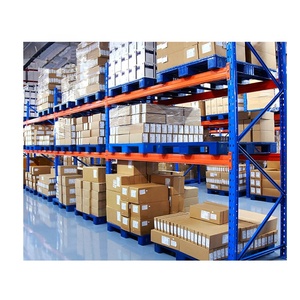
Garage Storage Factory Steel Warehouse Metal Van Rack System Heavy Duty Shelving Single Deep Industrial Pallet Rack Shelving
View Specifications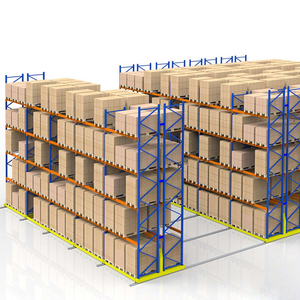
Custom Heavy Duty Selective Pallet Rack System One-Stop Warehouse Storage & Layout Design Solution in UAE
View Specifications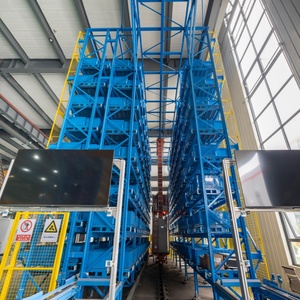
Fully Automated Warehouse Robot Unit Load Pallet Automation Miniload ASRS Storage Retrieval Picking System
View Specifications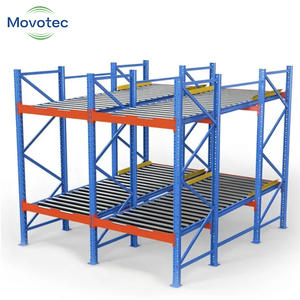
Warehouse Storage Racks Shelving Systems Pallet Rack Gravity Roller Flow Racking Movotec MTG100 1 Year Warranty
View Specifications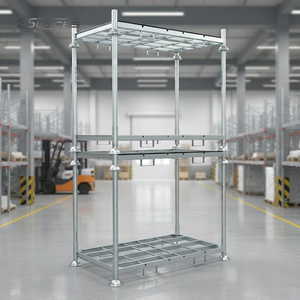
Customized Premium Material Heavy Duty Post Pallet Rack for Cold Warehouse
View Specifications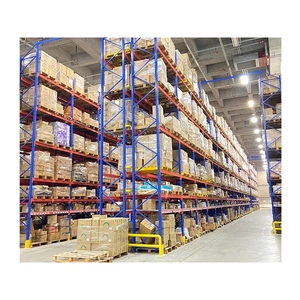
Warehouse Racking System Heavy Duty Industrial Steel Shelving Warehouse Pallet Racks for Sale
View Specifications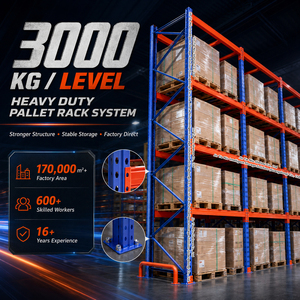
4 Storage Levels Durable Heavy Duty Pallet Rack for Factory and Warehouse Storage 3000KG
View Specifications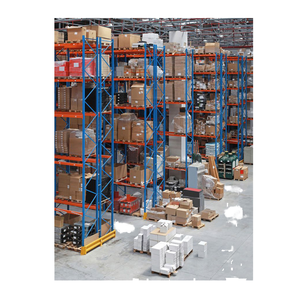
Factory Storage Heavy Duty Steel Detachable Pallet Racking Shelving for Industrial
View SpecificationsWhitepaper: Industrial Racking Mezzanine Engineering & Manufacturing Standards in China
In modern intra-logistics and supply chain management, land acquisition and facility expansion costs have surged globally. Warehouse operators, third-party logistics (3PL) providers, and industrial manufacturers are increasingly optimizing vertical space utilization through structural steel mezzanine platforms and rack-supported multi-tier systems. As the primary epicenter of global steel manufacturing and roll-forming engineering, China's leading warehouse racking mezzanine factories supply advanced, cost-effective structural systems engineered to stringent global standards.
Engineering Insight: Structural mezzanines effectively double or triple accessible operational floor space without increasing a facility's physical footprint. By converting vertical clear height into usable floor space, businesses achieve up to 200% ROI in cubic storage efficiency compared to standard traditional single-level expansion.
1. Structural Typology: Rack-Supported vs. Structural Steel Mezzanines
Selecting the optimal vertical storage platform depends heavily on operational load dynamics, column grid clear spans, pallet access frequency, and handling equipment integration:
- Rack-Supported Mezzanines: Built utilizing standard heavy-duty selective rack or upright frames as the primary load-bearing infrastructure. High-density storage beneath the floor is paired with open work zones, order picking lanes, or light assembly spaces above. Ideal for SKU-intensive distribution centers requiring simultaneous order fulfillment and bulk storage.
- Heavy-Duty Structural Steel Mezzanines (Column-and-Beam): Fabricated using hot-rolled wide flange I-beams (H-beams) and cold-formed C/Z purlins supported by robust structural steel columns. These systems offer vast clear-span openings below (up to 9+ meters between columns), enabling unrestricted movement for forklifts, Autonomous Mobile Robots (AMRs), and conveyor networks.
- Multi-Tier Mezzanine Storage Systems: Incorporating 2, 3, or even 4 vertical levels connected by integrated stairwells, cargo lifts, chutes, and safety gates. Typically specified for e-commerce sorting centers, pharmaceutical distribution hubs, and automotive spare parts facilities.
2. Steel Metallurgy & Cold-Forming Precision
Top-tier Chinese manufacturers prioritize high-tensile carbon steel grades such as Q235B (equivalent to ASTM A36) and Q355B / Q345B (equivalent to ASTM A572 Grade 50). Using advanced continuous multi-pass cold roll-forming mills, profiles are manufactured with tight dimensional tolerances.
Critical structural components undergo finite element analysis (FEA) to calculate moment connections, torsional buckling resistance, and deflection ratios (typically restricted to L/240 for general platforms and L/360 for high-precision robot picking decks).
Core Engineering Modules & Component Innovations
Discover the structural integrity and design innovations that differentiate premium Chinese racking mezzanine systems.
High-Load Decking Profiles
Options range from heavy-gauge galvanized steel decking panels, bar grating for ventilation and sprinkler water penetration, to durable anti-slip checkered steel plates and dense wood composite floorings tailored to wheel-load dynamics.
Seismic Engineering & Anchoring
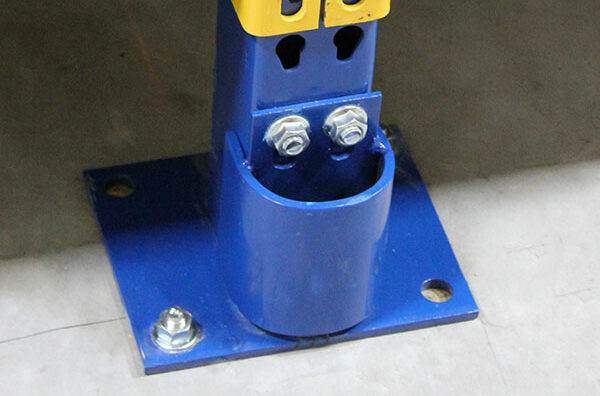
Designed in compliance with RMI / ANSI MH16.1 practices and Eurocode 8 seismic parameters. Systems utilize oversized baseplates, heavy-duty chemical expansion anchors, and diagonal bracing towers for optimal earthquake resilience.
Automated Finishing Lines
State-of-the-art electrostatic powder coating pre-treatment lines (including multi-stage phosphatizing and degreasing) ensure salt-spray resistance, scratch-proof epoxy durability, and long-term anti-corrosion protection for humid environments.
Mezzanine Platform Technical Performance Matrix
Review standard engineering benchmark metrics across primary warehouse mezzanine platform configurations manufactured in China:
| System Type | Uniform Live Load Capacity | Typical Column Grid Span | Decking Thickness / Material | Primary Application Areas |
|---|---|---|---|---|
| Rack-Supported Mezzanine | 300 – 800 kg / m² | 1.8m – 2.7m (Rack Beam Spans) | 1.5mm - 2.0mm Perforated Steel Deck | Order Picking, High SKU Small Goods Storage |
| Structural I-Beam Mezzanine | 500 – 2,000 kg / m² | 4.0m – 9.0m Clear Spans | 5.0mm Anti-Slip Steel Plate / Bar Grating | Heavy Machinery, AMR Sorting, Bulk Staging |
| Multi-Tier Shelving System | 200 – 500 kg / Level | 1.2m – 2.4m Shelving Bays | 25mm Structural Plywood / Steel Decking | E-commerce Fulfillment, Apparel, Auto Spare Parts |
| ASRS & Robot Deck Mezzanine | 800 – 1,500 kg / m² | 3.0m – 6.0m High-Rigidity Grid | Calibrated Flat Steel Plate with Rubber Underlay | Automated Shuttles, AGV/AMR Fleet Operations |
Next-Generation Procurement Trends for Global Industrial Buyers
The global warehouse rack procurement landscape has undergone a major shift. B2B buyers, supply chain executives, and EPC contractors are no longer sourcing racking strictly based on initial unit price. Instead, procurement strategies focus heavily on lifetime durability, structural adaptability, and logistics automation readiness.
1. Modular Modularization & Reconfigurability
Standardized bolt-together connections (rather than welded structural connections) dominate modern procurement specs. Facilities require systems that can be dismantled, expanded vertical-wise, or reconfigured as warehouse operational flows shift over a 5-to-10-year period.
2. Total Cost of Ownership (TCO) Focus
Global logistics hubs evaluate total landed cost including containerized freight optimization, ease of assembly on site, local building code certification compliance, and low maintenance overhead over a 20-year structural lifespan.
3. Eco-Friendly & Low-VOC Coating Specs
Leading international brands mandate strict environmental sustainability standards. Chinese factories certified under ISO 14001 implement zero-emission powder coating systems and recyclable raw material sourcing.
4. Turnkey Engineering & BIM Integration
Buyers increasingly require 3D Building Information Modeling (BIM) CAD files (Revit/STEP format) during pre-procurement to simulate collision checks with HVAC, fire sprinkler systems, and automated lighting grids.
Future Technology Development Trends in Racking & Mezzanines
The convergence of material science, robotics, and industrial IoT is transforming traditional structural racking into intelligent intralogistics assets. Leading Chinese factories are at the forefront of these technological advancements:
Integration with Autonomous Mobile Robots (AMRs)
Mezzanines are no longer designed solely for human foot traffic. Modern floors are built with ultra-flat robotic decks designed specifically for sorting AMRs and 3D pallet shuttles. Floor flatness, deflection tolerances, and anti-static surface coatings are engineered to prevent robot traction slip or navigation drift.
Smart IoT Structural Health Monitoring
Emerging high-density pallet rack installations feature integrated wireless strain gauges and accelerometer sensors. These IoT sensors continuously measure column deflection, impact shocks from forklifts, and structural load balance, alerting warehouse safety managers in real-time before structural failure can occur.
Why Partner with China's Premier Racking Mezzanine Factory
Combining decades of specialized OEM/ODM manufacturing heritage with state-of-the-art steel processing equipment, our factory delivers uncompromised engineering quality to global markets:
End-to-End Layout & Structural Engineering
Our in-house structural engineering team utilizes advanced finite element analysis (FEA) software to design custom column layouts, optimal beam profiles, and tailored load capacities suited for specific regional seismic codes and floor slab constraints.
Advanced Automated Manufacturing Lines
Equipped with high-precision continuous roll-forming mills, robotic laser cutting units, multi-axis welding robots, and fully automated electrostatic powder-coating tunnels, ensuring perfect batch-to-batch consistency and high production throughput.
Strict ISO & Global Quality Assurance
Every batch of raw Q235B/Q355B steel coil is mill-certified. Ultrasonic weld testing, zinc-plating thickness gauges, and destructive load testing guarantee that installed systems fulfill stringent international safety margins.
Global Logistics & Export Packaging Efficiency
Components are bundled with custom protective wrapping and steel strapping designed specifically for 40ft High Cube container shipping, minimizing ocean freight damage and maximizing container volumetric utilization.
Built-in Protection & Safety Upgrades
Industrial safety is paramount in high-throughput distribution environments. Our heavy-duty racking systems integrate custom straddle column protectors, heavy-steel end-of-aisle guardrails, frame safety couplers, and drop-in wire decking to mitigate forklift impact damage and secure overhead inventory.
Frequently Asked Questions (FAQ) for Global Buyers
Clear, authoritative answers to common engineering, logistical, and structural questions encountered during industrial mezzanine and rack procurement:
How do I determine whether a Rack-Supported or Structural Steel Mezzanine is best for my warehouse?
If your primary operational goal is high-density storage of small-to-medium SKUs combined with order picking on multiple levels, a Rack-Supported Mezzanine is more cost-effective because the storage racks serve double-duty as floor support columns. However, if you require open, unobstructed floor space below for machinery, conveyor lines, or forklift maneuvers, a Structural Steel Mezzanine (Column-and-Beam) provides long clear spans (up to 9+ meters) and higher point-load capacities.
What concrete floor slab specifications are required to support a heavy-duty steel mezzanine?
Most standard structural mezzanines require a reinforced concrete slab thickness of at least 150mm to 200mm with a minimum compressive strength of 25 to 30 MPa (approx. 3,000 to 4,000 PSI). For heavy multi-tier or structural I-beam systems with high point loads on column baseplates, our engineering team provides exact column load reactions so your local structural engineer can verify slab punching shear and foundation capacity.
Which international building codes and design standards do your racking systems comply with?
Our manufacturing and structural calculations comply with key international standards including the ANSI/RMI MH16.1 (Specification for the Design, Testing and Utilization of Industrial Steel Storage Racks), European FEM 10.2.02 standards, Australian AS4084-2012 code, and relevant CE certifications for structural steelwork (EN 1090).
What floor decking material options are available, and how do I choose?
We offer four main decking types: 1) Galvanized Perforated / Solid Steel Panels (durable, fire-resistant, excellent for heavy pallet loads); 2) Steel Bar Grating (allows light and sprinkler water penetration, ideal for strict fire codes); 3) Checkered Steel Plate (maximum anti-slip durability for heavy foot traffic or pallet jacks); 4) High-Density Plywood / B-Decking Composite (cost-effective, quiet, smooth rolling surface for carts and trolleys).
How are shipping, ocean freight, and container loading optimized for large project orders?
Uprights, beams, purlins, and decking are engineered to nest efficiently inside standard 40ft High Cube (40HC) ocean shipping containers. Components are steel-strapped onto heavy wooden or steel dunnage with corner edge protection to prevent transit damage. Our logistics team provides container load plans, maximizing weight and volumetric capacity to reduce per-unit freight costs.
Can custom racking and mezzanine dimensions be fabricated for non-standard warehouse layouts?
Yes. Over 80% of our production consists of customized OEM/ODM industrial projects. We custom-engineer column spacings, mezzanine floor heights, stairwell placements, safety gate configurations, and load ratings to fit your building's exact CAD drawings and operational requirements.
Ready to Optimize Your Warehouse Vertical Storage Space?
Work directly with China's leading structural racking engineers. Contact our technical team today for a complimentary CAD floor plan layout, structural load calculation, and factory-direct quotation.
Contact Us