Global Procurement Whitepaper: High-Density Push Back Racking Systems
An authoritative analysis of technical specifications, manufacturing standards, OEM/ODM capabilities, and strategic sourcing trends from leading Chinese rack manufacturers.
In modern industrial logistics, optimizing volumetric warehouse efficiency while maintaining rapid SKU selectivity represents a primary engineering objective. Push Back Rack Systems—engineered around telescoping inclined nested carts—deliver a high-density Last-In, First-Out (LIFO) storage architecture that maximizes storage capacity by up to 75% compared to traditional selective racking. By eliminating multiple operator aisles required in standard selective layouts, push back systems transform structural warehouse overhead into revenue-generating pallet storage.
China's industrial racking manufacturing sector leads global supply chains in high-strength cold-rolled steel processing, automated robotic welding, and automated powder coating technologies. Modern Chinese OEMs manufacture heavy-duty racking systems adhering strictly to international structural codes, including RMI (ANSI MH16.1), FEM 10.2.02, EN 15512, and AS4084-2012. This whitepaper details engineering parameters, procurement considerations, future automation trends, and technical metrics essential for global logistics directors, procurement heads, and warehouse structural planners.
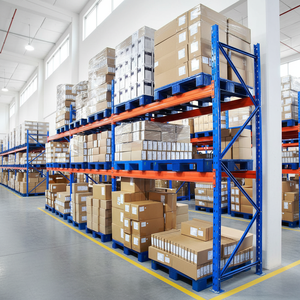
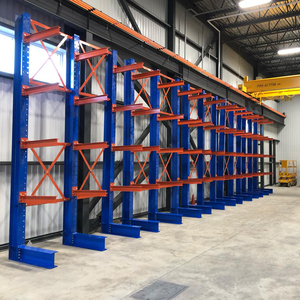
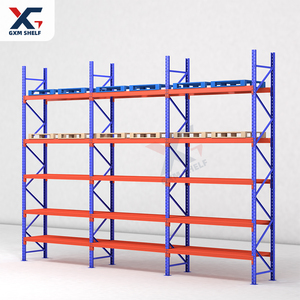
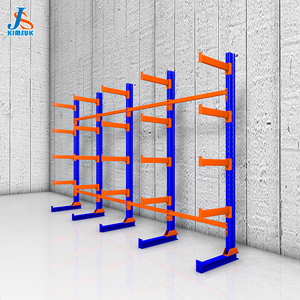
Featured Warehouse Storage & Racking Systems
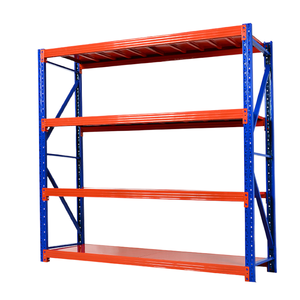
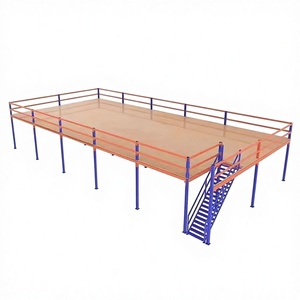
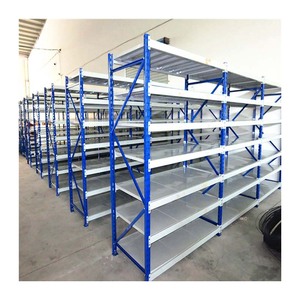
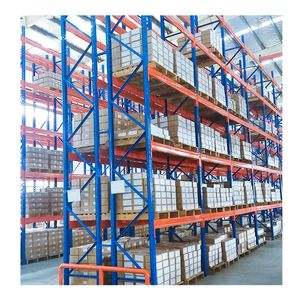
Explore China's top-tier manufactured industrial storage racking systems engineered for high-density logistics, cold storage, and heavy-duty manufacturing facilities.
Engineering Architecture & Mechanical Dynamics of Push Back Systems
Push back racking operates on an inclined rail structure supporting a series of nested, wheeled carts. When a forklift pushes the first pallet back into the lane, it exposes the underlying nested cart for the second pallet. This telescoping action repeats up to 6 pallets deep. When unloading, gravity moves the remaining pallets forward smoothly to the front pick face.
Precision Inclined Rails
Engineered with a precise 1.5% to 3% pitch grade. The structural steel guide tracks maintain uniform kinetic momentum, preventing acceleration spikes during gravity advancement while minimizing forklift push resistance.
Telescoping Cart Metallurgy
Carts are fabricated using heavy-gauge cold-rolled Q355B steel with low-profile wheel assemblies. Sealed precision bearings ensure maintenance-free operation across temperature ranges from -30°C in cold storage to +50°C dry ambient.
Fail-Safe Structural Safety
Integrated mechanical stops, anti-lift clips, and rear impact bumpers guarantee that inner carts remain securely locked within the track system during rapid loading cycles or seismic disturbances.
FEA Testing & Seismic Resistance Engineering
Leading Chinese push back rack factories employ advanced 3D Finite Element Analysis (FEA) software to model structural frame behavior under vertical static loads, dynamic forklift impact, and lateral seismic accelerations. Standard upright profiles utilize continuous cold-formed teardrop or structural channel geometry with 50mm to 75mm adjustability increments. Frame capacities exceed 20,000 kg with dynamic safety factors of 1.65 to 1.95 based on ANSI MH16.1 specifications.
Get a QuoteGlobal Procurement & Sourcing Trends (2025–2030)
Strategic supply chain shifts influencing international industrial racking procurement from Chinese manufacturing centers.
As international supply chains balance cost efficiency with operational resilience, several macro trends are defining how enterprise buyers source heavy-duty push back racking systems from China:
1. Integration with Automated Guided Vehicles (AGVs)
Next-generation push back systems are evolving to interface directly with Autonomous Mobile Robots (AMRs) and AGV forklifts. Specialized funnel entry guides and optical sensor targets are now standard OEM add-ons for driverless pallet positioning.
2. High-Density Cold Chain Expansion
With global demand for frozen food and biopharmaceuticals surging, push back racking is replacing drive-in racking in refrigerated distribution centers. Its ability to store 2-6 pallets deep while offering immediate SKU access per lane drastically reduces energy loss in costly refrigerated space.
3. ESG & Zero-Volatile Powder Coatings
Chinese factories are aggressively transitioning to eco-friendly, zero-VOC thermoplastic powder coat formulations. Pre-treatment chemical washing now incorporates closed-loop water recycling, meeting stringent global environmental compliance frameworks.
Manufacturing Technology & Quality Assurance Innovations
The technological gap between traditional fabrication shops and advanced Chinese smart factories has widened significantly. Top-tier manufacturers utilize state-of-the-art production machinery to maintain ultra-tight tolerances required for smooth nesting cart operations.
| Manufacturing Process | Traditional Fabrication | Advanced China Factory Standard | Impact on Push Back Performance |
|---|---|---|---|
| Steel Roll Forming | Manual hydraulic bending / standard forming | Continuous 26-pass CNC cold roll forming mills | Eliminates internal stress; ensures exact straightness over 12-meter upright spans. |
| Welding Integrity | Manual MIG welding operators | Multi-axis Panasonic / ABB robotic welding cells | 100% full-penetration seam welds without slag or porosity; prevents structural frame fatigue. |
| Surface Preparation | Basic solvent wiping or manual sanding | Automatic shot-blasting & 9-stage phosphate wash | Provides superior surface anchor profile for long-term corrosion resistance in humid conditions. |
| Coating Thickness | 30–50 microns liquid spray paint | 70–110 microns electrostatic powder coating | Resists chipping, scratching, and severe abrasion from repeated cart movement. |
| Tolerance Testing | Manual tape measure verification | Laser coordinate measurement & 3D scanning | Guarantees nested carts align within ±0.5mm, eliminating binding or track derailment risks. |
Why Source Push Back Racks from China Manufacturers?
Choosing a premier Chinese rack manufacturer provides international buyers with unmatched strategic and financial advantages:
Direct-from-Factory Cost Efficiency
By eliminating middle-layer regional distributors, procurement directors reduce capital expenditures by 30% to 45% while maintaining custom structural specifications engineered specifically for their facility footprint.
End-to-End Customization (OEM/ODM)
Whether accommodating non-standard wood, plastic, or metal slave pallets, Chinese engineering teams develop custom nested cart frame dimensions, specialized roller bearings, and integrated entry guides tailored to your exact payload weight.
Turnkey Technical Export Services
Leading factories provide comprehensive engineering support, including stamped CAD layout drawings, structural calculation books, 3D installation BIM models, and dedicated multilingual project managers.
Technical Specifications Matrix: Push Back Racking Systems
Use this reference table to evaluate structural dimensions and capacity thresholds during your procurement engineering reviews.
| Parameter / Feature | 2-Deep Push Back | 3 to 4-Deep Push Back | 5 to 6-Deep Push Back |
|---|---|---|---|
| Standard Payload Capacity | 500 kg – 1,500 kg / pallet | 500 kg – 1,500 kg / pallet | 500 kg – 1,200 kg / pallet |
| Cart Configuration | 1 Nested Cart per lane | 2–3 Nested Carts per lane | 4–5 Nested Carts per lane |
| Required Incline Grade | 1.5% Slope | 2.0% Slope | 2.5% – 3.0% Slope |
| Forklift Requirement | Standard Counterbalance / Reach | Standard Heavy Reach Truck | High-Capacity Reach Truck |
| Vertical Level Adjustability | 50mm / 75mm Pitch | 50mm / 75mm Pitch | 50mm / 75mm Pitch |
| Operational Temperature | -30°C to +50°C | -30°C to +50°C | -30°C to +50°C |
Frequently Asked Questions (Procurement & Engineering FAQ)
Detailed technical answers to common queries raised by international buyers and warehouse logistics engineers.
Accelerate Your Warehouse Capacity Today
Connect directly with senior structural racking engineers to receive a complimentary CAD warehouse layout design, structural FEA calculation review, and direct-factory price quote.
Get a Quote