Flagship Industrial Heavy-Duty Racking Systems
Engineered for maximum cubic space utilization, cold-chain longevity, and seismic resilience. Certified to international structural safety benchmarks including RMI, FEM 10.2.02, and ANSI MH16.1.
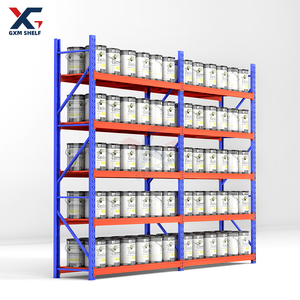
Factory Heavy Duty Metal Shelving Industrial Warehouse Storage Rack Shelf Steel Racking System for Stacking Racks & Shelves
View Technical Specs →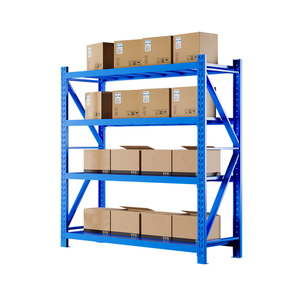
Industrial Warehouse Storage 5-Layer Pallet Racking System with Tire Rack Slotted Angle Rack Stacking Racks & Shelves
View Technical Specs →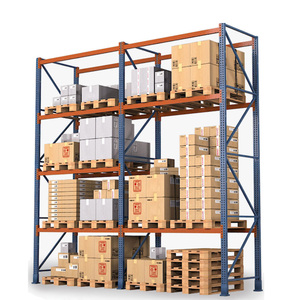
Heavy-Duty Selective Pallet Racking System for Warehouse Storage, Custom Size, Factory Direct
View Technical Specs →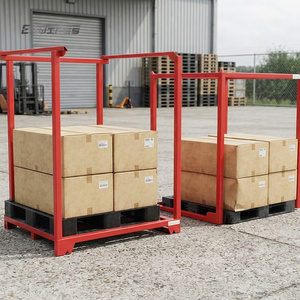
Powder Coating Nestable Warehouse Heavy Duty Detachable Steel Welded Pallet Stacker Rack
View Technical Specs →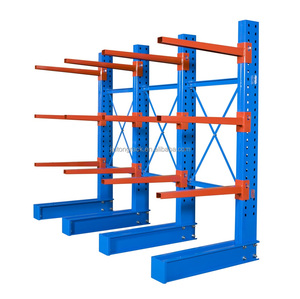
China Factory Economical Cantilever Racks Modular Steel Span Storage System for Wood Storage
View Technical Specs →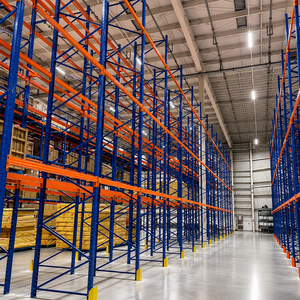
Warehouse Storage Rack 3000kg Selective Racking Adjustable Beam for Steel Pallets Manufacturing Plant 24h CAD Service
View Technical Specs →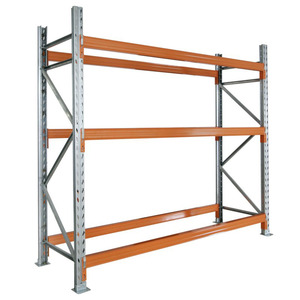
NOVA Full Automatic Warehouse Q235 Steel Boltless Store Heavy Duty Stacking Rack Industrial Storage Pallet Racking System
View Technical Specs →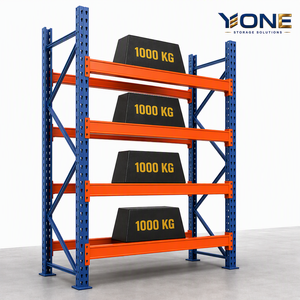
Durable Steel Storage Rack Heavy Duty Pallet Racking for Industrial Warehouse Storage with Safety Accessories
View Technical Specs →1. Industry Sourcing Overview: China's Racking Manufacturing Ecosystem
Global supply chain optimization depends on structural reliability, high density, and cost efficiency. China has solidified its position as the premier international hub for structural steel fabrication and warehouse storage solutions. Selecting the top China industrial racking manufacturers and exporters requires analyzing material engineering, roll-forming precision, structural safety factors, surface treatment, and international compliance standards.
Leading Chinese racking manufacturers leverage domestic steel production, sourcing certified cold-rolled structural steel (such as Q235B and Q355B grades). With automated continuous roll-forming lines, robotic laser cutting, and multi-stage electrostatic powder coating systems, modern Chinese exporters deliver structural integrity rivaling European and North American fabricators at optimized total cost of ownership (TCO).
Information Gain Metric: High-grade Q355B structural steel provides up to 35% higher yield strength than standard steel profiles, allowing thinner wall profiles to carry equivalent loads. This reduces total shipping weight and freight costs for international importers.
When procuring racking systems from China, enterprise buyers evaluate specialized layout configurations: selective pallet racking, high-density push-back and drive-in systems, gravity pallet flow systems, heavy-duty cantilever racks for long materials, and fully integrated automated storage and retrieval systems (AS/RS). Leading Chinese manufacturers operate dedicated CAD/3D BIM engineering teams that issue structural stress analysis calculations adhering to local codes—including North America's RMI (ANSI MH16.1), Europe's FEM 10.2.02, and Australia's AS4084-2012 standards.
2. Comprehensive Engineering & System Selection Matrix
Selecting the optimal pallet racking layout involves balancing volumetric storage density against immediate SKU selectivity. The table below details key performance indicators across industrial storage architectures engineered by premier Chinese exporters:
| Storage Architecture | Volumetric Cube Efficiency | SKU Direct Selectivity | Stock Rotation Rule | Typical Load Range (per bay) | Primary Application Focus |
|---|---|---|---|---|---|
| Selective Pallet Racking | 40% – 50% | 100% Direct Access | FIFO / LIFO Flexible | 1,000 kg – 4,500 kg | General distribution, high SKU mix, 3PL hubs |
| Drive-In / Drive-Thru | 65% – 85% | 15% – 20% Low Selectivity | LIFO (Drive-In) / FIFO (Thru) | 1,000 kg – 2,000 kg | Cold storage, homogeneous agro-exports, bulk goods |
| Push Back Rack Systems | 60% – 75% | 30% – 50% Medium Selectivity | LIFO (Last-In, First-Out) | 1,000 kg – 1,500 kg/cart | Medium SKU count, food & beverage, staging lanes |
| Gravity Pallet Flow | 70% – 85% | Dedicated Pick Faces | Strict FIFO (First-In, First-Out) | 500 kg – 1,500 kg/pallet | Perishables, pharmaceuticals, fast-moving consumer goods |
| Heavy Cantilever Systems | 50% – 65% | 100% Linear Access | Open Linear Access | 500 kg – 5,000 kg/arm | Lumber, steel pipes, rebar bundles, sheet metal |
| Automated AS/RS Structures | 85% – 95% | 100% Automated Access | WMS Software Driven | 500 kg – 3,000 kg | High-throughput mega DCs, dark warehousing, high-bay storage |
3. Next-Generation Industry Development & Sourcing Trends (2025–2030)
The industrial storage industry is undergoing a technological transition driven by automated warehousing, land cost inflation, and international environmental mandates. Enterprise buyers sourcing from China should align procurement strategies with these core industry vectors:
AS/RS Structural Integration
Racking is evolving from passive static shelving into structural load-bearing frameworks for automated guided vehicles (AGVs), autonomous mobile robots (AMRs), and stacker cranes. Manufacturing tolerances for column straightness have tightened to ±1mm per 10 meters height.
Advanced Seismic Engineering
With warehousing expansion into seismically active coastal regions across South America, Southeast Asia, and Central America, Chinese exporters utilize non-linear finite element analysis (FEA) to design dynamic base plates, heavy-duty floor anchors, and reinforced upright frame bracing.
Eco-Friendly Powder Coatings
Environmental regulations have driven top tier Chinese racking plants to adopt zero-VOC, heavy-metal-free thermosetting epoxy-polyester powder coats. Fully automated multi-stage pre-treatment ensures salt-spray resistance exceeding 500 hours for humid, tropical, and cold-chain facilities.
4. Manufacturing Excellence & E-E-A-T Quality Assurance Profile
Evaluating a Chinese manufacturer requires auditing their quality assurance framework. Enterprise buyers must verify structural raw material mill certificates, automated fabrication machinery, and batch testing protocols.
Leading Chinese exporters maintain comprehensive testing facilities equipped with tensile test machines, salt-spray chambers, and full-scale beam loading frames. Every upright section punching profile—whether teardrop, 50mm pitch, or 75mm euro-pitch—undergoes computerized roll-forming validation to eliminate residual stress concentration.
Furthermore, structural safety is reinforced through integrated accessory engineering. Standard production lines incorporate heavy-duty column protectors, frame straddle guards, row spacers, pallet support bars, and drop-in safety pins to mitigate fork-truck impact risks in high-traffic logistics environments.
5. Post-Purchase Reliability: Maintenance, Repair & Safety Accessories
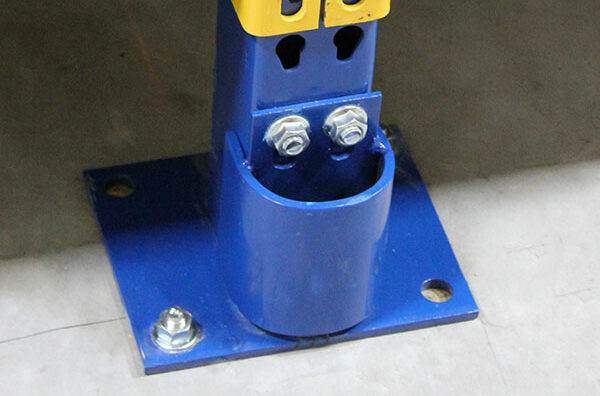
Long-term operational safety relies on engineered maintenance systems. Rather than performing costly full-bay teardowns following a minor forklift impact, modern racking systems utilize modular, bolt-on upright repair kits.
Engineered rack repair systems allow damaged lower column sections to be replaced while maintaining structural integrity, often eliminating the need to unload adjacent pallets completely. Utilizing high-strength structural tubing and heavy-duty base plate anchors, these components restore full load capacity while reducing facility maintenance downtime by up to 75%.
6. Procurement Best Practices: Global Logistics & Installation Coordination
Exporting structural steel racking systems globally requires precise shipping container utilization and freight packaging engineering. Leading Chinese exporters utilize nested loading methods, heavy-duty steel banding, and protective corner wrapping to maximize container cube density while preventing surface abrasion during maritime transit.
From a project execution perspective, top-tier suppliers provide detailed 2D layout drawings, 3D installation models, step-by-step assembly guides, and clear weight-capacity signage for every bay elevation. This technical documentation streamlines local field installation and simplifies code compliance inspections with local municipal building authorities.
7. Enterprise Sourcing & Procurement FAQ
What steel grades are typically used by top Chinese racking manufacturers?
Leading Chinese racking fabricators primarily use certified Q235B and Q355B cold-rolled structural steel. Q355B offers higher yield strength (approx. 355 MPa), making it ideal for tall upright frames, high-load beams, and seismic applications. Q235B (approx. 235 MPa yield strength) is widely used for standard load beams, decking, shelf panels, and light accessories.
How do Chinese racking systems comply with international safety standards like RMI or FEM?
Premier Chinese exporters employ structural engineers proficient in international design codes. Designs are validated using finite element analysis (FEA) soft-modelling and empirical full-scale destructive testing according to RMI (ANSI MH16.1 in North America), FEM 10.2.02 (Europe), and AS4084-2012 (Australia/New Zealand). Mill test certificates and independent third-party inspection reports (e.g., SGS, TÜV) are provided upon request.
What is the standard lead time for custom warehouse racking projects exported from China?
Typical factory production lead time ranges from 15 to 30 days depending on total tonnage, coating requirements, and component complexity. CAD design approval and structural calculation review usually take 3 to 7 business days prior to raw material cutting and roll-forming.
How does surface finish quality protect racking in humid or cold-storage environments?
Components undergo an automated multi-stage pre-treatment process (degreasing, phosphating/silane wash, pure water rinse) prior to electrostatic powder coating with thermosetting epoxy-polyester paint (60–80 microns thick). For outdoor, coastal, or harsh chemical environments, hot-dip galvanizing (HDG) or stainless steel structural options are available to prevent rust.
What key building measurements must be provided to receive an engineered layout quote?
You should supply: (1) Warehouse floor plan showing column locations, dock doors, and obstruction heights; (2) Building clear height under roof trusses/sprinklers; (3) Concrete slab thickness and compressive strength (PSI/MPa); (4) Pallet dimensions (W x D x H) including load overhanging; (5) Maximum pallet weight; and (6) Forklift specs (operating aisle width, max lift height, and mast collapsed height).
Can Chinese racking factories support OEM/ODM custom dimensions and teardrop punching profiles?
Yes. Chinese racking manufacturers produce teardrop patterns (interchangeable with standard North American systems), 50mm pitch, 75mm pitch, and 76.2mm pitch profiles. Custom beam lengths, column profiles, baseplates, and specialized colors can be fully customized for OEM distribution partners.
Optimize Your Warehouse Capacity & Structural Safety
Connect with senior logistics engineering team to request custom 2D/3D layout drawings, structural load stress reports, and direct factory container pricing.
Contact Us