Flagship Warehouse Racking Systems
Explore our heavy-duty, certified industrial racking options engineered for global supply chains, cold storage facilities, and high-density logistics hubs.
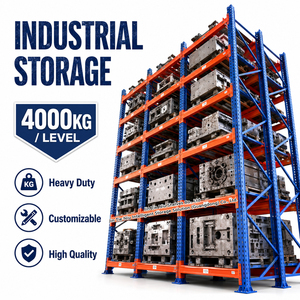
4000KG Heavy Duty Warehouse Rack Pallet Storage System Adjustable Beam Racking
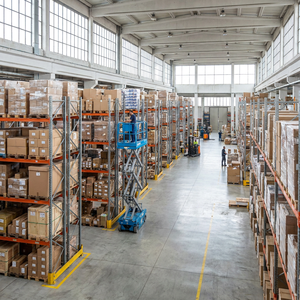
Professional Heavy Duty Pallet Rack Supplier Warehouse Storage System Manufacturer
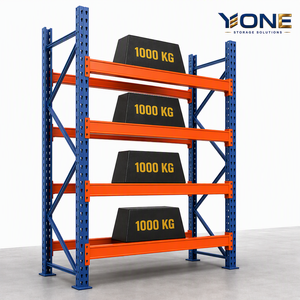
Durable Steel Storage Rack Heavy Duty Pallet Racking for Industrial Warehouse Storage with Safety Accessories
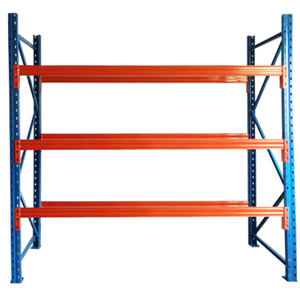
Mracking Industrial Warehouse Pallet Racking Shelving System
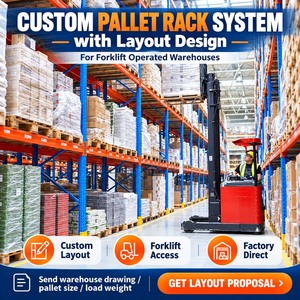
Custom Pallet Rack System with Layout Design for Forklift Operated Warehouses
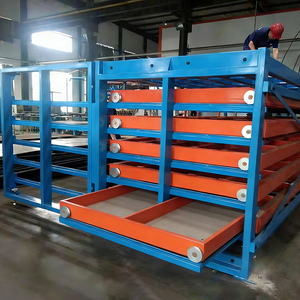
Stacking Racks Shelves Heavy Duty Steel Sheet Metal Drawer Type Storage System with Pallet Racking
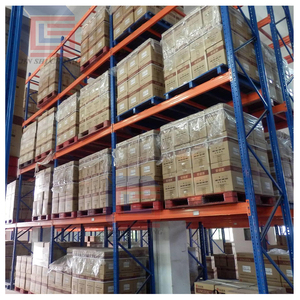
Industrial Heavy Duty Steel Pallet Rack Warehouse Shelving System for Storage, Distribution Center and Factory Use
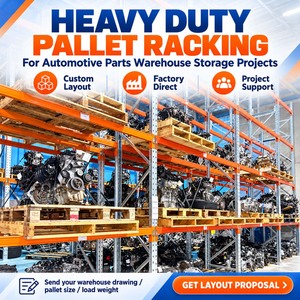
Heavy Duty Warehouse Pallet Racking for Automotive Parts Warehouse Storage Projects
Engineering Excellence in Global Warehouse Racking Export
In modern intra-logistics, industrial warehouse racking systems serve as the structural backbone for global supply chains. As enterprise procurement directors evaluate top-tier racking system exporters and wholesalers, the focus extends far beyond static storage capacity. Total Cost of Ownership (TCO), dynamic load distribution, structural integrity under seismic stress, and seamless integration with Automated Storage and Retrieval Systems (AS/RS) now dominate procurement requirements.
High-density industrial storage requires uncompromising engineering standards. Selecting high-grade structural steel—such as Q235B and high-yield Q355B structural steel profiles—ensures upright frames withstand immense static vertical compression and kinetic forklift impacts. Certified manufacturing processes adhere strictly to RMI (Rack Manufacturers Institute) ANSI MH16.1 design specifications, FEM 10.2.02 European standards, and ISO 9001 quality management protocols.
When engineering heavy-duty selective pallet rack systems, drive-in systems, or push-back configurations, finite element analysis (FEA) is utilized to simulate load stress, elastic deformation, and sway resistance. This level of rigor guarantees structural integrity across diverse regional environments—from high-seismic zones requiring specialized anchor embedment to high-humidity coastal distribution hubs requiring thermo-setting powder coat finishes.
Enterprise Strengths & Global Wholesale Advantages
With nearly seven decades of industrial heritage, our manufacturing facilities combine automated roll-forming line technology, robotic welding, and continuous electrostatic powder coating.
Seismic Engineering & CSCR Compliance
Every racking system is engineered with lateral seismic force resistance in mind. We calculate base plate thickness, anchor bolt embedment depth, and upright bracing angles to comply with strict structural seismic codes worldwide.
Automated Powder Coating Finish
Multi-million-dollar automated powder coating lines apply a uniform 80-120 micron epoxy-polyester barrier. This provides high resistance to mechanical abrasion, humidity, and corrosive chemical environments in cold storage or coastal logistics facilities.
Engineered Column Protection & Repair
Forklift impact is the leading cause of upright failure. Our solutions include heavy-duty structural steel column guards, wrap-around base protectors, and modular bolt-on repair kits that allow damaged upright remediation without unloading entire bays.
Custom B2B CAD Layout & FEA Modeling
Our dedicated engineering department provides detailed CAD layout drawings, clearance analysis, and 3D FEA strain modeling before fabrication, ensuring operational efficiency and total code compliance.
Export Packaging & Ocean Logistics
Components are bundle-packed using custom steel strapping, protective edge corner boards, and anti-humidity plastic wrapping, optimized for dense loading in 40ft High Cube containers to lower international freight costs.
Comprehensive Load Capacity Signage
To adhere to OSHA and international safety guidelines, every delivered racking system includes certified maximum load plate signage detailing shelf capacity, beam height limitations, and structural safety margins.
Direct Manufacturer Wholesaler Value
By eliminating middleman distributor markups, our B2B wholesale exporting model gives logistics developers, general contractors, and facility managers access to commercial-grade racking at highly competitive factory-direct pricing. All custom orders are supported by localized technical engineering assistance.
Selecting the Right Industrial Racking Architecture
Evaluating warehouse storage systems requires matching SKU diversity, turnover speed, pallet dimensions, and handling equipment capabilities against capital expenditure constraints.
| Racking Architecture | Storage Density | Pallet Selectivity | Stock Management | Ideal Application |
|---|---|---|---|---|
| Selective Pallet Rack | Standard (1x Depth) | 100% Immediate Access | FIFO / LIFO Flexible | General Distribution, FMCG, Wide SKU Mix |
| Push-Back Racking | High (2x to 6x Depth) | Selective per Lane | LIFO (Last-In, First-Out) | Cold Storage, Food & Beverage Batching |
| Pallet Gravity Flow | Very High (2x to 20x Depth) | Dedicated Lane Access | Strict FIFO (First-In, First-Out) | Perishables, Pharmaceuticals, High-Throughput |
| Drive-In / Drive-Thru | Maximum Cube Utilization | Limited (Lane-Based) | LIFO (Drive-In) / FIFO (Drive-Thru) | Homogeneous Bulk SKUs, Raw Materials |
| Cantilever Racking | Specialized Linear | 100% Unobstructed | Open Access | Lumber, Steel Pipes, Tubing, Sheet Metal |
| AS/RS High-Bay Structure | Ultra-High Vertical Cube | Automated Computer Control | Software Managed (WMS) | Fully Automated Smart Warehouses |
Whether your warehouse operational layout calls for teardrop roll-formed punch patterns for easy beam adjustability or heavy-duty structural channel steel held by grade-5 structural bolts, our engineering team ensures optimal beam deflection limits (less than L/180 under full static load).
Future Procurement Trends in Industrial Warehouse Racking
The global warehousing landscape is undergoing a structural paradigm shift driven by automated technology, nearshoring supply chains, and stringent environmental compliance goals. Procurement directors must anticipate these key trends when sourcing capital equipment over the next decade:
1. Acceleration of Hybrid AS/RS and Shuttle-Compatible Architectures
As labor costs rise and urban industrial land prices escalate, warehouse designs are expanding vertically. Traditional manual selective rack setups are increasingly yielding to high-density shuttle racking systems and automated crane-guided AS/RS superstructures. Modern racking procurement contracts now demand micro-tolerance fabrication standards (+/- 1.0mm tolerance over 10 meters height) to facilitate flawless robotic shuttle movement and optical sensor scanning.
2. Sustainable Cold Chain and Energy-Efficient Storage Density
Cold storage operating costs are dictated by volumetric energy usage. Maximizing thermal efficiency requires packing maximum pallet count into minimum cubic meters. Exporters are seeing a surge in demand for double-deep push-back systems, automated pallet runner channels, and dynamic mobile racking bases that reduce chilled footprint and decrease electrical refrigeration overhead by up to 40%.
3. TCO Procurement vs. Initial CapEx Sourcing
Leading global buyers are abandoning cheap, low-grade racking options in favor of systems evaluated on a Total Cost of Ownership (TCO) model. Factor in damage repair downtime, replacement parts availability, and modular adaptability, and high-quality heavy-duty steel racking consistently outperforms low-cost options over a 15-to-20-year service life.
4. Supply Chain Nearshoring and Standardized Modular Engineering
With multinational corporations decentralizing production and expanding regional distribution centers, standardized racking modularity has become critical. Global companies seek racking exporters capable of delivering identical, certified engineering components across multiple geographic regions, simplifying global spare parts management and inventory audits.
Technical & Material Advancement in Racking Manufacturing
Racking system manufacturing is no longer a simple structural steel fabrication process. It is a high-tech material science field governed by structural design software, cold-roll metallurgical optimizations, and advanced surface chemistry.
High-Yield Micro-Alloyed Steel Profiles
Developments in cold-rolled steel metallurgy allow the use of thinner gauge, higher-yield strength steels (e.g., yield strengths exceeding 355-420 MPa). This delivers increased load-bearing strength while reducing structural weight, significantly lowering international shipping costs.
IoT Structural Health Monitoring
Next-generation high-bay racking systems feature embedded Wireless Structural Health Monitoring (SHM) strain sensors and acceleration gauges. These IoT nodes record forklift impact spikes, detect unaligned overloading, and alert safety managers before structural fatigue can result in rack failure.
Eco-Friendly Surface Pretreatments
To meet strict global ESG directives, advanced manufacturing facilities have replaced old solvent-based degreasers with zirconium-based nanotech conversion coatings. This eco-friendly pretreatment enhances powder adhesion and provides 1,000+ hours of salt-spray corrosion resistance without toxic heavy-metal sludge.
Frequently Asked Questions (FAQ)
Technical and commercial answers to common questions from warehouse developers, buyers, and structural engineers.
1. What information is required to receive an accurate structural racking quote and CAD layout?
To engineer a code-compliant racking layout, our engineering team requires:
- Pallet physical dimensions (Width x Depth x Height including cargo overhang).
- Maximum and average weight per load (e.g., 1,000 kg / pallet).
- Clear building height to the lowest overhead obstruction (sprinklers, joists, lighting).
- Concrete floor slab specifications (thickness, compressive strength, rebar mesh layout).
- Forklift truck make/model, maximum lift height, and minimum aisle turning radius requirement.
- Environmental factors (operating temperature, cold storage, seismic geographic zone).
2. How do structural steel racks differ from roll-formed teardrop pallet racks?
Roll-formed racks are constructed from cold-rolled sheet steel formed into C-shapes with teardrop punch patterns, offering economical cost and rapid tool-free beam adjustment. Structural steel racks are manufactured from hot-rolled C-channel structural steel with heavy bolted beam connections. Structural rack systems provide superior durability against severe forklift impacts, making them ideal for high-traffic distribution centers, freezer warehouses, and heavy industrial applications.
3. How is seismic force resistance calculated and incorporated into the racking design?
Seismic rack design is calculated using dynamic response spectrum analysis according to ANSI MH16.1 / RMI standards and regional building seismic codes (such as CSCR or IBC). Seismic considerations dictate heavy-duty base plate surface area, enlarged anchor bolt diameters and embedment depths, reinforced horizontal/diagonal upright frame bracing, and custom beam connector locking pins.
4. What quality standards and certifications should a global racking exporter possess?
A reputable warehouse racking supplier must maintain compliance with ISO 9001 quality management systems, ISO 14001 environmental management standards, and manufacture in accordance with RMI (Rack Manufacturers Institute) specification ANSI MH16.1 or European FEM 10.2.02 standard. Steel raw materials should include mill test certificates verifying tensile and yield strengths.
5. Can damaged racking uprights be safely repaired, or must they be fully replaced?
Minor column impact damage can often be safely remediated using engineered bolt-on rack repair kits. These kits feature heavy-gauge structural steel outer sleeves that replace the damaged lower section of an upright. The installation is performed under engineering supervision without requiring the total teardown of adjacent structural bays, saving significant time and labor.
6. What protective packaging measures are taken for ocean freight container shipments?
To prevent shipping damage during transoceanic transit, all upright frames, beams, and support bars are bundled using steel strapping, wrapped in heavy-duty polyethylene stretch film, and fitted with reinforced cardboard corner guards. Loose hardware components (bolts, safety pins, anchor bolts) are packed in wooden crates or heavy plastic drums to ensure complete shipment integrity upon arrival.
Start Your Warehouse Optimization Project Today
Get direct access to factory-direct wholesale pricing, custom engineering design, and expert global export support. Speak directly with a qualified structural storage engineer.