Engineered Warehouse Racking Product Showcase
Directly manufactured heavy-duty pallet rack configurations designed for high-bay stability, severe loading requirements, and continuous material handling operations.
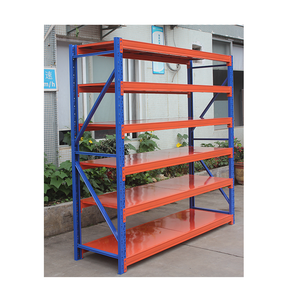
Certified Safe & Stable Heavy Duty Selective Bolted Pallet Rack
- High-grade Q235B structural steel
- Bolted assembly for rigidity
- 1000kg–4000kg beam capacity
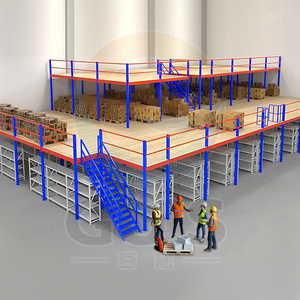
Customized Heavy-Duty Mezzanine Platform System with Elevator
- 2-3 Floors multi-level access
- 1000–3000kg/sqm floor rating
- Integrated freight elevator & stairs
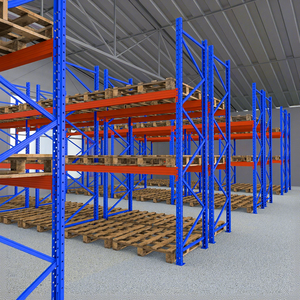
Heavy Duty Adjustable Beam Pallet Storage Racking
- 50mm pitch adjustable beam levels
- Corrosion-resistant finish
- Optimized for forklift access
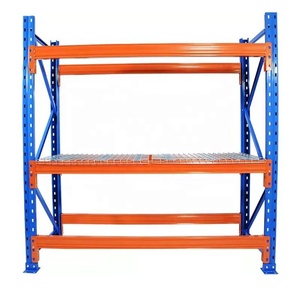
OEM Custom Selective Pallet Racking Storage System
- Up to 4000kg/layer load rating
- Seismic-engineered footplates
- Tailored beam lengths & depths
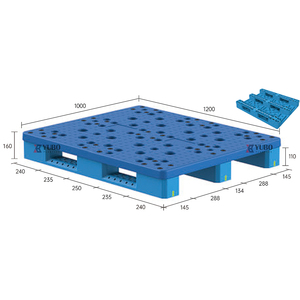
Heavy Duty Stackable 4-Way Entry HDPE Plastic Pallets
- Standard 1200*1000mm footprint
- High dynamic & rack load limits
- Cold room and hygienic certified
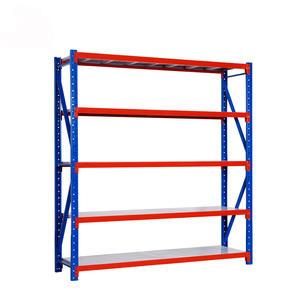
Industrial Medium Duty Storage Shelving (500kg/Tier)
- Ideal for hand-pick operations
- Modular boltless drop-in beams
- Durable steel shelf decking
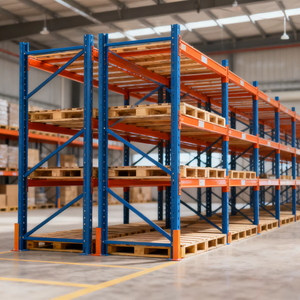
Powder-Coated Anti-Corrosion Heavy Duty Storage Rack
- CE Certified safety standards
- Automated powder-coat finish
- Long service life in humid sites
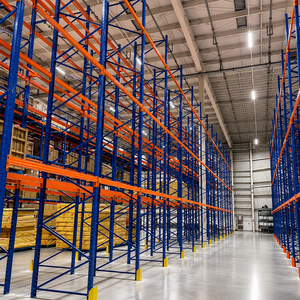
3000kg Heavy Selective Pallet Rack with 24h CAD Service
- Engineered for steel/wooden pallets
- Free 24h CAD warehouse layout
- High structural rigidity uprights
1. Global Executive Report: Selecting Top Pallet Rack Manufacturers
Modern global logistics networks demand structural storage systems capable of maintaining uncompromised safety margins under continuous dynamic loading, intense material throughput, and environmental stress. Choosing among the top 10 pallet rack systems suppliers and exporters requires an engineering-driven assessment that extends well beyond surface purchasing costs. Warehouse directors, logistics project managers, and structural engineers must evaluate high-density storage vendors on rigorous structural standards, steel chemistry, manufacturing consistency, and international seismic compliance.
Core Procurement Engineering Principle: A pallet racking installation functions as a load-bearing steel structure. System design must calculate dynamic shock loads, beam deflection ratios ($L/180$), vertical column buckling resistance, and local floor slab anchoring dynamics under regional seismic parameters.
Key Evaluation Framework for Global Procurement Directors
When shortlisting primary manufacturing and export partners for enterprise warehouse deployments, structural compliance and raw material certification form the baseline. Key evaluation indicators include:
- Steel Mechanical & Chemical Properties: Verified mill test certificates proving minimum yield strengths for cold-formed roll-formed sections ($Q235B$, $Q355B$, or Structural Grade 33/50) and hot-rolled structural steel channels.
- Compliance with International Structural Codes: Adherence to the Rack Manufacturers Institute (RMI) ANSI MH16.1 in North America, standard FEM 10.2.02 / EN 15512 in Europe, and regional codes such as the Código Sísmico de Costa Rica (CSCR) or AS 4084 in Australasia.
- Finish Durability & Corrosion Protection: Fully automated multi-stage pre-treatment wash lines followed by electrostatic epoxy-polyester powder coating, providing salt-spray protection for high-humidity logistics zones and cold chain facilities.
- Manufacturing Automation & Quality Assurance: Robotic continuous seam welding on beam connector brackets, laser-guided punching machines, and ISO 9001 certified production controls.
| Racking Architecture | Selectivity Ratio | Storage Density | Primary Ideal Applications | Typical Load Range |
|---|---|---|---|---|
| Selective Pallet Rack | 100% Direct Access | Standard (Baseline) | High SKU mix, fast fulfillment, general logistics | 1,000kg – 4,000kg / Level |
| Double-Deep Racking | 50% Immediate Access | +30% vs Selective | Identical multi-pallet SKUs, medium turnover | 1,500kg – 3,000kg / Level |
| Drive-In / Drive-Thru | Low Selectivity (LIFO/FIFO) | High (+60% Cube Use) | Cold storage, seasonal items, low SKU count | 1,000kg – 2,000kg / Pallet |
| Push Back Rack Systems | Lane Selectivity (LIFO) | High (+75% Cube Use) | Medium SKU counts, multi-pallet depth (2 to 6 deep) | 1,000kg – 1,500kg / Cart |
| Pallet Gravity Flow | Strict FIFO Flow | Ultra-High Density | Perishables, pharmaceuticals, high-velocity FMCG | 1,000kg – 1,500kg / Pallet |
| Mezzanine Platform Racking | Multi-Tier Access | Vertical Cube Multiplier | E-commerce order picking, spare parts, archive storage | 300kg – 1,000kg / Sqm |
Advancements in Modern Storage Racking Architecture
From finite element analysis (FEA) design modeling to automated surface treatment, structural rack manufacturing has evolved to support automated material handling and extreme operational stress.
Seismic-Aware Structural Design
Advanced racking structures utilize enlarged footplates, thick anchor embedments, and heavy-duty diagonal bracing channels designed to absorb dynamic shear forces during seismic events, preventing vertical buckling.
Automated Electro-Powder Finish
To resist industrial humidity, temperature shifts in cold chain facilities, and coastal salt air exposure, modern components undergo automated multi-stage pre-treatment and high-durability electrostatic powder coating.
AS/RS Ready Precision Tolerances
Automated Storage and Retrieval Systems (AS/RS) require millimetric beam straightness and strict structural deflection limits to ensure automated stacker cranes and shuttles operate without mechanical jamming.
2. Sourcing & Future Sourcing Trends in Industrial Pallet Storage (2025–2030)
Global supply chain volatility, nearshoring manufacturing shifts, and skyrocketing real estate costs per square meter have fundamentally reshaped corporate procurement strategies for industrial racking. Logistics managers are moving away from spot-buying standardized commodity shelves and are establishing multi-year strategic OEM/ODM partnerships with verified global exporters.
Key Industry Trends Driving Global Pallet Rack Procurement:
- Rapid Expansion of Automated Warehousing (AS/RS & Shuttles): Traditional manual forklift storage is increasingly integrated with radio shuttle systems, AGVs (Automated Guided Vehicles), and high-bay AS/RS crane structures. Pallet rack manufacturers must now engineer components with tighter structural manufacturing tolerances to interface flawlessly with robotics.
- Nearshoring Supply Chain Nodes: Global enterprises are constructing strategically positioned distribution hubs in high-growth industrial zones across Latin America, Southeast Asia, and Eastern Europe. This shift requires suppliers capable of delivering certified, heavy-duty racking exported directly to international port hubs with full engineering CAD and layout support.
- Cold Chain & Agro-Export Expansion: High-density pallet flow (FIFO) and push back (LIFO) systems are experiencing surge demand across refrigerated and frozen storage infrastructure. Maximizing cubic capacity within climate-controlled enclosures directly cuts electrical refrigeration costs per pallet slot.
- Lifecycle Safety & Modular Maintenance: To mitigate costly rack replacements following forklift impact, modern operations prioritize bolt-on heavy-duty column protectors, structural channel bottom posts, and field-repairable upright inserts that restore structural capacity without dismantling entire storage bays.
3. Direct Enterprise Strengths & Engineering Capabilities
Backed by decades of structural design heritage, automated manufacturing lines, and deep export experience, our manufacturing infrastructure delivers industrial storage solutions engineered for maximum durability, structural stability, and seamless global deployment.
70 Years Manufacturing Heritage
Decades of continuous refinement in steel roll-forming, structural beam welding, and load-path optimization for global logistics operators.
24-Hour Express CAD Service
In-house structural engineering teams deliver customized 2D/3D warehouse layouts, elevation drawings, and structural calculations within 24 hours.
End-to-End Export Support
Full containerization, anti-scratch protective packaging, ocean logistics management, and clear installation documentation for seamless worldwide setup.
Every upright frame and horizontal beam is fabricated using high-yield structural steel ($Q235B/Q355B$), tested rigorously for tensile strength, weld integrity, and frame compression under maximum rated capacity. Our systems seamlessly integrate with third-party material handling equipment, providing long-term reliability for distribution centers, manufacturing plants, free trade zone warehouses, and retail hubs.
Frequently Asked Questions (FAQ)
Technical guidance and expert answers to common engineering, purchasing, and safety questions regarding warehouse pallet racking installations.
To generate an accurate load-bearing CAD layout, engineers require: pallet dimensions ($Width \times Depth \times Height$), maximum gross weight per pallet, building clear height, floor slab thickness and concrete strength ($f'c$), forklift minimum aisle turning radius and reach height, total SKU count, and regional seismic acceleration coefficients.
In high-seismic regions, racking systems experience significant horizontal shear forces during earthquake ground motion. Structural design must incorporate enlarged base plates, heavy-duty diagonal frame bracing, and deeper expansion or chemical anchor bolt embedments into the concrete slab to prevent frame uplift and base shear failure.
According to ANSI MH16.1 and EN 15512 standards, the maximum permissible beam deflection under full design load is $L/180$, where $L$ represents the clear span length of the beam. For example, a 2700mm beam under maximum load must not deflect vertically by more than 15mm.
When forklift impacts deform an upright column beyond allowable tolerance, field-certified bolt-on rack repair kits can replace the damaged bottom column section without unloading the upper levels. However, if structural weld seams or upper diagonal bracing are compromised, a full upright frame replacement is recommended.
An automated electrostatically applied epoxy-polyester powder coat provides superior moisture and scratch resistance. For extreme environments, such as outdoor covered staging or sub-zero blast freezers with condensation risk, hot-dip galvanizing (HDG) or zinc-rich primer pre-treatments offer maximum long-term corrosion prevention.
Optimize Your Warehouse Cube with Certified Racking Engineers
Connect with our technical design team today for comprehensive CAD warehouse layouts, load capacity calculations, and custom enterprise quotation support.
Contact Us