Featured Industrial Storage & Heavy-Duty Pallet Racking Systems
Direct-from-factory engineered warehouse racking solutions engineered for high load-bearing safety, maximum volumetric efficiency, and full compliance with RMI / ANSI MH16.1 specifications.
Industry Whitepaper: Benchmarking Top Industrial Storage Shelving Manufacturers
The global industrial storage shelving and pallet racking market is undergoing a structural transformation. Rapid expansion in automated fulfillment networks, cold-chain agricultural logistics, medical manufacturing free trade zones, and heavy industrial production has driven unprecedented demand for high-capacity, space-optimized storage systems. Selecting the right industrial racking manufacturer requires going far beyond basic price-per-kilogram quotes. Modern procurement directors and industrial engineers must evaluate structural steel grades, yield strength parameters, seismic dissipation design, automated finish durability, and compliance with international standards such as ANSI MH16.1 (Specification for the Design, Testing and Utilization of Industrial Steel Storage Racks) and ISO certifications.
In this comprehensive whitepaper guide, we analyze the manufacturing methodologies, engineering capabilities, and architectural features that distinguish top-tier industrial storage shelving factories from commercial traders. By understanding structural yield limits, roll-formed versus structural channel steel dynamics, and surface treatment science, procurement teams can maximize cube utilization while ensuring operational safety and multi-decade structural integrity.
Technical Selection Matrix: Structural vs. Roll-Formed Industrial Storage Systems
Understanding the operational trade-offs between cold-rolled high-tensile steel racking and heavy-duty structural channel racking is critical for long-term return on investment (ROI) and seismic safety.
| Storage Criteria | Roll-Formed Steel Racking | Structural Channel Steel Racking | Hybrid / Modular Cantilever Systems |
|---|---|---|---|
| Steel Grade & Yield Strength | Q235B to Q355B High-Tensile Cold-Rolled Steel (Up to 355 MPa) | Hot-Rolled Structural C-Channels (ASTM A36 / Q235 structural) | Structural Column Profiles & Heavy Pin-Lock Arms |
| Impact Resistance | Moderate; requires column protectors in high-traffic forklift aisles | Extreme; resilient to repeated heavy forklift impact damage | High lateral and longitudinal structural impact rating |
| Adjustability & Versatility | High; teardrop or clip connection with 50mm / 75mm pitch pitch adjustments | Bolted connections; requires tools for shelf beam height adjustments | High; flexible arm spacing for irregular, pipe, and plate stock |
| Cold Storage Performance | Excellent with automated epoxy-polyester thermosetting powder coat | Outstanding in sub-zero freezer environments (-30°C) | Exceptional for outdoor, galvanized, or refrigerated pipe storage |
| Ideal Application Profile | E-commerce DCs, fast-moving retail distribution, high-density flow racks | Heavy manufacturing, freezer warehouses, abusive industrial plants | Lumber yards, steel service centers, extrusions, tubing, long plate stock |
Enterprise Manufacturing & Structural Advantages
How state-of-the-art production technology and structural engineering design protect your supply chain infrastructure.
Precision Cold-Forming & CNC Punching
Our continuous automated roll-forming lines operate within strict dimensional tolerances (±0.5mm). Integrated CNC punching ensures pin-point beam connector engagement, preventing torsional rotation under maximum capacity deflection limits ($L/240$).
Automated Multi-Stage Powder Coating
Components undergo a 5-stage pre-treatment wash including zinc-phosphate degreasing, followed by electrostatically applied epoxy-polyester powder coat cured at 200°C. This provides superior salt-spray corrosion resistance in humid tropical or coastal industrial environments.
Finite Element Analysis (FEA) & Seismic Design
Every structural system is calculated using advanced Finite Element Analysis software to simulate non-linear bucking, dynamic wind, and seismic shear forces. Uprights and baseplates are engineered to pass strict local structural engineering audits.
Product Architectural Analysis: Right-Sizing Your Storage Infrastructure
1. Heavy-Duty Selective Pallet Racking Systems
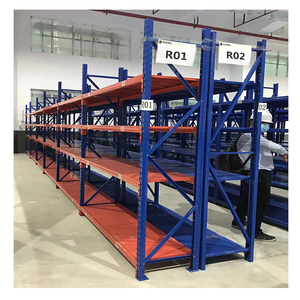
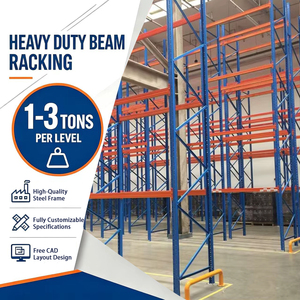
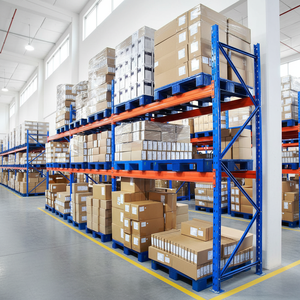
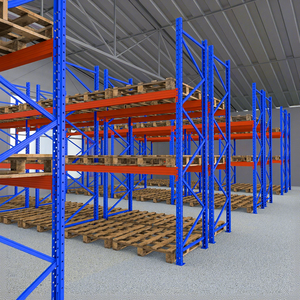
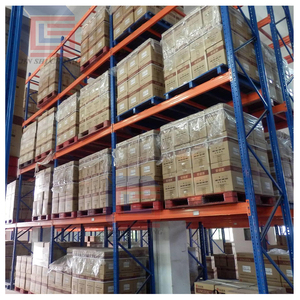
Selective pallet racking represents the foundational framework for over 80% of global warehouse distribution operations. Characterized by 100% direct pallet accessibility and immediate SKU selectivity, selective racking accommodates standard counterbalanced forklifts, reach trucks, and VNA (Very Narrow Aisle) turret trucks. Our engineered selective rack configurations utilize high-grade Q235B or Q355B cold-rolled steel column uprights featuring continuous ribbing profiles that optimize section modulus while minimizing overall dead weight.
2. Heavy-Duty Cantilever Racking for Pipe & Long Profile Storage
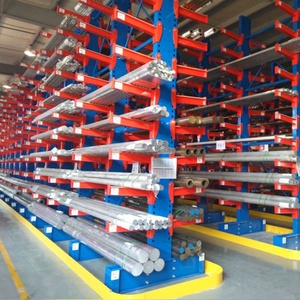
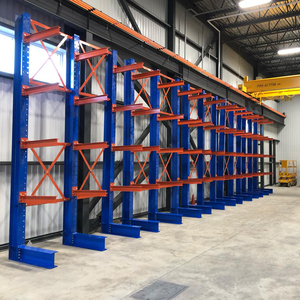
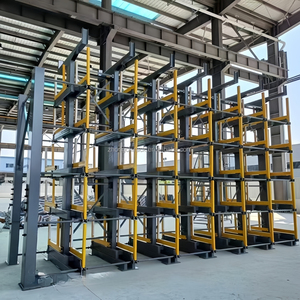
Storing long, bulky, or awkward linear goods such as steel pipes, PVC conduits, aluminum extrusions, timber packs, and heavy sheet plate presents unique engineering challenges. Traditional pallet rack uprights obstruct horizontal loading, creating severe safety risks and space inefficiency. Our heavy-duty cantilever systems utilize solid welded or bolt-on structural column bases connected to tapered cantilever arms. Each arm is held in place by high-tensile locking pins or heavy bolt assemblies, offering step-less vertical height adjustment. Furthermore, specialized mechanical telescopic hand-crank cantilever systems allow operators to manually extend storage trays outwards, enabling overhead crane access for rapid material loading.
3. High-Density Pallet Flow & Push-Back Racking
For operations experiencing high throughput with limited floor space, high-density storage methods provide compelling volumetric benefits. Pallet Flow Racks utilize inclined wheel beds with centrifugal speed controllers to automatically glide pallets forward on a First-In, First-Out (FIFO) basis—ideal for food, beverage, and pharmaceutical cold storage. Conversely, Push-Back Rack Systems feature nested floating carts riding on inclined structural steel rails. When loading, each incoming pallet pushes back the previously placed pallet. Upon retrieval, gravity automatically moves remaining pallets to the front aisle face operating on a Last-In, First-Out (LIFO) order profile.
Future Industrial Sourcing & Tech Trends (2025–2030)
Key technological advancements changing the landscape of warehouse storage procurement.
Integration with AS/RS & Automated Shuttles
Modern enterprise procurement is shifting away from static manual storage towards rack-supported Automated Storage and Retrieval Systems (AS/RS). High-bay racking structures serve as the building's primary load-bearing framework, engineered to sub-millimeter tolerances required by robotic crane guidance systems.
Green Steel Manufacturing & ESG Compliance
Environmental product declarations (EPD) and reduced carbon footprint steel manufacturing are now pivotal selection criteria for Fortune 500 procurement teams. Top factories utilize electric arc furnace (EAF) steelmaking coupled with zero-VOC powder coat lines.
In-Situ Bolt-On Modular Rack Repair
Instead of replacing entire damaged upright frames after minor forklift collisions, leading manufacturers supply engineered, bolt-on rack repair kits. These allow facility maintenance crews to permanently restore structural capacity in place without unloading the whole bay.
Industrial Storage Procurement & Engineering FAQ
Expert technical answers to high-intent questions raised by logistics directors and structural engineers.
- Pallet dimensions (Width x Depth x Load Height, including pallet wood structure)
- Maximum load weight per pallet (including uniform vs dynamic load considerations)
- Warehouse building clear height under joists or fire sprinkler heads
- Concrete floor slab specifications (thickness, compressive strength, expansion joint layout)
- Forklift truck specifications (aisle width requirements, lift height limit, turning radius)
- Environmental factors (operating temperature ranges, cold storage, outdoor exposure, coastal proximity)
Request an Engineered Industrial Racking Layout & Factory Quote
Connect directly with our structural engineering team to receive custom CAD layout designs, structural load calculations, and competitive direct-from-factory pricing for your warehouse expansion project.