Precision-Engineered Industrial Racking Systems
Heavy-duty OEM/ODM rack architectures engineered to ANSI MH16.1 and FEM 10.2.02 standards for maximum structural integrity and warehouse space optimization.
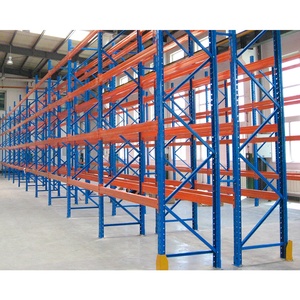
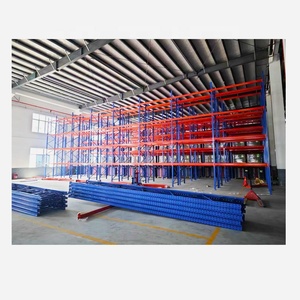
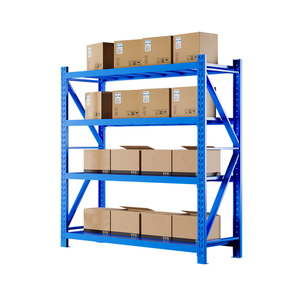
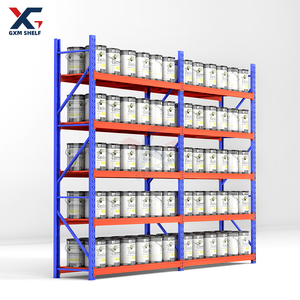
Why Enterprise Buyers Partner with Our OEM/ODM Racking Plant
Backed by nearly seven decades of structural engineering lineage, multi-million-dollar automated production lines, and comprehensive finite element analysis (FEA).
Custom OEM/ODM Cold-Roll Engineering
We operate 16 continuous cold-roll forming lines equipped with real-time laser wall-thickness monitoring. From custom upright pitch geometry (50mm, 75mm, 76.2mm) to proprietary beam connector claw profiles, our engineering team custom-fabricates solutions to match exact forklift reach constraints and pallet configurations.
Automated Electrostatic Powder Coating
Our multi-stage pre-treatment washing and automated powder coating process ensures an ultra-durable 80–120 micron epoxy finish. Tested under ASTM B117 salt spray chambers for 500+ hours, our racking systems provide unmatched corrosion resistance in high-humidity tropical microclimates and cold storage facilities.
Seismic FEA & Slab Anchoring Verification
High-bay storage structures in seismic zones require advanced load path analysis. We run ANSYS Structural Simulation to calculate lateral sway, overturning moments, and anchor bolt shear stresses. We coordinate directly with local registered structural engineers to verify slab thickness and concrete compressive strength requirements.
Future Procurement & Technological Trends in Industrial Racking
Understanding the transformation from static physical storage to dynamic, automated, and sustainable warehouse infrastructure.
1. The Rapid Transition Toward AS/RS & Rack-Supported Buildings
Industrial real estate costs in primary logistics corridors have increased exponentially over the last five years. As a result, supply chain directors are shifting procurement strategies from traditional selective rack configurations to Automated Storage and Retrieval Systems (AS/RS) and Rack-Supported Warehouses (Clad-Rack structures).
In OEM manufacturing, this requires ultra-tight tolerances during cold-roll profile extrusion—often demanding pitch tolerances under ±0.5mm across a 12-meter upright length. Future-proof procurement requires selecting suppliers capable of integrating crane guide rails, sensor positioning plates, and shuttle track channels directly into the structural columns.
2. Thermal-Efficiency Engineering in Cold-Chain Logistics
Cold storage facilities operate under intense operational expenditure pressures due to energy consumption. Modern procurement trends prioritize maximum volumetric cube utilization (85%+ density) using gravity-driven Pallet Flow Rack and multi-depth Push Back systems to minimize refrigerated building volume.
Metallurgically, cold-chain environments (-30°C) induce thermal brittleness in lower-grade steel. Modern OEM production utilizes normalized, low-temperature impact-tested steel structural members with high manganese ratios to prevent stress cracking under heavy dynamic loads.
3. Integration of IoT Load Sensors & Digital Twin Structural Monitoring
Smart racking is transitioning from experimental pilot projects to enterprise procurement mandates. Embedded strain gauges, optical impact detectors, and wireless inclination sensors integrated directly into critical upright baseplates provide real-time structural health monitoring.
This technology alerts logistics safety managers to forklift impact forces exceeding allowable deformation thresholds before structural fatigue causes catastrophic frame failure, effectively reducing Total Cost of Ownership (TCO) and fulfilling regulatory workplace safety standards.
Technical Matrix: Storage System Density vs. Operational Throughput
| Racking Architecture | Storage Density Ratio | Pallet Selectivity | Forklift & Equipment Requirement | Optimal Industry Application |
|---|---|---|---|---|
| Selective Pallet Rack | 40% - 50% (Standard) | 100% Direct Access | Standard Counterbalance / Reach Truck | High-SKU E-commerce, Retail, 3PL Warehousing |
| Push Back Rack System | 65% - 75% (High) | LIFO (Last-In, First-Out) | Standard Reach Trucks | Beverage Distribution, Fast-Moving Consumer Goods |
| Pallet Flow (Gravity) Rack | 75% - 85% (Ultra-High) | FIFO (First-In, First-Out) | Separate Loading & Picking Trucks | Cold Storage, Perishable Agro-Exports, Pharma |
| Drive-In / Drive-Thru Rack | 80% - 90% (Maximum) | LIFO / Strict Lane FIFO | Specialized Deep-Lane Forklifts | Bulk Seasonal Grain, Uniform Manufacturing Lots |
| Automated AS/RS Structure | 90%+ (Vertical Max) | Computer-Automated | Automated Stacker Cranes & Shuttles | Automotive, High-Tech Electronics Free Trade Zones |
End-to-End OEM/ODM Customization Workflow
How our engineering team transforms raw warehouse dimensions into fully certified, high-capacity structural racking.
Pallet & Building Analysis
We review pallet dimensions (1000x1200mm, 40x48 in), load heights, maximum unit weights, concrete slab PSI, and forklift turning radius constraints to eliminate aisle spatial inefficiencies.
3D CAD & FEA Structural Design
Our structural engineers draft full CAD layouts and simulate beam deflection limits (L/180 standard), column buckling safety factors, and seismic lateral acceleration response under local building codes.
Precision Continuous Fabrication
High-grade structural steel coil (Q235B/Q355B) undergoes automated multi-station punching, roll forming, robotic seam welding, and continuous electrostatic powder coating.
Frequently Asked Questions for Warehouse Racking Buyers
Addressing structural engineering, international compliance, customization capabilities, and installation logistics.
What technical parameters are required for a fully customized OEM rack quote?
To deliver an accurate, code-compliant OEM/ODM racking layout and quotation, our structural engineering team requires:
- Pallet Specifications: Width × Depth × Maximum Loaded Height, plus maximum weight per pallet (e.g., 1,000 kg/pallet).
- Facility Floorplan: Architectural CAD drawings or dimensions showing building column grids, clear ceiling height, overhead lighting/sprinkler clearances, and floor slab thickness/compressive strength (e.g., 200mm slab @ 30 MPa).
- Forklift Operating Parameters: Forklift model, maximum lift height, and minimum right-angle stacking aisle width requirements.
- Environmental Conditions: Seismic zone location, ambient working temperature (ambient vs. cold storage), and relative humidity.
How does your factory handle seismic design requirements for unstable zones?
We engineer rack frames in strict compliance with ANSI MH16.1 (Specification for the Design, Testing and Utilization of Industrial Steel Storage Racks) and local structural seismic codes such as the Código Sísmico de Costa Rica (CSCR) or IBC standards. For high-seismicity regions, we utilize oversized footplates with dual anchor points, heavy-duty bottom frame bracing, and custom heavy-gauge beam connector claws engineered to absorb lateral kinetic energy without unhooking during a seismic event.
What steel grades and surface finishes do you utilize for humid or tropical climates?
Our default manufacturing material is certified prime structural steel Q235B or high-yield Q355B (equivalent to ASTM A1011 Grade 50). To combat corrosion in humid tropical regions or coastal distribution centers near port logistics hubs, components pass through an automated 5-stage chemical cleaning/degreasing wash prior to receiving an electrostatic epoxy powder coating (thickness 80–120 microns). Hot-dip galvanizing options are also available for coastal outdoor applications or wash-down food processing environments.
Can damaged pallet rack columns be repaired in place without taking down the entire bay?
Yes. Forklift impact damage typically occurs within the lower 12 to 24 inches of the front upright column. We manufacture engineered, bolt-on heavy-duty column repair kits and heavy-gauge column protectors. Certified repair kits allow maintenance teams to support the upper frame, cut away the damaged lower section, and anchor a heavy-duty replacement leg in place—saving significant labor costs and operational downtime compared to full rack bay disassembly.
What is the standard manufacturing lead time for containerized global shipping?
Standard production lead times for custom OEM/ODM racking orders range from 15 to 25 business days following CAD drawing sign-off and deposit receipt. Our packing teams specialize in dense containerized loading (utilizing custom steel skids and protective wrapping) to maximize 40ft HQ container space utilization, minimizing ocean freight costs per pallet position.