Engineering-Grade Industrial Racking Solutions
Precision Cold-Rolled Structural Rack Systems Tailored for Global Fulfillment Centers & Logistics Hubs
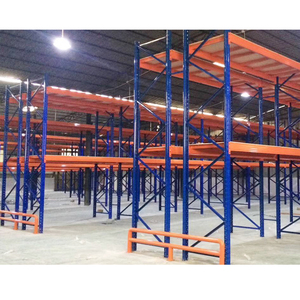
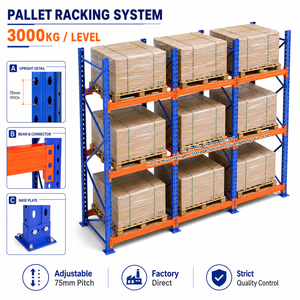
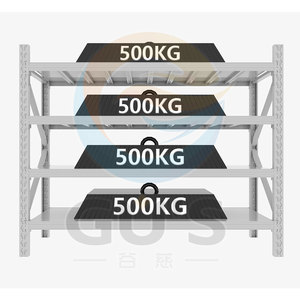
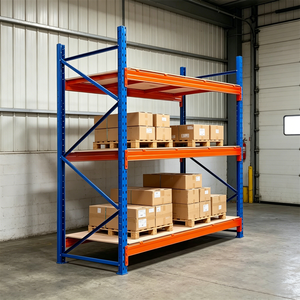
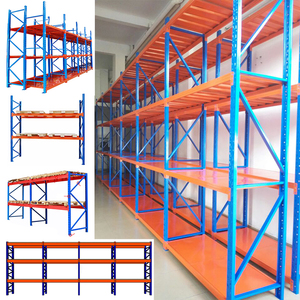
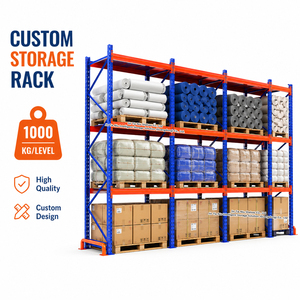
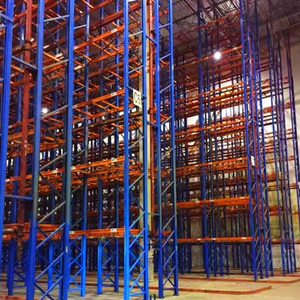
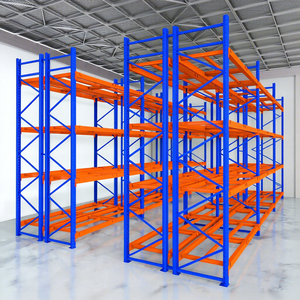
Industrial Storage White Paper: Engineering Standards for OEM/ODM Pallet Racking
In modern supply chain architecture, selecting an enterprise-grade OEM/ODM Warehouse Pallet Racks Manufacturer & Supplier requires rigorous evaluation of structural mechanics, metallurgy, and seismic resilience. As modern distribution centers shift toward higher clear-height facilities (exceeding 12 to 16 meters), racking systems are no longer static shelves—they are load-bearing structural frameworks subject to complex dynamic, dead, and operational forces.
Our manufacturing engineering protocols align with international structural codes, including the Rack Manufacturers Institute (ANSI MH16.1), FEM 10.2.02 European Code, and AS4084 Australian Standard. By leveraging prime cold-rolled steel coils (Q235B and Q355B grade) with minimum yield strengths up to 355 MPa, we ensure structural integrity under dynamic forklift loading, seismic sway, and continuous load cycle fatigue.
Technical Structural Component Engineering
Every heavy-duty pallet rack frame engineered within our facilities undergoes Finite Element Analysis (FEA) to simulate complex stress distributions, local buckling modes, and beam-to-column connector shear moments.
Upright Frame Geometry
Multi-ribbed, cold-formed open C-profiles with 50mm, 75mm, or 76.2mm (3-inch) pitch adjustment holes, optimized for maximum section modulus and torsional rigidity.
Interlocking Step Beams
Continuous twin-C welded step beams featuring automatic drop-in safety locks to prevent accidental forklift dislodgement under high-velocity palette loading.
Electrostatic Powder Finish
Automated 9-stage pre-treatment and degreasing line coupled with thermo-cured epoxy-polyester powder coating (60-90 µm thickness) offering 1000-hour salt spray resistance.
Enterprise OEM/ODM Manufacturing Capabilities
As a direct primary manufacturer, we provide complete ODM (Original Design Manufacturing) custom architectural designs and OEM contract fabrication. From custom beam profile extrusion to specialized seismic base plates, our engineering department works in direct synergy with global system integrators, third-party logistics (3PL) providers, and industrial real estate developers.
| Racking Attribute | Standard Market Specification | Our OEM/ODM Custom Capability | Engineering Benefit |
|---|---|---|---|
| Steel Grade Selection | Commercial Q235 Steel | Prime Cold-Rolled Q355B / ASTM A1011 Gr 50 | Higher load capacity with reduced total frame weight |
| Upright Column Gauge | 1.5 mm – 1.8 mm | 1.5 mm – 3.0 mm Heavy Duty Gauges | Resists severe lower-level forklift wheel impact |
| Beam Hook Connectors | 3-Claw Riveted Plate | 4 to 5-Claw Heavy-Duty Cast/Forged Connectors | Increases moment connection stiffness and prevents rack sway |
| Surface Finish Standard | Basic Air Spray Painting | Thermosetting Electrostatic Epoxy Powder Coat | Superior scratch resistance and sub-zero cold chain durability |
| Seismic Engineering | Generic Base Plate | Custom Anchor Pattern & Anchoring Calculation (Zone 4) | Fully compliant with international building seismic codes |
Future Procurement & Global Industry Trends (2025–2030)
Industrial procurement managers and supply chain directors must design warehouse storage infrastructure with future operational shifts in mind. Over the next decade, four key technological macro-trends will redefine pallet racking design and vendor selection criteria:
1. Automated Storage and Retrieval Systems (AS/RS) Integration Readiness
The rapid adoption of crane-based AS/RS, pallet shuttles, and Autonomous Mobile Robots (AMRs) requires millimeter-level rack manufacturing tolerances. Traditional manual pallet racking allows deflection rates up to $L/240$. However, automated shuttle and crane systems demand tighter tolerances of $L/400$ or better, alongside rigid vertical plumbness ($\le 1/1000$). OEM manufacturers must possess advanced roll-forming machinery with laser-guided punch positioning to support high-bay automated racking structures.
2. Cold Chain Expansion & Sub-Zero Metallurgical Resilience
With global demand for fresh produce, pharmaceuticals, and frozen foods accelerating, high-density storage in cold environments (-25°C to -30°C) is critical. At sub-zero temperatures, standard structural steel risks brittle fracture under impact. Future procurement strategies prioritize low-temperature toughened steel alloys and specialized galvanized coatings (hot-dip galvanized $\ge 65\mu m$) to eliminate structural embrittlement and surface oxidation.
3. Sustainable "Green Steel" & Carbon Footprint Compliance
Scope 3 carbon emissions are rapidly becoming a strict supplier evaluation metric among Fortune 500 enterprises. OEM manufacturers relying on Electric Arc Furnace (EAF) steel production powered by renewable energy sources—alongside volatile organic compound (VOC)-free powder coatings—provide a competitive advantage to global clients striving for LEED and carbon-neutral facility certifications.
4. Structural Health Monitoring & IoT Sensor Compatibility
The integration of physical racking with digital twin software is transforming warehouse safety. Modern OEM designs incorporate dedicated mounting channels for optical impact sensors, strain gauges, and tilt indicators. These smart sensors stream real-time structural health metrics to warehouse management platforms, flagging micro-collisions and frame overloads before cataclysmic structural collapses can occur.
Enterprise Procurement FAQ & Technical Guidance
How do I determine whether to choose Selective, Drive-In, or Pallet Flow Racking for my warehouse layout?
- Selective Pallet Rack: Ideal for high SKU diversity requiring 100% immediate pallet accessibility. Provides lower storage density but maximum operational flexibility.
- Drive-In / Drive-Thru Rack: Best for high-density storage of homogeneous products with low SKU counts. Operates on a LIFO basis (or FIFO for Drive-Thru), maximizing floor cube utilization up to 85%.
- Pallet Flow / Gravity Rack: Optimal for high-throughput, date-sensitive goods requiring strict FIFO (First-In, First-Out) stock rotation using inclined roller tracks.
What are the critical mill certifications and compliance standards required for heavy-duty pallet racks?
What information is required to receive an accurate OEM/ODM structural design quotation?
- Pallet dimensions (Width x Depth x Stacked Height including goods).
- Maximum load weight per pallet (e.g., 1000 kg, 1500 kg, 2000 kg).
- Warehouse clear-height under joists and concrete floor slab specification (slab thickness and concrete compressive strength, e.g., 200mm / 30 MPa).
- Material handling equipment specs (forklift maximum lift height, collapsed mast height, and minimum aisle turning radius).
- Seismic zone location and operating temperature ranges (e.g., standard ambient vs. cold storage).