Industrial Warehouse Storage & Pallet Racking Systems
Direct-from-factory OEM/ODM storage solutions engineered to RMI, FEM, and EN standards. Browse our core wholesale pallet racking configurations engineered for heavy duty industrial loading.
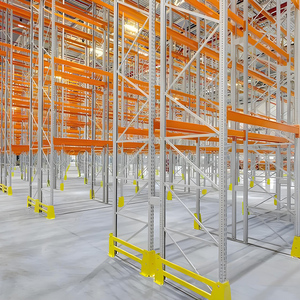
Heavy Duty Pallet Racking System Industrial Storage Shelving Racking Warehouse Shelves Warehouse Picking Shelves Rack
View Specifications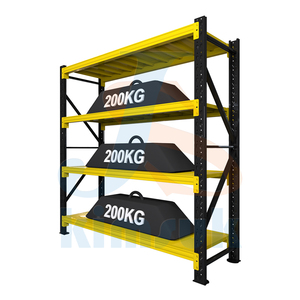
Warehouse Heavy Rack Ing Warehouse Storage 19 Pallet Rack System for Racking Rack Shelf Factory Shelf
View Specifications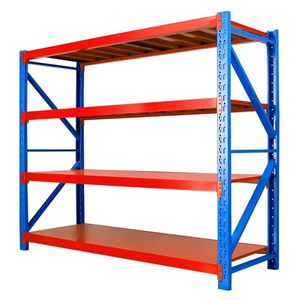
Industrial Adjustable Beam Shelving Warehouse Cargo Goods Storage Rack Heavy Duty Metal Steel Structure Selective Pallet Racking
View Specifications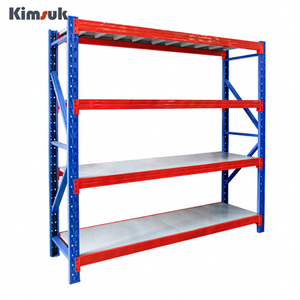
Heavy Duty Warehouse Pallet Rack Metal Steel Garage Warehouse Shelving Shelves Unit Storage Rack
View Specifications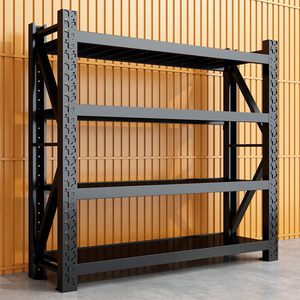
Custom Heavy Duty Selective Pallet Rack Manufacturer Warehouse Storage Pallet Racking System for Cargo Storage
View Specifications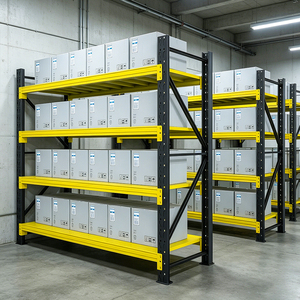
Warehouse Racking Pallet Rack warehouse Small Parts Shelves Tires Stacking Racks Shelves
View Specifications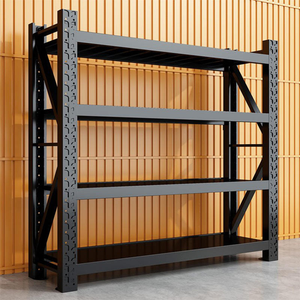
Durable Medium Duty Selective Pallet Racking System Corrosion Protection Cold Rolled Steel Warehouse Storage Pallet Rack for
View Specifications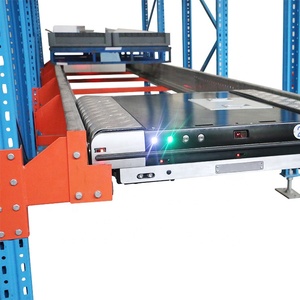
High Density Automated Warehouse Storage FIFO & FILO Pallet Radio Shuttle Racking System for Industrial Raw Material Storage
View SpecificationsIndustrial OEM/ODM Manufacturing Capabilities for Global Buyers
As a premier OEM/ODM pallet warehouse racking exporter and wholesaler, our manufacturing footprint is architected to address the structural engineering challenges faced by modern supply chain operators, third-party logistics (3PL) providers, and industrial distributors worldwide. We bridge the gap between high-capacity structural steel fabrication and client-specific custom geometry.
With nearly seven decades of industry lineage backing our structural design philosophies, our manufacturing facilities operate fully integrated continuous cold-roll forming mills, multi-axis robotic welding cells, and automated pre-treatment electrostatic powder coating lines. We do not merely offer standard shelving; we provide fully certified structural systems optimized for static loading, dynamic forklift impacts, and localized seismic forces.
Precision Metallurgy & Structural Steel
Every frame upright and load beam is formed using prime high-tensile steel (Q235B, Q355B, and SS400 structural grades). Our cold-rolled profiles feature optimized cross-sectional moments of inertia, delivering exceptionally high strength-to-weight ratios and minimal elastic deflection under full rated capacities.
Automated Epoxy Powder Coating
Components undergo a 7-stage automated chemical wash, iron-phosphate conversion coating, and high-voltage electrostatic polyester/epoxy powder deposition. The result is a 60–90 micron thick protective envelope that resists chemical corrosion, mechanical abrasion, and tropical humidity exposure.
Custom OEM/ODM Engineering
Our in-house structural engineering department utilizes Finite Element Analysis (FEA) and BIM/CAD modeling to adapt teardrop, structural bolt-together, or hook-and-slot connection mechanics to match your exact warehouse ceiling heights, concrete slab capacities, and material handling equipment.
Structural Performance & Racking System Comparison
Selecting the optimal industrial storage architecture requires balancing pallet selectivity, cubic storage density, equipment access, and overall capital expenditure (CapEx). Below is an technical evaluation matrix comparing primary OEM/ODM racking topologies.
| Racking Architecture | Primary Storage Logic | Selectivity Rate | Volumetric Cube Efficiency | Structural Steel Grade | Seismic Compliance |
|---|---|---|---|---|---|
| Selective Pallet Rack | 100% Direct Access (FIFO) | 100% |
|
Cold-Rolled Q235B / Q355B | RMI / ANSI MH16.1 |
| Double-Deep Racking | FILO (First-In, Last-Out) | 50% |
|
Structural / Cold-Formed | FEM 10.2.02 / EN 15512 |
| Push Back Cart System | LIFO (Last-In, First-Out) | 20%–25% (Lane Level) |
|
Heavy Gauge Q355B + Steel Carts | IBC / ASCE 7 Seismic |
| Drive-In / Drive-Thru | High Density LIFO / FIFO | 10%–15% (Batch Level) |
|
Structural Channel C-Section | RMI / CSCR Code |
| Pallet Gravity Flow | Strict Automatic FIFO | Lane Level |
|
Heavy Cold-Rolled + Brake Rollers | RMI / EN 15512 |
| Radio Shuttle Automation | Automated FIFO / LIFO | Software Controlled |
|
Precision Formed Shuttle Rails | ISO 9001 / High-Seismic |
Future Procurement Trends for Pallet Racking Exporters & Wholesalers
The global material handling equipment (MHE) and industrial racking market is undergoing a structural transition. Strategic procurement directors and logistics executives are shifting focus from simple hardware acquisition toward multi-dimensional evaluation frameworks prioritizing integration, sustainability, and life-cycle ROI.
1. Nearshoring & Multi-Standard Compliance
Global trade realignment is driving rapid expansion of industrial free trade zones (Zonas Francas) and localized distribution nodes. Procurement managers are favoring OEM exporters capable of cross-certifying structural designs—producing upright frames and beams that concurrently meet American RMI (ANSI MH16.1), European FEM 10.2.02, and regional seismic provisions (e.g., California CBC, Costa Rica CSCR, Chilean NCh433).
2. Cold Chain Infrastructure Expansion
With global trade in perishables, pharmaceuticals, and frozen foods accelerating, cold storage construction is at an all-time high. Cold store energy costs require maximum cubic utilization. Procurement is shifting toward automated radio shuttle systems and high-density pallet flow racks manufactured from cold-resistant alloy steels engineered to operate reliably in sub-zero environments down to -30°C without micro-fissuring or cold shortness.
3. Hybrid Modular Architecture
Modern e-commerce fulfillment requires flexible facilities. Purchasing teams are abandoning rigid single-purpose racking in favor of modular pick-module structures. These systems integrate pallet storage on upper levels with carton flow tracks and belt conveyors on lower tiers, enabling rapid reconfiguration as SKU counts and pick patterns fluctuate.
Key Industry & Technical Development Trends
The engineering underlying industrial pallet racking is progressing beyond basic steel stamping. Material science, continuous manufacturing automation, and structural testing methodologies have created a new generation of high-efficiency warehousing components.
Ultra-High Yield Cold-Rolled Steels
R&D advances in micro-alloyed, cold-rolled steel coils allow manufacturers to achieve yield strengths ($f_y$) exceeding 355 to 450 MPa while retaining crucial ductility. This enables thinner structural profiles without sacrificing ultimate load-bearing capacity, reducing freight shipping weight and lowering global carbon footprints during transit.
Advanced Impact Protection & Modular Field-Repair
Recognizing that the vast majority of forklift structural damage occurs within the bottom 600mm of upright frames, technical developments are focusing on integrated heavy-gauge column protectors, internal structural reinforcement inserts, and engineered bolt-on repair kits. These allow damaged lower legs to be replaced safely in accordance with engineering guidelines without dismantling the entire rack bay.
Digitized Load Capacity Monitoring
The intersection of IoT and structural monitoring has arrived in high-bay logistics. Advanced OEM racking now accommodates embedded strain gauges and tilt sensors along critical beam connections and base plates, transmitting real-time deflection data to Warehouse Management Systems (WMS) to prevent overloading and alert safety teams to dynamic impact events.
Frequently Asked Questions (FAQ) for Global Racking Procurement
Direct technical answers to common queries raised by international purchasing teams, structural consultants, and logistics directors when negotiating wholesale OEM/ODM contract orders.
What technical data is required to generate a custom OEM/ODM pallet racking quote?
To develop a structurally certified layout and accurate BOM (Bill of Materials), our engineering department requires:
- Pallet Specs: Width, depth, height, and maximum gross weight per palletized load (including wooden/plastic skid weight).
- Building Envelope: Clear ceiling height beneath sprinkler heads, floor slab thickness, concrete compressive strength (e.g., 3,000 PSI / 20 MPa), expansion joint locations, and building column spacing.
- MHE Parameters: Forklift lift height, mast collapsed height, minimum right-angle aisle turning radius, and outrigger dimensions.
- Environmental Conditions: Operating temperatures (ambient vs cold storage) and local seismic design acceleration coefficients ($S_s, S_1$).
How do you ensure seismic compliance for racks exported to high-seismic zones?
Our engineering team performs localized finite element modeling in accordance with the Rack Manufacturers Institute (RMI ANSI MH16.1) specification and international building codes (IBC / EN 1998). Seismic compliance is achieved by adjusting steel plate thickness, enlarging seismic base plates, specifying specialized anchor bolt embedment depths (e.g., Hilti or wedge mechanical anchors), and utilizing heavy-gauge diagonal and horizontal frame bracing.
What is the structural advantage of teardrop racking vs. structural bolt-together racking?
Teardrop Racking: Utilizes cold-rolled steel profiles with slide-and-lock rivet connections, offering rapid assembly, tool-free vertical beam adjustment in 2-inch increments, and lower initial installation labor costs. It is the dominant standard across North America.
Structural C-Channel Racking: Constructed from hot-rolled structural steel channels joined with high-strength structural bolts. It offers superior resistance to forklift impact damage, making it ideal for severe duty environments, heavy manufacturing, outdoor applications, and high-turnover grocery operations.
How are export container packing and ocean logistics optimized to prevent transit damage?
Long structural components (uprights and step beams) are bundled into heavy-duty wooden skids lined with protective plastic film and corrugated edge guards. Connectors, base plates, and small hardware are packed in reinforced, steel-strapped wooden crates. Bundles are custom-dimensioned to maximize volumetric container utilization in 40ft High Cube (40HC) containers while ensuring easy offloading with standard forklift fork extensions at destination ports.
Can damaged upright frames be safely repaired without replacing the complete structure?
Yes. Under RMI guidelines, damaged rack legs can be restored using engineered, bolt-on rack repair kits. An engineered repair involves cutting away the buckled lower leg section while holding the frame elevated with hydraulic jacks, then installing a heavy-duty outer sleeve welded or bolted to a new column section anchored firmly to the slab. This avoids the cost and downtime associated with unloading adjacent bays to replace an entire frame.
What surface finishes are available for humid or coastal environment export orders?
For standard climate-controlled indoor warehouses, our thermosetting electrostatic powder coating provides superior resistance against chipping and scratching. For coastal facilities with high salt-air exposure, humid unconditioned buildings, or food-grade washdown areas, we offer Hot-Dip Galvanizing (HDG) in accordance with ISO 1461, providing a sacrificial zinc coating that delivers multi-decade corrosion protection.