Precision OEM Racking Systems & Global Export Hardware
Direct-from-factory pallet storage racking manufactured to international RMI, FEM, and ANSI MH16.1 structural safety standards.
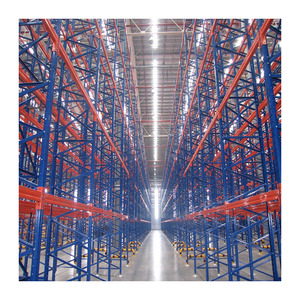
Mracking Heavy Duty Industrial Palletized Racking (1000-4000kg)
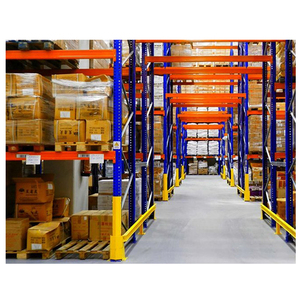
Heavy Duty Boltless Steel Pallet Rack System Industrial Warehouse Shelves
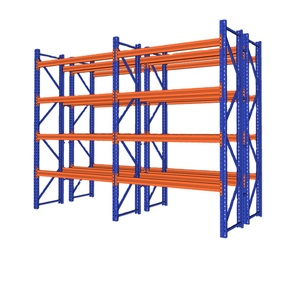
Heavy Duty Storage Rack Pallet Rack System Shelf for Industrial Storage
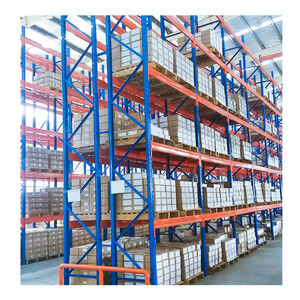
Heavy Duty Industrial Storage Rack Steel Warehouse Pallet Shelving System
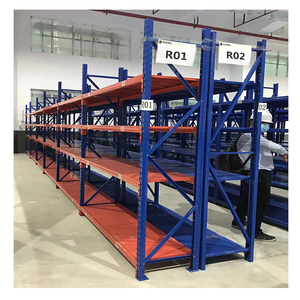
Assemble Steel Pallet Rack Heavy Duty Storage Selective Rack System
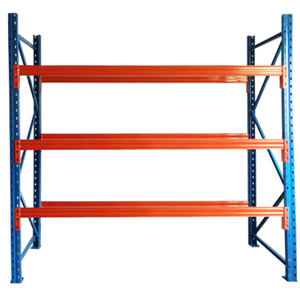
Mracking Industrial Warehouse Pallet Racking Shelving Modular System
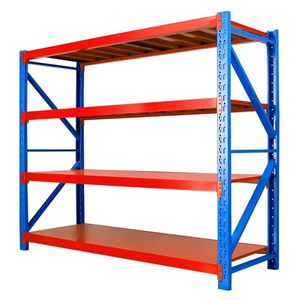
Industrial Adjustable Beam Storage Rack Metal Steel Selective Pallet Racking
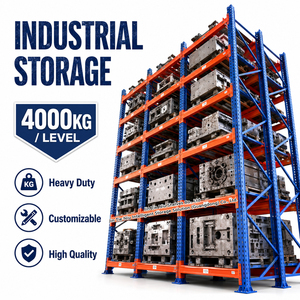
4000KG Heavy Duty Warehouse Rack Pallet Storage Adjustable Beam System
Custom Structural Profiles
Fully tailored upright section dimensions (80mm to 140mm) and beam depths engineered specifically to sustain extreme static and dynamic loads under high-bay configurations.
Seismic & Wind Load Compliance
Engineered with dynamic finite element analysis (FEA) to fulfill strict regional seismic criteria, including US RMI/ANSI MH16.1, European FEM 10.2.02, and Costa Rican CSCR standards.
Automated Finishing Lines
Continuous multi-stage automated pre-treatment and electrostatic powder coating lines yielding exceptional adhesion, uniform dry-film thickness (80-120μm), and salt-spray resistance.
Technical Whitepaper: Engineering Considerations in Heavy-Duty OEM Pallet Rack Design
Modern automated logistics hubs and high-density industrial distribution centers demand structural pallet racking systems engineered with precise metallurgical standards, high structural stiffness, and strict manufacturing tolerances. As Tier-1 custom OEM pallet racking factories and international exporters, maintaining high performance under heavy cyclic loading requires moving beyond generic roll-formed steel into customized structural engineering.
Metallurgical Specifications: Q235B vs. Q355B Cold-Formed Steel Profiles
The foundational integrity of any heavy-duty pallet storage rack depends primarily on the yield strength and ultimate tensile performance of the raw coil steel. Superior OEM manufacturing utilizes cold-rolled structural steel grades matching high international standards:
| Mechanical Property | Standard Structural Q235B | High-Strength Alloy Q355B | ASTM A1011 SS Grade 50 |
|---|---|---|---|
| Yield Strength ($f_y$) | ≥ 235 MPa | ≥ 355 MPa | ≥ 345 MPa (50 ksi) |
| Tensile Strength ($f_u$) | 370 - 500 MPa | 470 - 630 MPa | ≥ 450 MPa (65 ksi) |
| Elongation at Break ($\delta_5$) | ≥ 26% | ≥ 22% | ≥ 18% |
| Ideal Application | Standard Selective Beams | High-Bay Upright Columns | Cold-Chain & Seismic Racks |
Information Gain Insight: Utilizing high-yield Q355B steel for upright column profiles allows OEM factories to reduce steel gauge thickness while increasing overall load-bearing capacity by up to 30%, optimizing container shipping weight density and lowering overall landed freight costs for overseas importers.
Structural Physics of Beam-to-Column Interlock Connections
The beam-to-column connector is the crucial joint responsible for resisting flexural bending moments and transferring live load forces directly into upright posts. Custom OEM factories design multi-hook connector plates featuring tapered self-locking lugs (3-hook, 4-hook, and 5-hook heavy-duty variations). As vertical loads increase, the downward gravitational vector forces the connector tighter into the teardrop or structural column perforations, minimizing frame sway and mechanical joint loosening under repeated forklift pallet placement.
Additionally, spring-loaded safety locks engineered with a minimum shear strength rating of 1,000 kg prevent accidental beam dislodgement caused by upward forklift boom impacts, ensuring full workplace safety compliance across international warehouses.
Sourcing & Technology Trends: The Future of Global Pallet Racking Procurement
The industrial material handling sector is experiencing a rapid technological transition driven by automated warehouse logistics, supply chain nearshoring, and green building standard mandates. Global procurement officers sourcing from specialized OEM exporters are shifting focus toward next-generation racking solutions.
1. Automated Storage & Retrieval System (AS/RS) Integration
Traditional manual forklift racking is increasingly giving way to ultra-precise AS/RS structural rack frames. These systems require manufacturing tolerances as tight as ±1.5mm over a 15-meter vertical span. OEM factories must utilize continuous automated robotic welding cells and laser-guided punching lines to ensure absolute alignment for high-speed stacker cranes and autonomous shuttle vehicles.
2. Cold-Chain Logistics & Sub-Zero Metallurgical Resilience
With global cold-chain storage expanding rapidly to serve pharmaceuticals and fresh food exports, racking hardware must endure ambient temperatures down to -30°C without suffering hydrogen embrittlement or protective coating cracking. OEM exporters specialize in low-alloy micro-treated steel profiles paired with specialized low-temperature powder coatings and hot-dip galvanized surface treatments (HDG) exceeding 65μm zinc thickness.
3. Real-Time Smart Structural Health Sensors
Future-ready OEM pallet racking incorporates integrated IoT impact sensors and wireless strain gauges inside upright baseplates. These smart modules monitor structural deflection, detecting subtle forklift collision damage and structural overloading before critical column failure occurs, enabling preventive facility maintenance.
Structural Engineering Innovations: Drive-In, Push Back & Gravity Flow Integration
Maximizing volumetric cubic space utilization requires structural engineering options tailored to specific SKU density and stock rotation strategies:
| Racking Architecture | Cube Volume Utilization | Stock Handling Strategy | Optimal Industry Application |
|---|---|---|---|
| Selective Pallet Racking | 40% - 50% | FIFO (First-In, First-Out) | E-Commerce, High SKU Diversity |
| Drive-In / Drive-Thru | 65% - 75% | LIFO / FIFO Option | Cold Storage, Low SKU High Bulk |
| Push-Back Cart Systems | 70% - 80% | LIFO (2 to 6 Pallets Deep) | Beverage Distribution, FMCG Hubs |
| Pallet Flow (Gravity Roller) | 85% - 90% | Strict FIFO Automatic Flow | Perishable Foods, Pharmaceuticals |
Frequently Asked Questions by Industrial Importers & Engineers
What parameters are required to generate an accurate custom OEM pallet racking design?
How does high seismic activity influence structural pallet rack engineering?
What is the difference between Roll-Formed teardrop rack and Structural C-Channel rack?
How do OEM factories ensure long-term anti-corrosion protection for international ocean shipping?
Can custom racking components be engineered to interlock with existing third-party systems?
What structural quality testing and certification protocols are conducted prior to factory export?
Partner with a Leading OEM Pallet Racking Factory
Get direct-from-factory wholesale pricing, complete CAD space planning, and certified structural FEA calculations tailored to your exact warehouse project specs.