Welcome to the technical whitepaper and global export catalog for custom OEM pallet flow racking systems. As an industry-leading manufacturer and wholesale exporter certified under ANSI MH16.1 (RMI) standards, we specialize in high-density gravity flow storage engineering. By transforming vertical air space into dynamic kinetic storage lanes, our OEM solutions empower distribution centers, third-party logistics (3PL) hubs, and cold storage operations to achieve up to 85% higher volumetric utilization while enforcing absolute First-In, First-Out (FIFO) product rotation.
Core Heavy-Duty OEM Storage Portfolio
Engineered for high load capacities, extreme durability, and seamless automated integration.
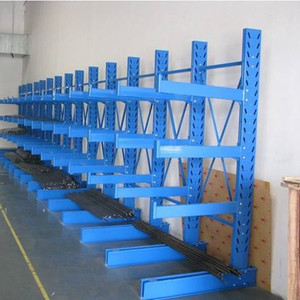
Warehouse Heavy Duty Industrial Cantilever Rack
View Technical Details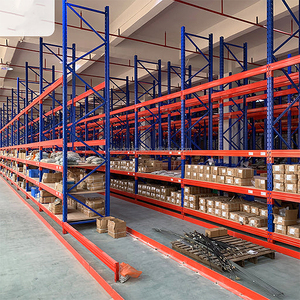
Heavy Duty Adjustable Beam Type Pallet Rack Industrial Steel Warehouse Storage
View Technical Details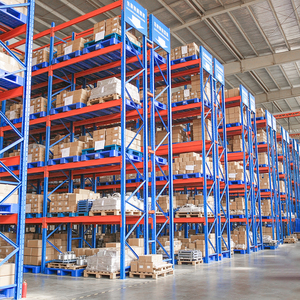
Heavy Duty Pallet Rack 1000-5000KG Load Capacity Storage System
View Technical Details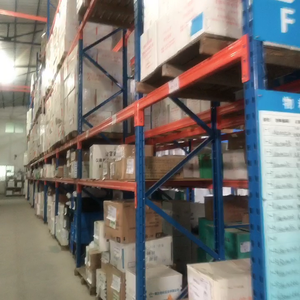
Complete Warehouse Racking System Design Manufacturing Installation
View Technical Details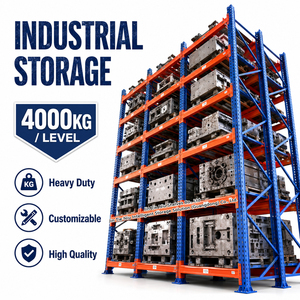
4000KG Heavy Duty Warehouse Rack Pallet Storage System Adjustable Beam
View Technical Details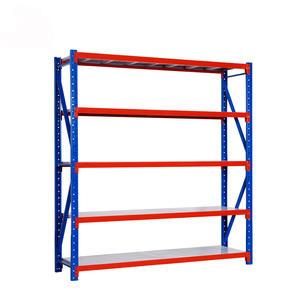
500kg Loading Capacity Medium Duty Warehouse Rack System
View Technical Details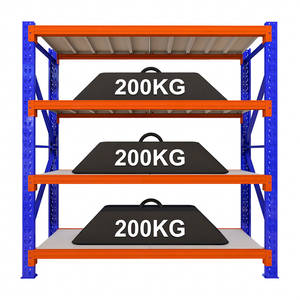
Original Factory Customized Selective Q235B Metal Warehouse Storage Rack
View Technical Details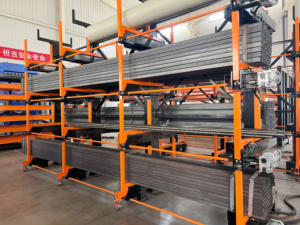
Space Efficient Double-Sided Cantilever Rack with Corrosion Protection
View Technical DetailsEngineering Deep-Dive: Gravity Flow Physics & OEM Architecture
How kinetic brake controllers, precision pitch angles, and structural steel yield flawless operational reliability.
Pallet flow racking (also designated as gravity flow rack) represents the apex of mechanical automation within non-powered high-density material handling. Unlike static selective racks or Last-In, First-Out (LIFO) push-back and drive-in configurations, a custom OEM pallet flow rack operates on a inclined wheel track system—typically engineered between a 3/8” to 1/2” pitch per foot (3.0% to 4.2% gradient). Pallets are loaded from the rear loading face, gliding smoothly on heavy-duty steel or high-impact polycarbonate rollers toward the front discharge picking aisle under controlled kinetic acceleration.
Precision Speed Controllers
Direct-drive and indirect speed controller brake rollers limit pallet momentum to a safe velocity below 0.3 m/s. Internal centrifugal brake shoes automatically adjust friction output based on real-time pallet mass, preventing runaway loads.
Automated Safety Separators
Engineered mechanical separators isolate the discharge pallet from the back pressure of succeeding pallets in the lane. This relieves line pressure (often exceeding several tons in 20-deep lanes), allowing forklifts unhindered extraction.
Seismic & Frame Metallurgy
Manufactured using cold-rolled high-tensile Q235B and Q355B structural steel columns. Base plates, seismic anchor bolts, and heavy-duty horizontal framing are optimized via Finite Element Analysis (FEA) to withstand high lateral sway forces.
When sourcing from a custom OEM factory, standard off-the-shelf specs are rarely sufficient for dynamic warehouse workflows. Pallet flow systems require bespoke tuning based on bottom-board pallet conditions (GMA, CHEP, EURO, plastic, or perimeter-base stringers), structural beam deflection limits (under L/180 or L/240 design rules), ambient operational temperatures (from +40°C deep dry storage down to -30°C blast freezer cold chain facilities), and specific throughput pick rates.
Technical Specification & Storage Topology Comparison
Evaluating Total Cost of Ownership (TCO) and operational efficiency across industrial racking methodologies.
| Storage Racking Category | Stock Rotation | Floor Area Utilization | Selectivity per SKU | Forklift Travel Time | Ideal Application Profile |
|---|---|---|---|---|---|
| Custom OEM Pallet Flow Rack | Strict FIFO | 80% – 85% | Medium (Lane Level) | Ultra-Low (Dedicated Aisles) | Perishables, FMCG, Cold Chain, High-Throughput Buffers |
| Selective Pallet Racking | FIFO / LIFO | 35% – 40% | 100% (Direct Access) | High (Aisle Navigational Overhead) | High-SKU diversity, low-density retail distribution |
| Push Back Racking | Strict LIFO | 65% – 75% | Medium-Low | Moderate (Single Loading Face) | Medium SKU count, seasonal staging, bulk non-perishables |
| Drive-In / Drive-Thru Racking | Strict LIFO | 60% – 70% | Low (Bay Level) | High (Forklift Driving inside Rack) | Homogeneous bulk commodities, raw material stock |
| Automated AS/RS Structure | System Controlled | 85% – 95% | 100% Automated | Zero (Crane / Shuttle Driven) | Fully automated dark warehouses, mega fulfillment hubs |
Enterprise Competitive Advantages: Why Partner With Our Global Export Plant
Nearly 70 years of manufacturing lineage, RMI alignment, and advanced surface finishing engineering.
Automated Powder Coat Finishing & Anti-Corrosion Metallurgy
Operating multi-million-dollar automated powder coating lines, our factory coats every upright, beam, dynamic rail, and cross-brace with an electrostatically applied thermosetting epoxy-polyester coating. Tested under 500-hour neutral salt spray (ASTM B117) standards, our components exhibit superior scratch, impact, and humidity resistance. This is vital for facilities located in tropical high-humidity zones or sub-zero refrigeration plants where condensation accelerated rust degrades non-coat structural steel.
- Uniform film thickness (60–90 microns) with zero paint sagging.
- Non-toxic, VOC-free coating complying with global green supply chain rules.
- Custom RAL color coding for fast visual identification of level capacity ratings.
Comprehensive Seismic & Structural Engineering Support
Warehouse safety hinges on exact stress calculations. Our international team of structural engineers utilizes advanced CAD and 3D FEA simulation software to model load paths under both dynamic rolling weights and severe seismic accelerations (conforming to RMI/ANSI MH16.1, IBC, and regional building codes like Código Sísmico de Costa Rica).
- Stamped structural engineering calculations & stamped bay load plates.
- Slab thickness verification & concrete anchor embedment engineering.
- Integrated column protection & straddle impact deflector guards.
Future Procurement Trends in High-Density Flow Racking (2025–2035)
Key technological shifts reshaping global supply chain investments, wholesale procurement, and logistics automation.
1. Convergence of Gravity Flow with AGVs & AMRs
Modern procurement strategies no longer treat pallet flow racking as an isolated manual system. Future-proof facilities integrate Autonomous Mobile Robots (AMRs) and Automated Guided Vehicles (AGVs) at both loading and discharge faces. OEM custom flow racks are increasingly specified with optical sensor brackets, laser-reflector alignment pins, and specialized entry guides to facilitate sub-millimeter robotic pallet placement.
2. Smart Magnetic Braking & IoT Sensor Integration
Mechanical brake rollers are evolving into zero-contact magnetic speed controllers that eliminate internal friction wear and maintenance downtime. Furthermore, wholesale buyers are procuring "Smart Flow Lanes" equipped with IoT proximity sensors and micro-switches that transmit real-time lane occupancy, dwell time, and inventory movement data directly to Warehouse Management Systems (WMS).
3. Modular OEM Standardizations for Global Freight
With soaring ocean freight costs, overseas importers and distributors favor OEM designs optimized for maximum container cubing. Knock-down (KD) bolted frame structures, nested roller track assemblies, and universal beam connector hooks drastically lower shipping volumes per TEU/FEU container, slashing landed import costs for overseas wholesalers.
Next-Generation Product Development & Metallurgical Innovation
As an OEM factory pushing the boundaries of storage engineering, our R&D roadmap focuses on key technological advancements:
Ultra-High-Molecular-Weight Polycarbonate Wheels
Formulated to eliminate flat-spotting under long-term static load dwell times up to 1,500KG per pallet level.
Self-Centering Entry Alignment Flanges
Reduces forklift operator placement errors, correcting off-center loading by up to 50mm automatically.
Hybrid Steel-Plastic Rollers for Cold Chain
Prevents freeze-locking of bearings at -30°C through specialized low-temperature synthetic lubricants and sealed stainless steel race bearings.
Frequently Asked Questions (FAQ) for OEM Buyers & Engineers
Expert answers addressing structural design, custom manufacturing, logistics, and maintenance.
What custom OEM specifications are required to engineer a pallet flow rack?
To deliver an exact OEM layout, our engineering team requires: (1) Pallet footprint dimensions, bottom-board profile, and wood/plastic condition; (2) Minimum and maximum weight per pallet; (3) Required lane depth (e.g., 4-deep up to 20-deep); (4) Clear building height and floor concrete slab specifications (thickness, compressive PSI, rebar matrix); (5) Operating ambient temperature range; and (6) Forklift mast reach and lift height constraints.
How do speed controller brake rollers prevent pallet impact damage in deep lanes?
Speed controllers are strategically installed at calculated intervals along the roller track (typically every 1 to 2 pallet lengths). As a pallet glides over the controller roller, internal centrifugal friction shoes engage against the inner housing wall, resisting excessive kinetic speed. This keeps pallet descent velocity regulated at a smooth, safe pace, eliminating heavy impact at the discharge pick face.
Can custom pallet flow racking be installed inside blast freezers and cold storage facilities?
Yes. Cold storage is one of the primary applications for pallet flow rack due to the extremely high cost of refrigerated cubic space. For cold chain applications, we utilize specialized low-temperature stainless steel sealed bearings, food-grade synthetic low-viscosity greases that do not freeze or stiffen at -30°C, and heavy-duty powder-coated or hot-dip galvanized structural steel components.
What is the difference between full-width steel rollers and skate wheel flow tracks?
Full-width steel rollers provide continuous surface support across the entire bottom width of the pallet, making them essential for weak, non-standard, or damaged wooden pallets and heavy loads exceeding 1,000KG. Polycarbonate skate wheel tracks utilize staggered multi-lane wheels; they are cost-effective for lighter, highly standardized pallets with consistent perimeter bottom boards.
How does your factory ensure compliance with local seismic building codes?
Every OEM project undergoes rigorous Finite Element Analysis (FEA) structural modeling in accordance with ANSI MH16.1 (RMI) guidelines, European FEM 10.2.02 standards, or local seismic structural regulations (such as CSCR in Central America or IBC seismic design categories D, E, and F). We engineer heavy-duty base plates, customized frame column gauges (up to 12-gauge or 10-gauge structural steel), and expanded anchor bolt patterns specifically sized for calculated overturning moments and lateral sway shear forces.
What is the typical production lead time and ocean export logistics process?
Standard OEM factory manufacturing lead time ranges from 3 to 5 weeks depending on project tonnage and customization complexity. Components are bundled, corner-protected, and palletized for optimal container loading into 40ft HQ dry or open-top ocean containers. Full export documentation, including Certificate of Origin, Bill of Lading, mill test certificates, and CAD installation assembly drawings, is provided with every shipment.
Ready to Optimize Your Warehouse Density & Velocity?
Connect directly with our senior OEM engineering team for a complimentary CAD warehouse layout, system flow analysis, and competitive factory-direct wholesale quotation.
Contact Us