Industrial Racking & High-Density Storage Solutions
Engineered for maximum structural integrity, international code compliance (RMI/ANSI MH16.1), and optimized warehouse floor utilization.
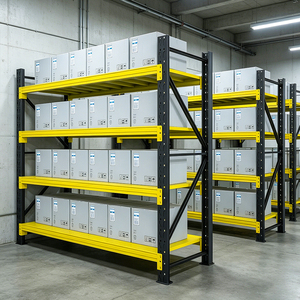
Warehouse Racking Pallet Rack Small Parts Shelves Tires Stacking Racks Shelves
View Product Details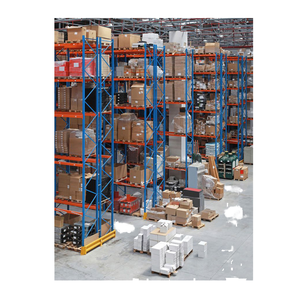
Factory Storage Heavy Duty Steel Detachable Pallet Racking Shelving for Industrial
View Product Details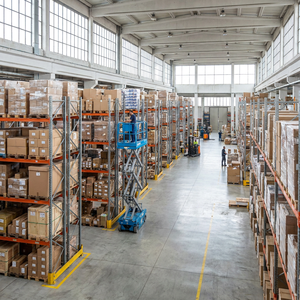
Professional Heavy Duty Pallet Rack Supplier Warehouse Storage System Manufacturer
View Product Details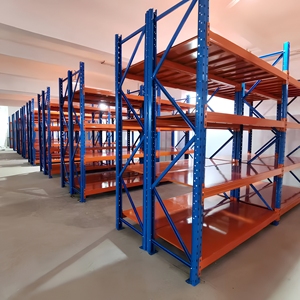
China Factory Direct Medium Duty Anti-Rust Corrosion Protection Warehouse Rack Custom Waterproof Multi-Tier Cold Rolled Garage
View Product Details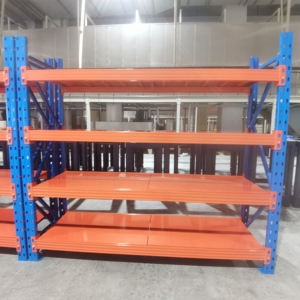
Heavy-Duty 2 Ton Capacity Adjustable Corrosion Protection 5-Layer Storage Rack for E-commerce Premium Cold Rolled Steel Shelf
View Product Details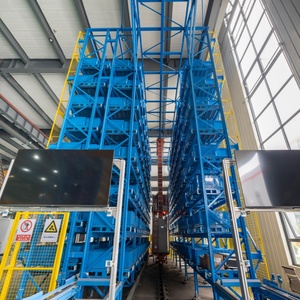
Fully Automated Warehouse Robot Unit Load Pallet Automation Miniload ASRS Storage Retrieval Picking System
View Product Details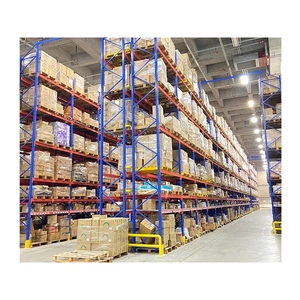
Warehouse Racking System Heavy Duty Industrial Steel Shelving Warehouse Pallet Racks for Sale
View Product Details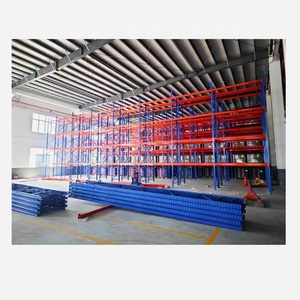
Warehouse Racks Double Deep Adjustable Pallet Storage Rack Beam Shelving Steel Heavy Duty Industrial Shelf Racking
View Product DetailsExecutive Summary: Global Warehouse Storage & Racking Manufacturing Dynamics
In modern industrial logistics, warehouse infrastructure serves as the foundational backbone for supply chain performance, inventory velocity, and operational safety. As global logistics networks face rising land acquisition costs, heightened urban industrial rents, and escalating SKU complexities, supply chain executives are re-evaluating their storage architecture. Strategic procurement teams are increasingly partnering directly with premier China wholesale warehouse storage shelving manufacturers and suppliers to achieve structural safety, customized volumetric density, and superior total cost of ownership (TCO).
Navigating the global manufacturer matrix requires rigorous evaluation beyond baseline material costs. Enterprise buyers must assess metallurgical yield strengths, advanced structural engineering standards (such as RMI/ANSI MH16.1 and FEM 10.2.02), automated surface treatment resilience, and seismic lateral load calculations. This white paper serves as an authoritative procurement and engineering blueprint, detailing system selection frameworks, future supply chain trends, metallurgical compliance standards, and manufacturing best practices.
Structural Steel Integrity
Utilizing certified premium Q235B and Q355B cold-rolled steel coils, engineered to withstand aggressive live-load flexure, high point loading, and strict deflection ratios ($L/180$).
Seismic Engineering Precision
Advanced finite element analysis (FEA) and dynamic lateral force calculations tailored for seismic zone compliance, floor slab embedment, and anchor shear load capacities.
Automated Surface Protection
Multi-stage chemical pre-treatment and electrostatic thermosetting epoxy-polyester powder coating lines, engineered to pass strict 500-hour salt spray corrosion testing (ASTM B117).
Future Sourcing & Procurement Trends (2025–2030)
The strategic framework for global warehouse equipment procurement is shifting from transaction-based buying toward fully integrated engineering partnerships. Leading industrial enterprises are adopting dynamic procurement strategies characterized by four dominant trends:
1. Nearshoring-Compatible Modular Racking Architecture
Global manufacturers are increasingly implementing standardized, demountable, and reconfigurable rack frame geometrics. As supply chains restructure near consumer hubs, facilities require adaptive racking structures that can transition from standard selective storage to double-deep, pick-module, or drive-in configurations without requiring complete steel demolition and reinvestment.
2. Green Steel Sourcing & Sustainable Powder Coatings
Environmental, Social, and Governance (ESG) mandates are transforming industrial procurement. Premier Chinese racking factories are transitioning to closed-loop zero-emission powder coating lines and sourcing eco-certified low-carbon steel Coils. These manufacturing advancements significantly lower scope 3 embedded carbon emissions for global logistics operations while maintaining extreme scratch resistance and structural durability.
3. Total Cost of Ownership (TCO) & Containerization Freight Optimization
Strategic logistics buyers prioritize shipping density to minimize global ocean freight expenditures. Modern racking components are CAD-engineered with nested channel profiles, teardrop punch alignment, and detachable beam-end connectors. This design approach optimizes TEU (Twenty-foot Equivalent Unit) ocean container volume, yielding up to a 28% reduction in cross-border transport costs per pallet position.
Product & Technological Development Trends
The industrial storage industry is undergoing a digital and automated revolution. Modern storage systems are no longer passive steel structures; they are dynamic components of automated fulfillment ecosystems:
- AS/RS Structural Integration: High-bay racking structures designed as load-bearing framing for Automated Storage and Retrieval Systems (AS/RS), capable of withstanding dynamic acceleration forces from automated cranes, shuttles, and miniload robotic grippers.
- High-Density Shuttle & Radio-Racking Systems: Transitioning traditional drive-in bays into automated shuttle channels. Semi-automated radio shuttles navigate within storage channels, increasing pallet velocity while protecting rack uprights from forklift collision risks.
- Cold-Chain & Tropicalized Finishes: Enhanced zinc-rich primers, hot-dip galvanizing (HDG), and specialized anti-microbial coatings optimized for sub-zero cold storage facilities and high-humidity free trade zones.
- In-Situ Upright Protection & Modular Repairability: Engineered bolt-on column guards, structural heavy-gauge bottom leg reinforcement, and standardized splice repair kits that allow localized frame restoration without tearing down structural bays.
Comparative Engineering Matrix: Selecting the Right System
Selecting the optimal warehouse storage system requires balancing SKU selectivity against cubic floor density. The following structural comparison matrix highlights key engineering metrics across primary heavy-duty racking configurations:
| Racking Architecture | Volumetric Storage Density | SKU Selectivity Ratio | Stock Rotation Protocol | Typical Load Capacity (per Level) | Ideal Industry Application |
|---|---|---|---|---|---|
| Selective Pallet Rack | Moderate (40%-50%) | 100% Direct Access | FIFO / LIFO Flexible | 1,000 kg – 4,500 kg | General Logistics, 3PL, E-Commerce |
| Double Deep Rack | High (60%-65%) | 50% Direct Access | FILO (First-In, Last-Out) | 1,000 kg – 3,500 kg | Bulk FMCG, Cold Storage, Spare Parts |
| Drive-In / Drive-Thru | Very High (75%-85%) | Low (Per Lane) | LIFO (Drive-In) / FIFO (Drive-Thru) | 1,000 kg – 2,000 kg | Agricultural Exports, Seasonal Goods |
| Pallet Flow Rack | Maximum (80%-90%) | Pick Face Only | Strict FIFO (Gravity Fed) | 1,000 kg – 2,500 kg per lane | Perishables, Food & Beverage, Pharmaceuticals |
| Push Back Cart Rack | High (65%-75%) | Lane Level Access | LIFO (Cart-nested system) | 1,000 kg – 2,000 kg per cart | Manufacturing Buffer, Distribution Hubs |
| Automated AS/RS Structure | Ultra-High (85%-95%) | 100% Automated Access | Software Managed (WMS) | 500 kg – 3,000 kg per position | High-Throughput Mega Fulfillment Centers |
Enterprise Manufacturing Strengths & OEM Capabilities
Our manufacturing complex represents the peak of Chinese structural steel engineering and OEM/ODM production capability. Serving global brands, Fortune 500 supply chain operators, and regional distributors, our facility offers unmatched production reliability and engineering support:
1. Fully Automated Cold-Roll Forming & Robotic Welding
Utilizing high-precision continuous cold-roll forming mills equipped with real-time laser measurement gauges, we ensure millimeter-precise beam profiles and upright geometry. Robotic welding cells execute full-penetration welds on beam-end connectors and baseplates, delivering uniform load transfer and zero welding defect rates.
2. Stringent Quality Assurance & Global Certification
Every steel batch undergoes rigorous raw material spectral analysis, yield strength testing, and ultrasonic weld testing. Our product lines meet or exceed international standards including ISO9001 quality management, CE European structural steel safety certification, and strict compliance with RMI (Rack Manufacturers Institute) guidelines.
3. End-to-End Project Engineering Support
We provide full-spectrum technical consulting for international procurement projects. Our engineering services encompass custom CAD layout rendering, 3D structural modeling, seismic coefficient simulation, load calculation documentation, and complete container packing plan generation.
Comprehensive B2B Procurement FAQ
To assist warehouse engineers, logistics directors, and procurement managers in evaluating industrial storage systems, our senior engineering team has answered the most critical technical sourcing questions:
What steel grade standards are used in high-capacity industrial pallet racking?
Our heavy-duty upright frames and load beams are primarily manufactured using certified high-tensile cold-rolled steel grades Q235B and Q355B (equivalent to ASTM A36 and ASTM A572 Grade 50). Q355B offers superior yield strength (355 MPa), allowing higher load ratings with reduced steel weight, making it ideal for tall racking structures and high-bay installations.
How do you calculate seismic design forces for custom racking projects?
Seismic design is engineered in accordance with RMI / ANSI MH16.1 standards and local building codes (e.g., IBC or Eurocode 8). We evaluate ground acceleration coefficients ($S_s, S_1$), site soil classification, total rack dead/live load ratios, and dynamic base shear forces to size baseplates, anchor embedment depths, and horizontal frame bracing.
What is the maximum recommended beam deflection ratio under full design load?
In structural storage engineering, beam deflection under maximum design live load is restricted to a maximum ratio of $L/180$ (where $L$ is the clear beam length). For example, a 2,700 mm beam under full rated capacity will not exceed 15 mm of vertical deflection, ensuring smooth forklift fork insertion and zero permanent deformation.
Which surface treatment finish is recommended for humid or coastal warehouse environments?
For standard indoor distribution centers, multi-stage chemical wash followed by electrostatic thermosetting powder coating (60-80 microns thick) provides excellent corrosion resistance. For high-humidity coastal zones, cold storage wash-down rooms, or outdoor applications, we recommend continuous hot-dip galvanizing (HDG) or zinc-rich epoxy powder primers.
Can damaged upright frames be safely repaired without replacing the full structural bay?
Yes. Utilizing engineered bolt-on column repair kits, damaged lower legs can be replaced in-situ. The repair section features a heavy-duty inner splice sleeve and outer protector, restoring the original structural column strength without requiring a complete teardown of upper storage levels.
What information is required to receive a structural layout drawing and quotation?
To prepare an accurate CAD layout and load design, our engineering team requires: (1) Warehouse building floor plan with column grid spacing and clear height, (2) Pallet dimensions (W x D x H) including load overhanging, (3) Maximum load weight per pallet position, (4) Forklift truck specifications (minimum aisle turning radius and maximum lift height), and (5) Operating temperature range.
Ready to Optimize Your Warehouse Storage Capacity?
Partner directly with China's leading warehouse racking manufacturer. Our structural engineering team is available to assist with custom CAD layouts, load calculations, and competitive direct factory pricing.
Send an Inquiry