Featured Industrial Racking & Storage Products
Direct-from-factory engineered pallet racks, cantilever frameworks, and heavy-duty shelving configurations manufactured to international load compliance standards.
1. Executive Summary & Structural Engineering Standards
In modern industrial logistics and global supply chain management, selecting the appropriate industrial racking and shelving systems is a critical architectural decision. High-density storage infrastructure directly impacts spatial utilization, operational safety, inventory throughput efficiency, and long-term capital expenditure ROI. China has firmly established itself as the global manufacturing hub for heavy-duty warehouse storage solutions, offering world-class engineering capabilities, advanced cold-roll forming technologies, and substantial cost efficiencies.
As leading OEM/ODM manufacturers, Chinese industrial racking factories adhere strictly to global design codes, including the Rack Manufacturers Institute (RMI ANSI MH16.1), European Committee for Standardization (FEM 10.2.02 / EN 15512), and Australian Standard (AS 4084). Our structural design methodology leverages Finite Element Analysis (FEA) to model stress concentration, buckling modes, and dynamic structural response under localized load conditions and severe seismic forces.
Advanced Metallurgy & Cold-Roll Forming
Our upright frames and load beams are constructed utilizing premium structural-grade cold-rolled steel coils (Q235B and Q355B grades, equivalent to SS400 and ASTM A572 Grade 50). By employing high-precision multi-pass continuous cold-roll forming lines, we ensure uniform profile cross-sections, minimal residual stresses, and exact dimensional tolerances down to ±0.5mm across extended beam spans.
Key Technical Insight: Yield Strength & Safety Factors
Industrial structural integrity relies on the yield strength ($F_y$) of the raw material. While standard commercial shelving uses generic mild steel, our heavy-duty beam profiles utilize high-yield Q355 structural steel with a yield point exceeding 355 MPa. Combined with a standard structural safety factor of 1.65 to 1.92 depending on local seismic coefficient requirements, our systems ensure maximum deflection remains within $L/240$ under maximum rated load capacities.
2. Core Enterprise Advantages & Manufacturing Superiority
Navigating global procurement requires evaluating direct factory capabilities. Our manufacturing facilities combine raw material sourcing power with fully automated, robotic production lines to deliver uncompromised quality for wholesale buyers and system integrators worldwide.
Automated Powder Coating
Equipped with multi-stage automated pre-treatment cleaning, nano-ceramic phosphatizing, and electrostatic powder coating lines. Finish durability withstands over 1,000 hours of continuous salt-spray testing, making racks ideal for humid, tropical, or cold-storage environments.
Precision Robotic Welding
Structural beam-to-connector joints are executed by full-path Panasonic multi-axis robotic welding cells. Complete penetration welding eliminates manual inconsistencies, providing superior moment-resisting connection strength and structural stability.
Full In-House Load Testing
Every beam connector profile, upright teardrop pattern, and floor anchor bracket undergoes destructive tensile, compression, and shear testing on certified hydraulic press rigs to verify analytical FEA calculations prior to commercial production.
3. Systems Analysis: Sourcing the Optimal Storage Geometry
Different supply chain configurations require tailored structural racking solutions. Understanding the design mechanics of each racking tier ensures optimal density without compromising operational velocity or selectivity.
A. Selective Heavy-Duty Pallet Racking
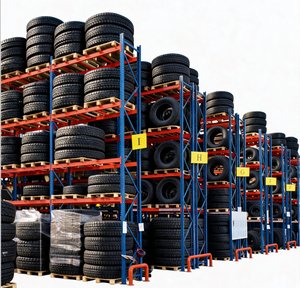
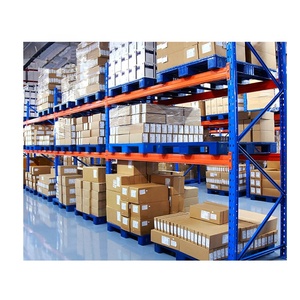
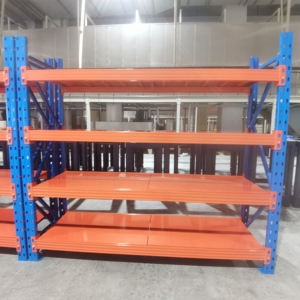
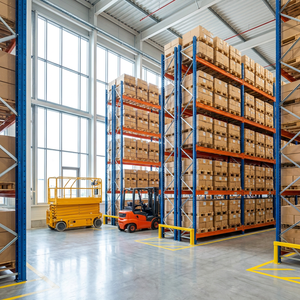
Selective pallet racking remains the benchmark standard for facilities requiring 100% direct pallet access and high SKU turnover versatility. Utilizing teardrop or custom-pitch slotted uprights, intermediate storage levels can be adjusted vertically on 50mm, 75mm, or 76.2mm increments. Heavy-duty box beams or step beams accommodate wire decking, bar gratings, or cross-supports for pallet loading up to 4,000 kg (8,800 lbs) per level.
B. Cantilever Racks for Long & Bulky Cargo
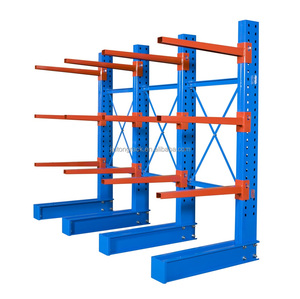
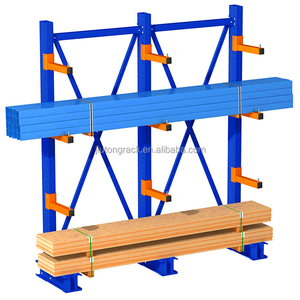
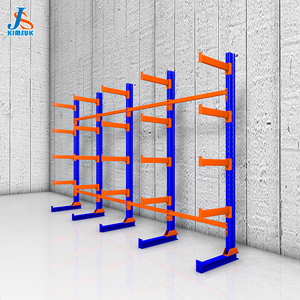
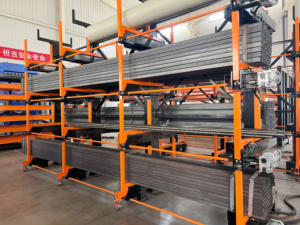
Designed specifically for non-standard, long-span materials such as lumber, steel pipes, extruded aluminum, and sheet metal, cantilever systems remove front vertical columns that obstruct loading faces. Available in single-sided and double-sided configurations, systems can be optimized with modular bolt-on arms capable of supporting up to 2,000 kg per arm under uniform load distribution.
C. Electric Telescopic & Automated Cantilever Racks
Representing the cutting edge of industrial storage tech, automated and electric telescopic cantilever systems feature motorized extendable arms that extend outward into access aisles. Operators can retrieve high-density heavy stock using overhead cranes without requiring expansive forklift aisles, increasing floor footprint density by up to 180% compared to static long-span layouts.
D. Multi-Tier Mezzanine & High-Bay Pick Modules
When vertical warehouse clearance permits, multi-tier mezzanine rack structures transform underutilized overhead cubic space into usable operational multi-floor picking platforms. Constructed with integrated heavy-duty staircases, safety handrails, pallet drop gates, and integrated conveyor lines, pick modules support dense manual split-case e-commerce fulfillment environments.
4. Comparative Sourcing & Engineering Sizing Matrix
The following engineering matrix outlines key technical metrics for specifying industrial rack configurations during the wholesale procurement planning phase:
| Racking System Type | Typical Steel Grade | Max Load / Level (KG) | Floor Space Efficiency | SKU Selectivity | Primary Ideal Application |
|---|---|---|---|---|---|
| Heavy-Duty Selective Rack | Q235B / Q355B | 1,000 – 4,500 kg | 40% – 50% | 100% Direct Access | FMCG, General Distribution, 3PL |
| Heavy Cantilever Storage | Q355B Structural HR | 500 – 2,000 kg / Arm | 55% – 65% | High Long-Cargo Access | Lumber, Steel Tubing, Building Supplies |
| Electric Telescopic Cantilever | Q355 Structural Alloy | 1,000 – 3,000 kg / Arm | 80% – 90% | Automated Crane Pick | Heavy Industrial Metals, Machinery Manufacturing |
| Drive-In / Push-Back Racking | Q235B Cold Rolled | 1,000 – 1,800 kg / Pallet | 70% – 85% | Low (LIFO Rotation) | Cold Storage, Seasonal Bulk Goods |
| Multi-Level Pick Modules | Q235B / Q355B Decking | 300 – 1,000 kg / m² | 150% – 300% (Cubic) | High Manual Case Pick | E-commerce Fulfillment, Apparel, Automotive Parts |
5. Future Sourcing & Technological Trends (2025–2030)
The global material handling industry is undergoing a digital transformation driven by automation, labor shortages, and rising real estate costs. Industrial racking is evolving from static passive structural frames into intelligent, dynamic components of automated warehouse ecosystems.
- Seamless AS/RS & AGV Integration: Traditional racking profiles are being re-engineered with ultra-tight structural tolerances to seamlessly interface with Automated Storage and Retrieval Systems (AS/RS), autonomous mobile robots (AMRs), and automated guided vehicles (AGVs). Precise beam straightness and deflection-free verticality ensure automated shuttle cranes travel at high speeds without mechanical binding.
- Structural Internet of Things (IoT) & Health Monitoring: Next-generation smart racking incorporates strain-gauge sensors, accelerometers, and optical vibration monitors embedded in critical upright columns. These IoT sensors communicate wirelessly to warehouse management software (WMS), alerting safety managers to micro-deflections, unrecorded forklift impacts, or localized weight overloads before structural fatigue failure occurs.
- Decarbonization & Green Steel Manufacturing: In response to corporate Scope 3 emission targets, leading Chinese factories are adopting low-carbon green steel coils produced via hydrogen-based direct reduced iron (DRI) processes, paired with 100% solvent-free powder coatings, significantly reducing the carbon footprint per linear meter of storage framework.
6. Quality Assurance, Anchorage & Risk Mitigation Checklist
Sourcing directly from overseas wholesale suppliers requires strict verification of structural integrity and quality control protocols. When executing large-scale turnkey rack procurement projects, engineering teams should mandate the following verification steps:
Slab Anchorage & Base Plate Verification
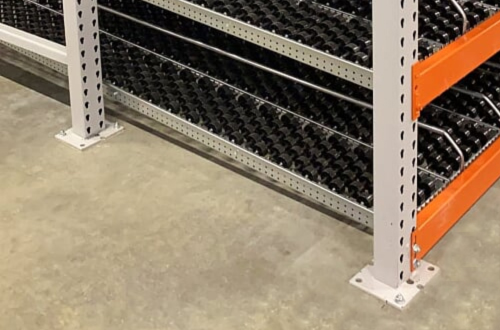
Proper slab anchoring is vital for structural stability. Upright base plates must be secured with high-grade seismic wedge anchors or expansion bolts. Ensure concrete slab thickness (typically minimum 150mm to 200mm) and compressive strength (C25/30 grade minimum) match engineering anchor embedment depths to resist overturning moments and seismic shear forces.
- Raw Material Mill Test Certificates (MTC): Request EN 10204 3.1 certified MTC documents for every steel batch, verifying chemical composition (Carbon, Manganese, Silicon limits) and mechanical tensile yield properties.
- Weld Integrity Non-Destructive Testing (NDT): Ensure structural welds undergo dye-penetrant or ultrasonic NDT inspections to confirm zero internal void porosity or cold-lap defects.
- Surface Finish Thickness Gauging: Verify dry film powder coat thickness measures between 60 to 90 microns using magnetic magnetic induction gauges to ensure comprehensive corrosion protection.
- Seismic Base Plate Design Verification: Confirm base plates provide adequate bearing surface area to prevent concrete crushing under maximum vertical axial loads and lateral seismic moments.
7. Frequently Asked Questions (FAQ) for Procurement Managers
Q235 steel has a minimum yield strength of 235 MPa (similar to ASTM A36), making it cost-effective for standard load requirements up to 2,000 kg per beam level. Q355 steel offers a higher minimum yield strength of 355 MPa (equivalent to ASTM A572 Grade 50), allowing engineers to reduce profile wall thickness while maintaining identical or superior load capacity. Q355 is ideal for tall, high-bay upright frames, heavy-duty cantilever systems, and seismic-zone installations.
Leading Chinese exporters maintain dedicated structural engineering teams equipped with advanced ANSYS and SAP2000 Finite Element Analysis software. Structural designs are engineered directly to RMI (ANSI MH16.1), FEM 10.2.02, or AS 4084 guidelines. Third-party testing certifications can be arranged through independent agencies such as SGS, TÜV Rheinland, or Bureau Veritas prior to shipment.
For sub-zero cold storage facilities down to -30°C, steel profiles undergo special low-temperature impact testing to prevent brittle fracture. For outdoor applications or corrosive chemical environments, hot-dip galvanizing (HDG) conforming to ISO 1461 is applied, providing a thick, self-healing zinc coating (70–100 microns) that protects against atmospheric corrosion for decades.
To generate an accurate layout and engineering proposal, please provide: (1) Warehouse CAD floor plan showing clear building height, column spacing, and door locations; (2) Pallet dimensions including load overhang (Width × Depth × Height); (3) Maximum weight per pallet; (4) Forklift specifications including maximum lift height and minimum right-angle stacking aisle width; and (5) Local seismic zone requirements.
Heavy upright frames and beams are bundled using high-tensile steel strapping, corner edge protectors, and heavy-duty corrugated wrapping. Small connection components, base plates, and hardware bolts are packed in reinforced wooden crates or heavy-duty steel wire baskets. Container loading layouts are pre-calculated using 3D loading software to maximize container volume and ensure safe forklift unloading at the destination port.
Accelerate Your Warehouse Capacity with Direct Wholesale Sourcing
Partner with China’s premier industrial racking manufacturer. Request a custom structural layout, detailed load calculation analysis, and direct factory pricing for your next warehouse storage project.
Get Catalog