Core Heavy-Duty Pallet Racking Portfolio
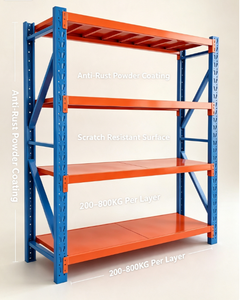
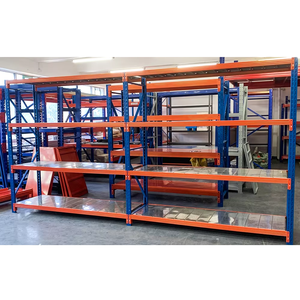
Engineered with high-tensile Q235B/Q355B cold-rolled steel, certified to RMI (ANSI MH16.1), FEM 10.2.02, and CE standards. Explore our primary industrial warehouse racking export solutions below.
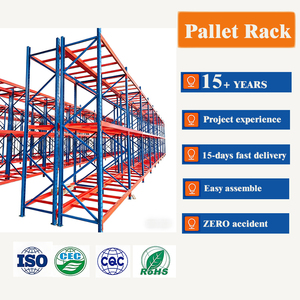
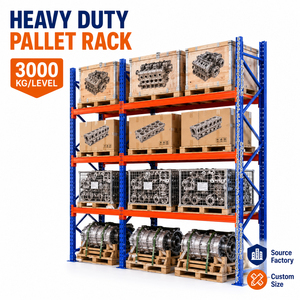
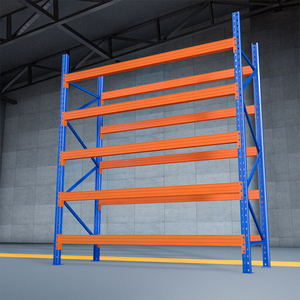
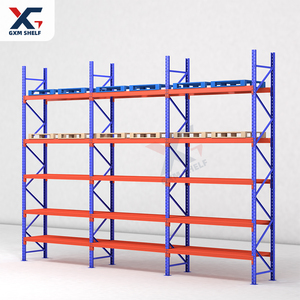
Enterprise Manufacturing Benchmark: Engineering Integrity & OEM/ODM Excellence
As one of China’s premier warehouse racking exporters and wholesale manufacturers, our structural engineering practices are grounded in nearly seven decades of collective industrial manufacturing heritage. The modern logistics landscape demands far more than basic steel shelving; it requires seismic-aware, load-optimized, and structurally validated storage frameworks tailored to specific operational dynamics, slab compression limits, and material handling automation interfaces.
Every upright frame, beam profile, and connector bracket manufactured in our state-of-the-art facilities undergoes rigorous mechanical testing. We exclusively source structural-grade, cold-rolled steel coils—primarily Q235B and Q355B (equivalent to SS400 and ASTM A572 Grade 50)—ensuring minimum yield strengths ranging from 235 MPa to 355 MPa. Through precision roll-forming technology, continuous automated punching lines, and robotic MIG welding workcells, our racking components maintain dimensional tolerances under ±0.5mm, critical for seamless field assembly and long-term structural equilibrium under maximum rated static and dynamic loads.
Automated Powder Coating
Multi-million-dollar 8-stage pre-treatment and electrostatic epoxy-polyester powder coating lines deliver 60-80 μm paint thickness, resisting tropical humidity and coastal salt-spray corrosion per ISO 9227 standards.
Seismic Engineering
Engineered compliance with RMI (ANSI MH16.1), EN 15512, and regional seismic codes. Lateral frame bracing, oversized anchor baseplates, and micro-alloyed steel ensure earthquake force mitigation.
Strict Quality Control
From spectral metal analysis of raw coils to destructive load-to-failure testing, ultrasonic weld inspection, and thickness verification, our ISO 9001 quality regime ensures zero-defect export shipments.
Industrial Racking System Selection Matrix
Selecting the appropriate pallet storage geometry involves balancing cubic space utilization, SKU selectivity, stock turnover velocity (FIFO vs. LIFO), and capital expenditure per pallet position. The matrix below outlines technical performance criteria for key industrial racking systems engineered by China's leading OEM exporter:
| Racking Architecture | Primary Material / Steel Grade | SKU Selectivity | Storage Density | Stock Rotation Method | Ideal Application / Environment |
|---|---|---|---|---|---|
| Selective Pallet Rack | Q235B / Q355B Cold-Rolled Steel | 100% Immediate Direct Access | Standard (30% - 40% Cube) | FIFO / LIFO (Universal) | General Logistics, E-Commerce FMCG, High SKU Count Warehouses |
| Double-Deep Pallet Rack | Q355B High-Yield Structural Steel | 50% Direct Access | High (50% - 60% Cube) | FILO / LIFO | Cold Storage, Batch Distribution, Dry Goods Wholesalers |
| Drive-In / Drive-Thru Rack | Structural / Roll-Formed Hybrid | Low (Per Lane Basis) | Very High (up to 75% Cube) | LIFO (Drive-In) / FIFO (Drive-Thru) | Seasonal Agro-Exports, Beverage Canning, Low-SKU High-Volume |
| Pallet Flow (Gravity) Rack | Heavy-Duty Steel Frames & Braked Rollers | Moderate (Per Lane Pick Face) | Ultra High (up to 85% Cube) | Strict FIFO (First-In, First-Out) | Perishable Foods, Pharmaceuticals, Expiry-Date Managed Goods |
| Push-Back Cart Rack | Telescopic Steel Carts & Guidance Rails | Moderate (Per Lane Pick Face) | High (2 to 6 Pallets Deep) | LIFO (Last-In, First-Out) | Medium Turnover Distribution, Staging Areas, Manufacturing Buffers |
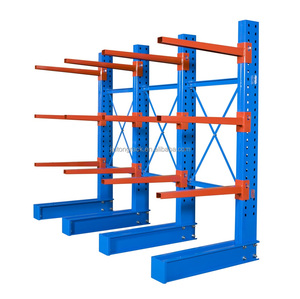
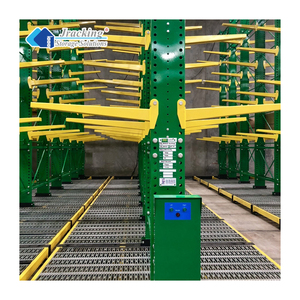
| Heavy-Duty Cantilever Rack | Structural I-Beam Column & Arm Forgings | 100% Direct Linear Access | Variable (Optimized for Length) | N/A (Continuous Linear) | Steel Pipe Storage, Timber, Aluminium Extrusions, Sheet Metal |
| AS/RS Automated Crane Racking | Precision Ultra-Tolerant Structural Steel | 100% System Controlled | Maximum (Height up to 45m) | WMS Dynamic Automatic | Fully Automated High-Bay Warehouses, Smart Logistics Parks |
Future Industry Trends: The Evolution of Warehouse Storage Racks
The industrial warehousing sector is undergoing a profound structural transformation driven by supply chain digitalization, labor shortages, urban land scarcity, and environmental sustainability mandates. As global wholesalers and engineering procurement teams source storage rack systems from China, several strategic technological trends are shaping future product specification roadmaps:
1. Hybrid Automation Readiness & AMR-Integrated Storage Structures
Traditional static selective racking is increasingly being upgraded to Autonomous Mobile Robot (AMR) and Radio Shuttle compatible frameworks. Modern warehouse design mandates racking uprights engineered with ultra-precise bottom clearance, guide rail alignments, and sensor-reflective target zones. Multi-tier pick modules and rack-supported mezzanine platforms now integrate automated vertical reciprocating conveyors (VRCs) and overhead conveyor loops, requiring Chinese rack manufacturers to adhere to tighter structural deflection limits (L/300 to L/600 under full live load).
2. Structural Roll-Forming Optimization & Micro-Alloyed High-Tensile Steels
To reduce freight deadweight and carbon footprint without sacrificing load-bearing capacity, forward-thinking exporters are shifting toward advanced micro-alloyed, high-yield steel formulations (such as Q355 structural steel with trace Vanadium/Niobium additions). By utilizing multi-stage cold-roll forming lines with up to 30 roll passes, complex profile geometries—such as 12-fold column profiles and stepped beam designs—achieve superior moment of inertia and torsional resistance while optimizing raw material consumption.
3. Advanced Anti-Corrosion Technologies for Cold Chains and Harsh Environments
With the rapid expansion of global cold-chain logistics (operating at sustained temperatures from -25°C down to -40°C), traditional powder coatings often face micro-fracturing due to thermal contraction stress. China’s top racking manufacturers are introducing Hot-Dip Galvanized (HDG) coating per ASTM A123 / EN ISO 1461 and Pre-Galvanized High-Zinc Alloy Steel sheets (Zinc-Aluminium-Magnesium coatings) that self-heal along cut edges, providing 30+ years of maintenance-free service in blast freezers and humid tropical port environments.
4. Structural Health Monitoring & IoT-Enabled Smart Racking
The integration of IoT structural health sensors directly into upright column bases and load beams represents a major breakthrough in warehouse risk mitigation. Low-power wireless strain gauges and impact sensors detect MHE (Material Handling Equipment) forklift collisions in real-time, sending immediate alerts to warehouse safety managers before catastrophic frame buckling occurs. This shift from reactive maintenance to predictive rack structural monitoring is redefining enterprise facility management protocols globally.
Strategic Procurement Trends for Global Racking Buyers
For enterprise procurement directors, project contractors, and regional distributors sourcing warehouse pallet storage racks from China, raw product price per kilogram is no longer the sole decision vector. Total Cost of Ownership (TCO), supply chain resilience, and freight optimization govern international purchasing strategies:
Container Loading Optimization
Pallet racking components possess high weight-to-volume variance. Advanced nestable beam profiles, teardrop column stacking, and custom steel-palette bundling maximize 40ft HQ container utilization up to 26,000–28,000 kg limits, reducing sea freight costs per pallet position by up to 22%.
Engineering Documentation Support
Tier-1 Chinese exporters provide turnkey engineering packages, including AutoCAD installation layouts, 3D BIM models, Structural Finite Element Analysis (FEA) reports, and stamped calculation packets verified by licensed third-party structural engineers.
Total Cost of Ownership (TCO)
Direct factory-direct wholesale pricing combined with standardized, interchangeable boltless connection designs accelerates site installation speed, minimizes job-site labor hours, and delivers lower lifetime operational expenses.
Request Technical Drawings & Factory-Direct Wholesale Pricing
Our senior structural engineering team is available to assist with warehouse CAD layouts, seismic load calculations, and competitive FOB/CIF quotation packets.
Frequently Asked Technical & Procurement Questions
Below are expert responses to critical structural, regulatory, and logistics queries commonly posed by international warehouse project managers, supply chain consultants, and racking distributors:
How do Chinese racking manufacturers ensure structural compliance with international standards like RMI, FEM, and EN 15512?
Leading Chinese warehouse racking exporters design, calculate, and test racking components strictly in accordance with international structural engineering codes. For North American export projects, calculations comply with the ANSI MH16.1 standard published by the Rack Manufacturers Institute (RMI). For European and international markets, components are designed per EN 15512 and FEM 10.2.02 guidelines.
Compliance is verified through full-scale mechanical testing of stub columns, beam-to-column connector lock-in connections, baseplate anchor assembly shear tests, and horizontal frame rack stability evaluations conducted at certified independent laboratories (such as SGS, TÜV Rheinland, or Intertek).
What concrete slab thickness and compressive strength are required for heavy-duty pallet rack installation?
A standard heavy-duty selective pallet rack installation carrying 1,000 kg to 3,000 kg per level generally requires a reinforced concrete floor slab with a minimum thickness of 150 mm to 200 mm (6 to 8 inches) and a characteristic compressive strength of at least 25 MPa to 30 MPa (3,500 to 4,000 PSI).
For high-bay racking systems (exceeding 8 meters in height) or high seismic zones, a slab thickness of 250 mm+ with double-layer rebar mesh and specific floor flatness tolerances (per ACI 117 or TR34 Superflat specifications) is mandatory to prevent anchor pull-out, localized concrete punching shear failure, and differential mast tilting.
When should a facility specify Hot-Dip Galvanized (HDG) finish versus Epoxy Powder Coating?
Electrostatically Applied Epoxy Powder Coating (60–80 microns thick) is the optimal and most economical choice for dry, climate-controlled indoor warehouses, ambient distribution centers, and standard retail storage environments.
Hot-Dip Galvanizing (HDG per ASTM A123), which immerses cleaned steel into molten zinc to achieve a 55–85 micron zinc-alloy barrier, must be specified for:
- Outdoor racking or open-air staging facilities exposed to direct rainfall and UV radiation.
- Cold storage and blast freezer facilities with high humidity condensation potential during wash-down cycles.
- Chemical, fertilizer, or salt storage facilities requiring superior atmospheric corrosion resistance.
How does seismic zone classification affect upright frame and beam design?
When racking is installed in active seismic regions, lateral seismic acceleration forces must be factored into structural calculations. This requires:
- Increasing upright column profile depth and wall thickness (e.g., upgrading from 1.8mm to 2.3mm or 2.5mm steel).
- Installing heavier horizontal and diagonal dynamic seismic frame bracing.
- Utilizing enlarged, heavy-duty floor baseplates with dual post-installed mechanical wedge anchors or chemical epoxy anchors embedded to greater depths.
- Employing top-tie beams and row spacers to mechanically bind back-to-back rack rows into a unified structural block.
Can upright column damage be repaired, or must the entire frame be replaced?
Minor cosmetic scratches or minor localized impacts that do not exceed industry deformation limits (such as a 3mm gap over a 1-meter straightedge per FEM guidelines) may not require immediate frame replacement. However, structural creasing, torn steel, or column buckling severely compromises structural safety.
To avoid the massive operational disruption of unloading and dismantling entire bay arrays, our factory supplies engineered bolt-on rack repair kits. These custom-manufactured heavy-gauge structural boots allow certified technicians to jack up the affected load bay, cut away the damaged lower column section, and anchor a heavy-duty, impact-resistant repair sleeve directly into the existing slab without disassembling the upper rack structure.
What technical data is required to receive a precise CAD design and factory quote?
To provide a fully optimized rack layout and itemized price breakdown, our engineering team requires:
- Pallet Specifications: Width, Depth, Height including cargo (mm), and Maximum Gross Weight (kg).
- Building Layout: Architectural floor plan (DWG or PDF) showing clear ceiling height, building column grid centers, warehouse doors, overhead obstructions, and fire sprinkler clearances.
- MHE Details: Forklift lift height capacity, turning radius, and minimum aisle width requirements (e.g., Reach Truck vs. Counterbalance vs. VNA Turret Truck).
- Environmental Factors: Ambient temperature range and regional seismic acceleration zone requirements.
Partner with China's Premier Racking Exporters
Whether you are planning a greenfield logistics center, upgrading an existing distribution hub, or seeking an established OEM contract manufacturing partner for structural steel storage systems, our engineering team provides end-to-end support—from initial CAD floorplan development to precision fabrication and worldwide containerized export delivery.