Featured Industrial Pallet Racking & Storage Systems
Direct factory supply from China's leading exporter—engineered for heavy-duty structural performance, strict safety compliance, and maximum cubic space utilization.
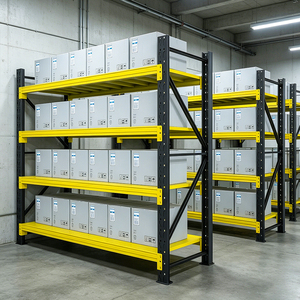
Warehouse Racking Pallet Rack Small Parts Shelves Tires Stacking Racks
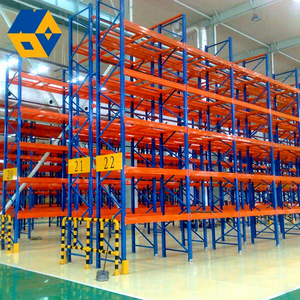
Customized Industrial Warehouse Storage Steel Heavy Duty Pallet Rack
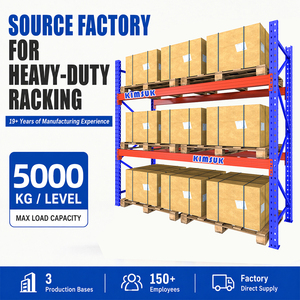
Heavy Duty Pallet Racking System (1000-5000kg Capacity)
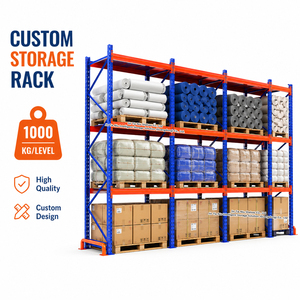
1000KG Industrial Adjustable Storage Racking System Factory Direct
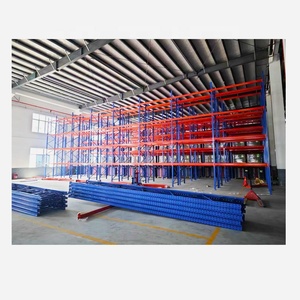
Customized Heavy Duty Industrial Warehouse Pallet Racking System
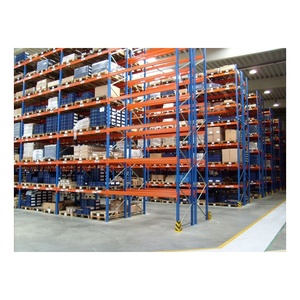
Industrial Adjustable Steel Selective Pallet Rack System
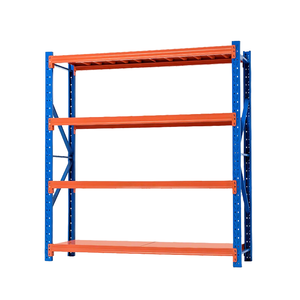
Industrial 4-Layer Light Duty Boltless Metal Shelving Rack
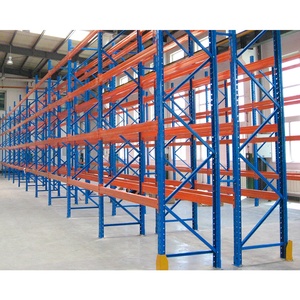
Customized Pallet Rack System with Integrated Safety Protection
Why Global Logistics Leaders Choose Our Racking Engineering
Leveraging nearly 70 years of pioneering structural steel fabrication heritage, automated multi-million-dollar powder coating lines, and global supply chain partnerships.
High-Grade Structural Steel Fabrication
We utilize premium certified Q235B and Q355B structural steel coils. Advanced cold-roll forming processes maintain strict structural profile tolerances within ±0.5mm, ensuring exceptional yield strength and long-term fatigue resistance under full rated loads.
Automated Powder Coating & Finish
Multi-million-dollar automated electrostatic powder coating lines deliver a uniform 80-120μm protective barrier. Tested for 500+ hours under salt spray conditions (ASTM B117), our finishes withstand high humidity, coastal environments, and cold storage sub-zero (-30°C) operation.
Seismic Analysis & Global Compliance
Every structural design undergoes finite element analysis (FEA) compliant with RMI (ANSI MH16.1), FEM 10.2.02, and AS4084-2012 standards. Custom baseplates, heavy-duty floor anchors, and engineered sway bracing ensure compliance with strict local building codes worldwide.
Turnkey Export Logistics & Packaging
We optimize freight cubic capacity using customized steel banding, protective wooden skids, and corner edge guards. Our global export department manages full container loading (FCL), sea freight clearance, and site delivery to over 90 countries seamlessly.
Mobile Engineering Tools & Support
We empower field engineers and warehouse managers with specialized digital planning tools—including mobile load capacity calculators, beam deflection charts, and installation guidance apps to streamline project execution on site.
Integrated Safety & Damage Protection
Protecting your racking investment is paramount. We supply heavy-duty aisle protectors, wrap-around column guards, and engineered bolt-on upright repair kits that allow in-situ restoration without disturbing full warehouse operations.
Evaluating Industrial Pallet Racking Architecture
An authoritative technical guide on selecting, structural sizing, and configuring industrial warehouse shelving for distribution centers, manufacturing plants, and cold storage facilities.
1. Selective Pallet Racking: The Standard for 100% Selectivity
Selective pallet racking remains the most widely implemented storage design across global distribution networks. By providing direct, unhindered 100% access to every pallet position, selective racking accommodates high SKU variation, fast-moving inventory turnover, and diverse material handling equipment (counterbalance forklifts, reach trucks, and VNA narrow-aisle stackers).
Our heavy-duty selective systems feature continuous roll-formed step beams with heavy 3 or 4-hook connector brackets, attached to vertical teardrop or structural upright frames. Beam elevation pitch adjustments are available in standard 50mm or 75mm increments, allowing warehouse managers to optimize vertical cubic space precisely according to pallet load height.
Engineering Rule of Thumb: Beam Deflection Limit = L / 240. For a 2700mm clear beam span, maximum allowable deflection under full rated load must not exceed 11.25mm to ensure structural integrity and safe forklift operator clearance.
2. High-Density Pallet Storage Systems: Drive-In, Push-Back & Pallet Flow
When warehouse real estate costs are high, or when operating cold-chain facilities where refrigerated cubic space carries high operational expense, high-density racking configurations drastically increase storage volume per square meter:
- Drive-In / Drive-Thru Racking: Eliminates operating aisles by allowing forklifts to drive directly into continuous racking lanes. Operating on a Last-In, First-Out (LIFO) or First-In, First-Out (FIFO) principle, Drive-In systems increase warehouse storage density by up to 75% compared to conventional selective configurations. Recommended for low-SKU, high-volume homogenous products.
- Push-Back Cart Racking: Utilizes nested dynamic carts riding on inclined structural steel rails. As a new pallet is loaded from the aisle, it pushes the preceding pallet back. When unloaded, gravity automatically feeds the next pallet forward. Configurable from 2 to 6 pallets deep per lane, offering a balance of high density with superior selectivity compared to Drive-In rack.
- Gravity Pallet Flow Racking: Integrates full-width steel roller tracks set on a precise slope (typically 3.5% gradient) with internal centrifugal speed controllers and automatic separation brakes. Pallets are loaded at the rear charge face and roll seamlessly toward the front discharge face, guaranteeing flawless First-In, First-Out (FIFO) rotation—vital for perishable foodstuffs, pharmaceuticals, and date-sensitive agricultural exports.
3. Specialized & Heavy-Duty Cantilever and Stacking Systems
Non-standard inventory shapes—such as structural steel pipes, timber packs, aluminum extrusions, and automotive tires—require specialized structural geometry. Heavy-Duty Cantilever Racks eliminate front upright columns, utilizing central structural towers with extending cantilever arms (capable of supporting up to 3,000kg per arm). For tire logistics and seasonal batch distribution, specialized portable tire stacking frames allow safe vertical stacking up to 5-high without sacrificing floor flexibility.
| Racking Architecture | Direct Selectivity | Storage Density | Rotation Rule | Optimal Application | Max Load Range / Level |
|---|---|---|---|---|---|
| Selective Pallet Rack | 100% Direct Access | Standard (40-50%) | FIFO / LIFO (Flexible) | High SKU count, general DC logistics | 1,000 kg – 4,500 kg |
| Drive-In / Drive-Thru | Low (20-30%) | High (75-85%) | LIFO (Drive-In) / FIFO (Thru) | Cold storage, bulk chemical, single-SKU | 1,000 kg – 2,000 kg |
| Push-Back Cart System | Moderate (40-50%) | Very High (70-80%) | LIFO (By Lane) | Beverage distribution, medium SKUs | 1,000 kg – 2,500 kg |
| Gravity Pallet Flow | Moderate (One face/lane) | Maximum (85%+) | Strict FIFO | Perishable food, cold chain, pharma | 1,000 kg – 1,800 kg |
| Heavy-Duty Cantilever | 100% Direct for Long Loads | Variable | Flexible | Pipes, lumber, steel bars, sheet metal | 1,000 kg – 6,000+ kg |
| Automated AS/RS Structure | 100% System Controlled | Ultra High (90%+) | WMS Automated (FIFO) | High-throughput automated fulfillment | 500 kg – 2,000 kg |
Future Trends in Pallet Rack Manufacturing & Global Procurement
Strategic foresight into material science evolution, warehouse automation integration, and sustainable supply chain requirements transforming industrial storage purchasing.
AS/RS & Automated Shuttle Integration
Modern supply chains are rapidly transitioning from manual forklift picking to Automated Storage and Retrieval Systems (AS/RS) and four-way radio pallet shuttle cars. Racking manufacturing in China is shifting toward high-precision structural tolerances (±1.0mm cumulative vertical tolerance over 20 meters height). Mill-certified steel profiles with zero twist and micro-smooth laser-guided rail channels are now standard requirements for automated dark warehouses.
High-Yield Steel Alloys & Carbon Neutrality
Procurement managers are prioritizing ultra-high-strength steel grades like Q355B and specialized micro-alloyed cold-rolled steels. These advanced alloys reduce the deadweight mass of upright frames by 12–18% while maintaining identical structural load capacities. Concurrently, zero-VOC powder coatings, closed-loop water treatment in prep spray booths, and solar-powered manufacturing plants are becoming key criteria in ESG supply chain audits.
Smart IoT Structural Health Monitoring
Next-generation industrial racking structures are integrating embedded strain gauges, piezoelectric impact sensors, and inclination monitors directly within heavy-impact upright baseplates. Connected via wireless LoRaWAN or Bluetooth Mesh to central Warehouse Management Systems (WMS), these real-time sensors instantly alert safety managers when a forklift collision exceeds structural deformation thresholds, preventing catastrophic structural collapse.
Modular Upright System Standardization
To mitigate global supply chain disruptions, B2B buyers are demanding standardized rack connectivity. Modular tear-drop and multi-hook connector profiles allow seamless cross-compatibility, enabling facility managers to expand existing installations, replace damaged upright bays, or reconfigure beam heights without incurring total system replacement expenses or proprietary vendor lock-in.
B2B Procurement Checklist for Importing Racks from China
A structured technical evaluation matrix for enterprise supply chain executives, logistics directors, and industrial contractors sourcing high-volume storage infrastructure.
Sourcing pallet racking directly from top Chinese manufacturers offers unmatched cost-efficiencies and production scale. However, ensuring structural reliability and regulatory compliance across international borders requires a strict engineering procurement protocol:
1. Raw Material Verification (MTC)
Demand EN 10204 3.1 Mill Test Certificates for all steel coils used in production. Verify chemical composition (Carbon, Manganese, Silicon limits) and mechanical tensile/yield strength parameters to guarantee structural compliance with engineering design drawings.
2. Weld Inspection & Certification
Ensure robotic welding operations comply with ISO 3834-2 and AWS D1.1 structural welding standards. Beam end connector welds must undergo routine Non-Destructive Testing (NDT) such as Ultrasonic or Dye Penetrant testing to ensure full joint penetration without porosity.
3. Coating Thickness & Adhesion
Inspect powder coat finish using magnetic thickness gauges. Coating must maintain 80–120 microns thickness with cross-hatch adhesion test performance rating Class 0 (ISO 2409) to prevent peeling and premature corrosion in high-use environments.
Frequently Asked Questions (FAQ) for Global Buyers
Direct answers from our senior engineering team on technical specifications, international shipping, structural safety, and custom OEM manufacturing.
How do I verify if a racking manufacturer complies with international safety standards like RMI or FEM?
Compliance is verified through third-party engineering test reports and structural calculations performed according to RMI (ANSI MH16.1 in North America), FEM 10.2.02 (Europe), or AS4084-2012 (Australia). Reputable Chinese exporters submit their upright sections and beam connectors to independent testing laboratories (such as SGS, TÜV, or Bureau Veritas) for full-scale compression, bending, and hook-engagement tests. Always request original stamped structural load capacity tables and laboratory test certificates prior to contract execution.
What steel grade is recommended for heavy-duty pallet racking applications?
For standard heavy-duty upright frames and beam sections, Q235B steel (yield strength ≥ 235 MPa) is the industry standard baseline. However, for high-bay installations, high seismic zones, or extreme loading requirements exceeding 3,000kg per level, high-strength Q355B steel (yield strength ≥ 355 MPa) is utilized. Q355B allows thinner gauge profiles without compromising safety factors, significantly reducing total freight tonnage and freight costs.
How does sub-zero cold storage impact pallet racking structural integrity?
Operating in cold storage or freezer environments down to -30°C requires specific material engineering. Extreme cold increases steel brittle-fracture risk. We specify high-impact killed steel grades with guaranteed Charpy V-notch impact toughness at sub-zero temperatures. Furthermore, specialized powder coat formulations with enhanced flexibility are applied to prevent micro-cracking caused by thermal contraction, maintaining total moisture barrier protection against corrosion.
What information is required to receive an accurate racking design layout and price quotation?
To produce an engineered proposal, our design engineers require: (1) Warehouse building floor plan CAD drawing indicating clear height, column grid locations, and dock doors; (2) Pallet dimensions (Length × Width × Height including goods); (3) Maximum load weight per pallet; (4) Forklift truck specifications (turning radius, maximum lift height, operating aisle width requirement); and (5) Operational temperature range and local seismic design requirements.
Can damaged racking uprights be repaired without dismantling the entire warehouse bay?
Yes. Forklift impacts typically damage the bottom 500mm to 1000mm of an upright frame. Instead of replacing the entire frame—which requires unloading adjacent bays and causing severe operational downtime—engineered bolt-on rack repair kits can be installed. Utilizing hydraulic jacking systems to temporarily support the load, the damaged lower section is cleanly cut away, and a heavy-duty, impact-resistant structural repair sleeve is bolted directly into place, fully restoring certified load capacity.
How are pallet rack components packaged to prevent damage during containerized sea transit?
Components undergo heavy export packaging protocols: Upright frames and beams are bundled using high-tensile steel strapping over heavy cardboard edge protectors. Custom wooden saddles and heavy-duty steel skids support the bottom of bundles, allowing smooth forklift handling during container loading and unloading. All small hardware (safety pins, baseplates, expansion anchors) are sealed in heavy moisture-proof plastic bags and packed in wooden crates.
What is the typical production lead time for a multi-container racking project from China?
Standard manufacturing lead time for orders ranging from 2 to 10 full container loads (FCL) is typically 20 to 25 calendar days following final CAD drawing approval and deposit receipt. For massive distribution center projects exceeding 50 containers, production is staged with rolling container shipments commencing within 18 days to ensure continuous installation progress on your job site.
Optimize Your Warehouse Capacity & Storage Efficiency Today
Consult directly with our senior structural engineers to receive a complimentary custom layout design, load capacity calculation, and factory-direct export quotation within 24 hours.
Get Catalog