High-Density Pallet Racking & Warehouse Storage Solutions
Direct from China's leading racking manufacturing plant. Engineered for extreme load capacities, cold-chain environments, and high-seismic integrity.
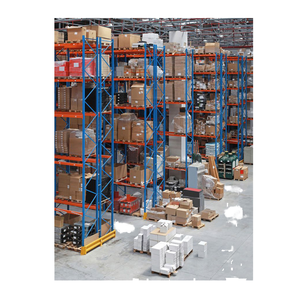
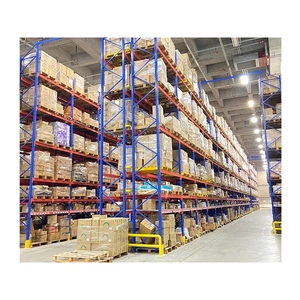
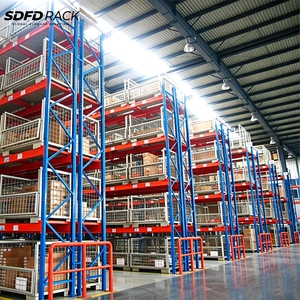
Technical Superiority of Push Back Pallet Racking Mechanics
An in-depth analysis of nested cart dynamic physics, structural steel load distribution, and operational efficiency for modern B2B procurement leaders.
Understanding Push Back Racking Structural Dynamics
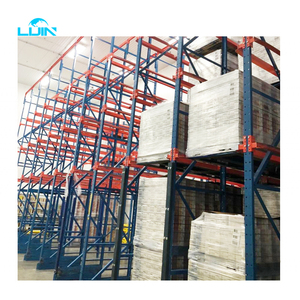
Push back pallet racking is a dynamic high-density Last-In, First-Out (LIFO) storage architecture engineered to bridge the gap between low-selectivity drive-in rack and high-cost automated storage systems. By utilizing a series of nested, inclined carts that ride on structural steel rails pitched at a precise 1.5% to 3% slope gradient, push back systems enable warehouses to store pallets from 2 to 6 deep while maintaining individual lane selectivity.
When a forklift operator loads the first pallet, it rests on the top nested cart. Loading the second pallet pushes the first pallet backward, exposing the secondary cart beneath it. This telescoping action repeats up to 6 pallets deep. Upon unloading, gravity smoothly moves the remaining pallets forward to the picking face, controlled by heavy-duty steel wheel bearings and safety stop limiters.
Nested Cart Engineering
Fabricated from low-profile, heavy-gauge steel plates. Carts nest flush inside each other to maximize vertical clear height utilization without sacrificing structural rigidity.
Precision Flow Control
Equipped with sealed stainless steel ball bearings and anti-lift safety clips that prevent cart derailment during aggressive forklift loading or seismic motion events.
Seismic Lateral Integrity
Engineered to withstand zone 4 lateral acceleration forces using heavy-duty base plates, double-anchor footings, and structural cross-bracing per CSCR/RMI regulations.
Structural Comparison Matrix: Push Back vs Alternative High-Density Systems
Selecting the optimal pallet storage matrix requires evaluating SKU mix, throughput speed, structural capital expenditure, and cubic space utilization efficiency:
| Storage System Type | Selectivity Level | Floor Space Utilization | Pallet Access Logic | Risk of Rack Damage | Ideal Industry Application |
|---|---|---|---|---|---|
| Push Back Pallet Rack | Medium (1 SKU per lane) | 75% - 85% Cubic Density | LIFO (Last-In, First-Out) | Extremely Low (Forklift stays in aisle) | Cold Storage, Food/Bev, General FMCG Wholesale |
| Selective Pallet Rack | 100% Direct Access | 35% - 45% Floor Density | FIFO / LIFO Flexible | Moderate (Frequent aisle maneuvering) | High-SKU Logistics, E-commerce Fulfillment |
| Drive-In Pallet Rack | Low (1 SKU per bay) | 75% - 85% Cubic Density | LIFO Strict | High (Forklift drives inside structure) | Homogeneous Bulk Goods, Seasonal Agricultural Export |
| Pallet Flow Gravity Rack | Medium (1 SKU per lane) | 80% - 90% Cubic Density | FIFO (First-In, First-Out) | Low (Aisle dedicated picking/loading) | Perishable Goods, Date-Controlled Pharma |
Future Procurement & Strategic Development Trends
How global logistics shifts, automation integration, and sustainable steel manufacturing are reshaping industrial racking procurement from China.
1. Hybrid Automation & AMR Compatibility
Modern Push Back rack designs are evolving to interface seamlessly with Autonomous Mobile Robots (AMRs) and Automated Guided Vehicles (AGVs). China wholesale manufacturers are integrating laser-guided positioning targets, widened front cart entries, and magnetic proximity sensors within nested carts to allow driverless forklifts to execute loading without manual positioning errors.
2. Cold Chain Infrastructure Boom
With global cold chain logistics expanding at an estimated 13.5% CAGR, push back racking is replacing standard selective racks in sub-zero refrigerated facilities (-30°C). By storing up to 6 pallets deep in freezer rooms where operational cost per cubic meter is premium, push back systems reduce thermal dissipation overhead and maximize power efficiency per pallet position.
3. Transition to High-Tensile Q355B Alloy Steel
Leading Chinese exporters are shifting manufacturing from traditional Q235 cold-rolled steel to high-yield Q355B (equivalent to ASTM A572 Grade 50). This material upgrading yields a 30% higher strength-to-weight ratio, enabling thinner structural profiles that maintain identical beam deflection thresholds while reducing total ocean freight shipping tonnage costs.
4. Automated Powder Coating & Anti-Corrosion Standards
Environmental regulations in China have driven state-of-the-art 12-stage automated electrostatic powder coating technology. Modern push back components receive zinc-phosphate pre-treatment followed by thermosetting epoxy-polyester powder baking, achieving >1000 hours salt-spray resistance required for humid tropical or coastal industrial installations.
Why Partner with China's Premier Push Back Racking OEM/ODM Supplier
Backed by nearly 70 years of structural manufacturing heritage, automated fabrication infrastructure, and global project execution experience.
End-to-End Engineering & FEA Stress Analysis
Our in-house structural engineering team utilizes ANSYS Finite Element Analysis (FEA) software to model frame compression, beam deflection, and dynamic wheel impact loads before steel cutting begins, guaranteeing exact ANSI MH16.1 compliance.
Precision CNC Robotic Welding Lines
Every beam connector, push back cart chassis, and rail assembly is welded using multi-axis Panasonic robotic arms. Continuous seam welds eliminate structural hot-spots, yielding unmatched fatigue strength under repetitive push-back force loading.
Strict Quality Assurance & Testing Rig
Every lot of nested carts undergoes a 10,000-cycle load endurance trial on our full-scale factory test track. Wheel bearings are tested under 150% overload conditions to ensure zero mechanical binding in freeze-thaw cycles.
Global Logistics & Containerized Export Packaging
Custom heavy-duty wooden crate packaging, steel strapping, and protective plastic wrap prevent moisture and transit scratch damage. Specialized container loading schemes ensure maximum cubic fill for lower ocean freight costs.
Frequently Asked Questions (FAQ)
Real-world answers to crucial engineering, operational, and commercial questions asked by international rack buyers and system integrators.
Why choose China Push Back Pallet Racking over local Western suppliers?
China's Tier-1 racking manufacturers deliver identical steel grades (Q355B/ASTM A572), strict RMI / ANSI MH16.1 design compliance, and robotic fabrication quality at 30% to 45% lower capital expenditure. Additionally, integrated steel supply chains in China guarantee faster raw material sourcing and shorter production lead times for large-scale logistics hub projects.
What forklift specifications are required for push back cart operation?
Standard counterbalanced, reach, or deep-reach forklifts can operate push back racking. The key requirement is that the forklift must possess sufficient pushing power (tractive force) to push back existing loaded pallets up the 1.5% - 3% rail slope. Ensure the mast tilt angle is properly calibrated during loading to maintain flat pallet placement on carts.
Can push back racking operate reliably inside -30°C cold storage freezers?
Yes. However, freezer applications require specialized low-temperature synthetic lubricants inside the sealed stainless steel cart bearings, as well as low-temperature carbon steel alloys that retain ductility under sub-zero thermal stress. Our cold-chain push back cart systems are purpose-built for continuous operation down to -30°C without mechanical freeze-ups.
What is the maximum weight capacity and lane depth available?
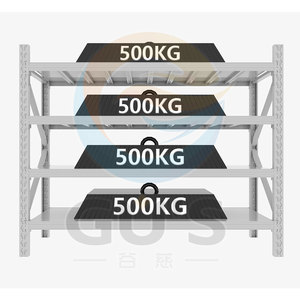
Standard cart configurations support 1,000 kg to 1,500 kg (2,200 lbs to 3,300 lbs) per pallet position. Custom structural push back cart systems can be engineered for heavy die storage up to 2,500 kg per position. Lane depths range from 2-deep, 3-deep, 4-deep, 5-deep, up to 6-deep pallets per lane.
How do you prevent pallets from sliding off inclined push back carts?
Nested carts feature safety perimeter lips and textured steel friction surfaces that lock wooden or plastic pallets securely in place. Additionally, rails are designed with integrated positive stop blocks at the front pick face, ensuring the front cart stops smoothly and securely at the aisle front.
What engineering drawings and certifications are provided with wholesale export orders?
Every project includes complete CAD layout drawings, elevation profiles, structural component capacity calculations, anchor load reaction tables, and material test certificates (MTC) verifying raw steel chemistry and tensile properties. Structural engineer-stamped calculations for local seismic codes (e.g., CSCR, IBC, ASCE) are available upon request.
Ready to Maximize Your Warehouse Storage Density?
Contact our senior structural racking engineers today for a complimentary warehouse CAD design layout, FEA stress simulation, and wholesale factory quotation.