High-Performance Industrial Pallet Racking Systems
Explore our factory-direct heavy-duty pallet racking systems engineered for high-density automated distribution centers, cold storage operations, and heavy machinery industrial warehouses worldwide.
Why Partner with China's Premier Racking System Factory
As a global frontrunner in warehouse equipment engineering and steel structural manufacturing, our facilities bridge the gap between high-capacity automated production and rigorous structural safety standards. Designing industrial racking is not merely forming sheet metal; it requires comprehensive mechanical engineering, finite element analysis (FEA), and material science. Whether implementing standard roll-formed selective pallet racking or heavy-duty structural steel cantilever systems, our manufacturing standard aligns strictly with International Storage Equipment Building Codes.
Q355B High-Yield Steel Sourcing
We utilize top-tier cold-rolled coils sourced directly from premium state steel mills (such as Baosteel and Shougang Group). By standardizing on structural grade Q235B and high-strength Q355B steel, our upright frames exhibit superior load-carrying resilience under static and dynamic loading.
Automated Powder Coating Line
Featuring multi-stage automatic phosphate pre-treatment, ultrasonic rust removal, and Swiss Gema electrostatic powder spray technology. Our baked thermosetting epoxy-polyester coatings deliver anti-corrosion barrier protection resistant to humid tropical warehouse environments and cold chain freezing.
Seismic-Aware Engineering Design
Every custom warehouse configuration undergo dynamic structural testing adhering to ANSI MH16.1 practice and global building codes (including North American RMI standards and European FEM 10.2.02). Base plate anchoring and beam connector locking safety pins are calculated specifically for localized seismic parameters.
Technical Breakdown of Industrial Warehouse Racking Architectures
Selecting the optimal storage geometry directly governs warehouse operational efficiency, floor-space utilization (cube utilization rate), inventory picking throughput, and total cost of ownership (TCO). Below is an engineering overview of key structural racking configurations engineered in our factory:
| Racking Architecture | Stock Access Rate | Storage Density | Ideal Logistics Application | Structural Profile Type |
|---|---|---|---|---|
| Selective Pallet Racking | 100% Direct Access | Medium (40-50% Floor Use) | FMCG, High SKU Diversity, E-Commerce Hubs | Roll-Formed Teardrop / Box Beam |
| Drive-In / Drive-Thru Rack | LIFO / FIFO Lane Based | Ultra-High (75-85% Floor Use) | Cold Storage, Agro-Exports, Single SKU Bulk | Heavy Duty Structural Channel Rail |
| Push-Back Rack System | LIFO Pick Face Access | High (60-70% Floor Use) | Medium SKU Count, Food & Beverage Distribution | Nested Telescoping Cart on Incline |
| Gravity Pallet Flow Rack | Strict FIFO Automatic | High (70-80% Floor Use) | Perishable Goods, Pharmaceuticals, Date-Coded Lots | Precision Brake Rollers & Speed Controllers |
| Heavy-Duty Cantilever Rack | 100% Unobstructed Linear | Flexible Center Column | Steel Tubes, Aluminum Profiles, Timber, Rebar | Hot-Rolled H-Beam Columns & Tapered Arms |
1. Selective Pallet Racking Systems (Roll-Formed & Structural)
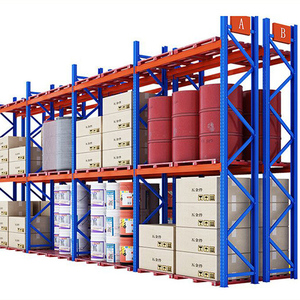
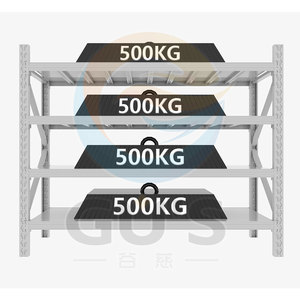
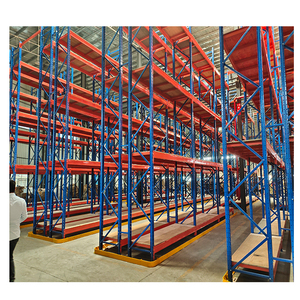
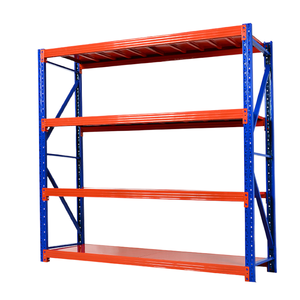
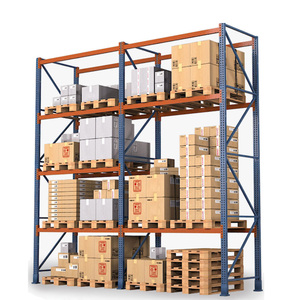
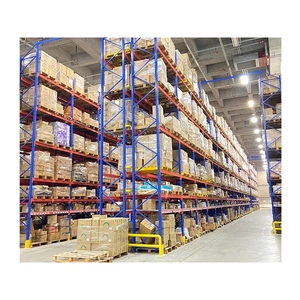
Selective racking remains the most versatile layout in material handling. Available in standard roll-formed tear-drop connectivity or structural bolted column profiles, this system allows individual pallet access without moving adjacent inventory. Upright frames feature continuous cold-roll formed profiles with 50mm or 76.2mm pitch adjustment holes, giving operators complete flexibility to modify shelf beam elevations as pallet height requirements evolve.
2. Heavy-Duty Cantilever Racking Systems
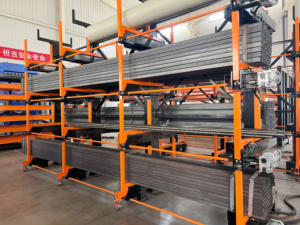
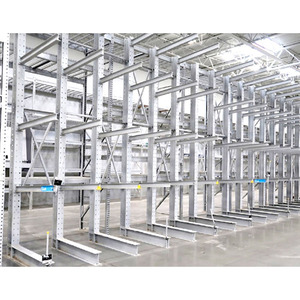
Engineered specifically for long, bulky, or oddly shaped materials such as steel pipes, extruded aluminum profiles, wooden timber, and plastic sheets. Designed without front vertical columns, cantilever racks provide unrestricted horizontal access for forklift side-loaders. Arms are connected to central uprights using high-tensile structural bolts or micro-adjustable pin sockets, equipped with safety lips to prevent load slip.
3. High-Density Drive-In and Push-Back Racking
For operations where warehouse footprint cost is at a premium—such as refrigerated cold storage facilities operating at sub-zero temperatures—high-density systems cut down on forklift aisle requirements. Drive-in racks permit forklifts to drive directly inside the structural racking lanes to deposit pallets on continuous support rails. Push-back systems utilize nested rolling carts on inclined steel channels, allowing up to 6 pallets deep per lane on a Last-In, First-Out (LIFO) schedule.
Future Procurement Trends in Industrial Racking Systems
As global supply chains transition toward Industry 4.0, warehouse procurement managers are evaluating pallet racking through a broader lens of automation compatibility, lifecycle sustainability, and structural resilience. Key purchasing trends shaping factory manufacturing standards include:
1. Integration with AS/RS & AMR Systems
Traditional manual selective racking is increasingly giving way to Automated Storage and Retrieval Systems (AS/RS) and Autonomous Mobile Robot (AMR) high-bay modules. Procurement demand now mandates tighter structural tolerances (+/- 1.5mm straightness deflection limits) to allow automated crane shuttles and robotic guide rails to function seamlessly up to 40 meters in height.
2. Green Steel Sourcing & Eco-Coating
Environmental, Social, and Governance (ESG) compliance has moved to the forefront of global enterprise procurement. Buyers prioritize factories utilizing scrap-recycled electric arc furnace (EAF) steel and zero-VOC solvent-free electrostatic powder lines to reduce the total embedded carbon footprint of their warehouse infrastructure.
3. Modular Impact Defense & In-Place Repair
Rather than discarding damaged uprights, modern warehouse designs integrate pre-engineered heavy-gauge column protectors, heavy wrap-around base guards, and modular bolt-on repair splices. Procurement contracts explicitly require standardized spare components to ensure ongoing operational uptime.
Industry & Manufacturing Technology Trends
Manufacturing pallet storage systems in China has evolved from basic metal fabrication into high-precision, automated industrial engineering. Key technology shifts driving product development in our manufacturing plants include:
- Robotic Laser Cutting & Continuous Roll-Forming Lines: Utilizing multi-axis CNC laser cutting ensures bolt-hole alignment accuracy down to sub-millimeter tolerances, eliminating assembly stress during on-site racking erection.
- Advanced Surface Pretreatments for Harsh Environments: Transitioning to heavy-duty Hot-Dip Galvanizing (HDG) for outdoor operations, coastal port hubs, and high-humidity chemical storage facilities where standard powder coat finishes could degrade over time.
- IoT Structural Strain Monitoring (Smart Racks): Integrating micro-sensor arrays into heavy-load beam connectors to monitor real-time beam deflection and dynamic load impact warnings, mitigating catastrophic warehouse collapse risks.
Frequently Asked Questions (Procurement & Engineering FAQ)
1. What raw material grades do you use for heavy-duty pallet racking frames?
We primarily use prime cold-rolled Q235B and high-strength Q355B carbon structural steel (equivalent to ASTM A36 and ASTM A572 Grade 50 respectively). Every steel batch comes with certified Mill Test Certificates (MTC) detailing yield strength, tensile performance, and chemical composition to guarantee load compliance under international standards.
2. How are racking load capacities verified and certified?
Structural load capacities are validated using Finite Element Analysis (FEA) software simulations complemented by physical destructive strain testing on full-scale upright frames and beam connectors. Design practices comply strictly with ANSI MH16.1 (Rack Manufacturers Institute - RMI) and European FEM 10.2.02 codes.
3. Can your factory manufacture custom sizes, OEM layouts, and non-standard colors?
Yes, we specialize in complete OEM/ODM customized racking production. Upright column depth, beam span lengths, material thicknesses, base plate anchor configurations, and RAL powder coat color schemes are customized based on your specific warehouse CAD layout, floor slab strength, and forklift specifications.
4. What coating finish options are recommended for cold chain and humid climates?
For standard indoor operations, our automated electrostatic powder coat finish delivers superior scratch resistance and durability. For sub-zero cold storage facilities or high-humidity coastal applications, we recommend upgraded heavy-duty epoxy powder coatings or Hot-Dip Galvanizing (HDG) to prevent rust and corrosion formation.
5. What critical parameters are needed for a custom warehouse layout proposal?
To provide an engineered drawing and quotation, we require: (1) Pallet dimensions (Length x Width x Height including cargo), (2) Maximum pallet load weight, (3) Warehouse clear height and door clearance, (4) Concrete slab thickness and strength rating, (5) Forklift model, minimum aisle turning radius, and max lift reach.
6. What is the standard production lead time for export orders?
Typical manufacturing lead times range from 15 to 25 business days following final engineering CAD drawing approval and deposit receipt. Large-scale distribution center projects exceeding 500 tons are scheduled in phased container shipments to align with your site installation timeline.
Ready to Optimize Your Warehouse Storage Footprint?
Consult directly with our senior structural racking engineers for free CAD layout design, structural load calculations, and competitive factory-direct pricing for your logistics expansion.
Contact Us