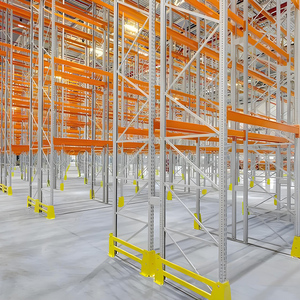
Flagship Industrial Storage Systems
Precision-engineered selective pallet racks, heavy-duty shelving, and radio shuttle automation certified to international RMI, FEM, and ISO standards.
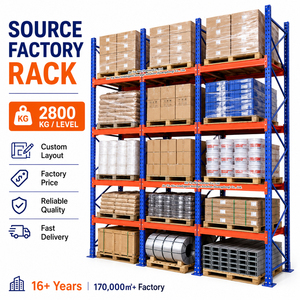
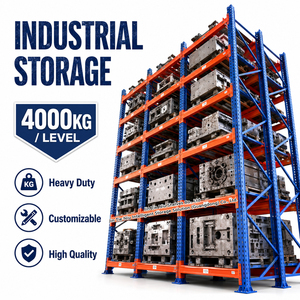
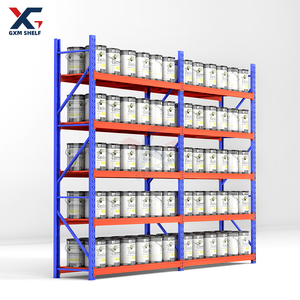
Sourcing Industrial Shelving & Racking from China: Executive Whitepaper
As global supply chains transition toward maximum spatial utilization, rapid order throughput, and strict structural resilience, selecting the right industrial shelving and storage manufacturer in China has evolved into a strategic engineering decision. China’s material handling manufacturing sector produces over 60% of the world's structural steel racking systems, utilizing advanced cold-roll forming technologies, robotic welding arrays, and automated thermosetting powder coat lines.
This technical whitepaper provides logistics directors, warehouse procurement managers, and civil structural engineers with actionable criteria for auditing Chinese racking suppliers, evaluating load capacity formulas, navigating seismic building codes, and selecting storage architecture tailored to modern distribution demands.
Key Takeaway for B2B Buyers: Purchasing rack systems is not merely a steel commodity purchase. It requires verifying cold-rolled yield strength (e.g., Q235B vs. Q355B structural steel), beam deflection limits ($L/200$ under full static load), baseplate anchor embedment physics, and compliance with ANSI MH16.1 (RMI) or EN 15512 specifications.
State-of-the-Art Automated Roll-Forming & Welding Production Plant
Structural Engineering Team Validating Load Bearing Capacities
Material Science & Structural Engineering Integrity
The performance of heavy-duty industrial storage racks depends entirely on steel grade consistency, upright profile geometric design, and surface treatment resilience against ambient oxidation.
1. Metallurgy: Q235B vs. Q355B Steel Profiles
Top-tier Chinese manufacturers utilize prime cold-rolled steel coils sourced from premier steel mills (such as Baosteel and Shougang). While standard commercial shelving often uses Q235B steel (yield strength $\sigma_y \ge 235\text{ MPa}$), high-bay pallet racking and automated storage systems mandate Q355B structural steel ($\sigma_y \ge 355\text{ MPa}$). Utilizing Q355B steel allows for thinner gauge profiles with higher load capacities, reducing overall tare weight and freight costs without sacrificing safety margins.
2. Upright Frame & Beam Connection Mechanics
Structural integrity depends heavily on the beam-to-column connection joint. High-grade Chinese storage suppliers utilize teardrop or 50mm/75mm pitch diamond-hole upright profiles connected via multi-hook cold-stamped connectors. Safety lock pins with gravity latch mechanisms prevent accidental beam displacement caused by forklift mast strikes.
System Selection Engineering Matrix
| Storage System Type | Optimal SKU Profile | Volumetric Efficiency | Selectivity Level | Structural Load Rating |
|---|---|---|---|---|
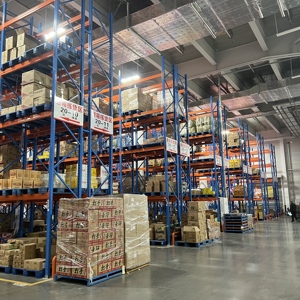
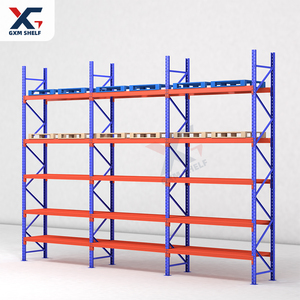
| Selective Pallet Racking | High SKU Variety, Low Volume | 40% - 50% | 100% Immediate Access | Up to 4,500 kg / beam level |
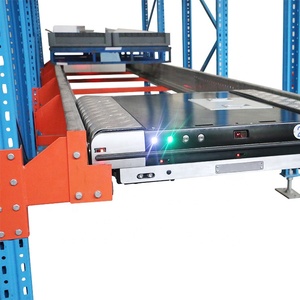
| Radio Shuttle System | Low SKU Variety, High Volume | 75% - 85% | LIFO / FIFO Automated | Up to 1,500 kg / pallet space |
| Push-Back Cart System | Medium SKU Variety, Medium Volume | 65% - 75% | LIFO per lane (2 to 6 deep) | Up to 1,400 kg / cart level |
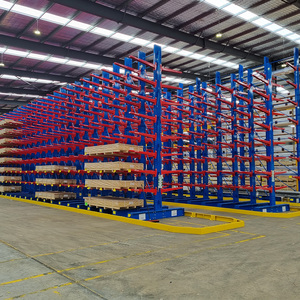
| Heavy Duty Cantilever Racks | Long, Bulky, Pipe/Lumber Cargo | 60% - 70% | 100% Linear Access | Up to 6,000 kg / arm assembly |
| Drive-In / Drive-Thru | Uniform Goods, Cold Chain | 70% - 80% | LIFO (Drive-In) / FIFO (Thru) | Up to 2,000 kg / pallet slot |
Technological & Product Future Evolution Trends
How Chinese manufacturing innovations are transforming industrial logistics infrastructure through automation, sustainable finishing, and smart monitoring.
1. AS/RS & Shuttle Integration
Conventional manual racking is transitioning to Automated Storage and Retrieval Systems (AS/RS) and 4-way pallet shuttle systems. Modern Chinese suppliers design racking columns with tighter tolerance profiles ($\pm 0.5\text{ mm}$) to accommodate high-speed robotic cranes and shuttle tracks.
2. Automated Powder Coatings
Environmental compliance shifts have led leading factories to adopt fully automated 200-meter-plus powder coating lines using non-toxic electrostatic epoxy-polyester coatings. These yield scratch-resistant finishes capable of passing 1,000-hour salt spray corrosion tests for humid and cold-storage environments.
3. Seismic-Resilient FEA Design
Utilizing Finite Element Analysis (FEA) software, top engineering departments model rack frame behavior under dynamic earthquake loads. Custom baseplate anchoring strategies and structural horizontal/diagonal bracing ensure compliance with regional seismic codes (such as US IBC or Costa Rica CSCR).
Future Global Procurement & Sourcing Strategies
Navigating cost management, supply chain resilience, and factory audit frameworks for international enterprise buyers.
Optimizing Freight & Container Loading (CBM Factor)
International shipping freight can represent 15% to 30% of total procurement costs. Premier Chinese manufacturers optimize product packaging through custom nestable beam nesting, knocked-down upright frames, and automated palletized bundling. This maximizes 40ft High Cube (40HQ) container utilization up to 26 metric tons or 58 CBM, drastically reducing per-unit transport expenses.
Total Cost of Ownership (TCO) & Supplier Auditing
A low initial quotation often hides substandard steel thickness or raw material mill test certificates (MTC). Enterprise procurement teams must evaluate suppliers based on TCO—factoring in installation speed, structural lifespan, availability of bolt-on column protectors, replacement part lead times, and factory ISO 9001 / CE quality assurance systems.
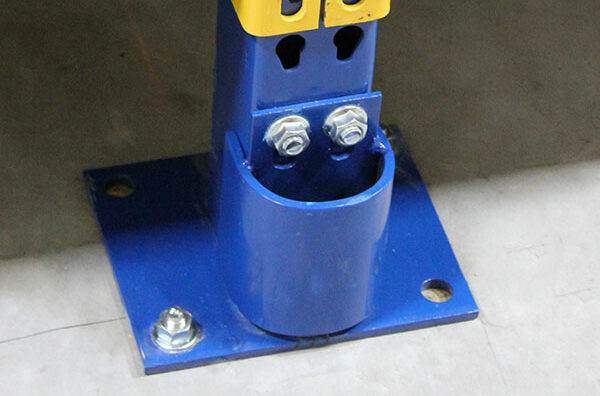
Heavy-Duty Bolt-On Column Protectors Engineered to Prevent Forklift Base Damage
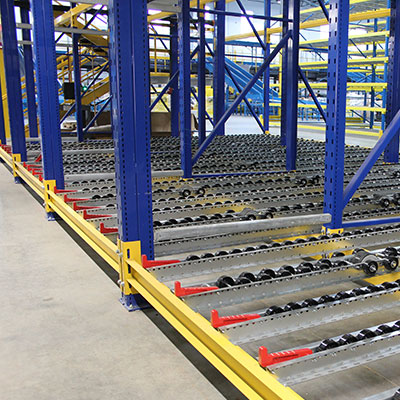
Gravity Pallet Flow Systems Featuring Corrosion-Resistant Powder Coat Finishes
Manufacturing Competencies & Engineering Excellence
Why leading global distribution centers rely on our OEM / ODM Chinese manufacturing infrastructure.
CNC Roll-Forming
Over 24 continuous cold roll-forming lines guarantee millimeter-precise profile punching, uniform beam stiffness, and zero internal structural stress buildup.
Robotic Welding
Fully automated robotic arm welding workcells ensure 100% penetration welds on all beam end connectors, eliminating human margin of error.
CAD/BIM Integration
In-house structural engineering teams produce complete AutoCAD drawings, 3D Revit BIM models, and structural calculation reports tailored to local building permits.
Turnkey Supply Chain
From raw material sourcing to export customs clearance, sea freight containerization, and site installation supervision, we offer complete end-to-end support.
Frequently Asked Questions (FAQ) for Industrial Procurement
Technical and logistics insights answered by senior warehouse structural engineers.
How do I verify the load capacity of industrial pallet racking supplied from China?
Verification requires reviewing Mill Test Certificates (MTC) for steel grade (Q235B/Q355B), confirming beam profile section modulus ($Z_x$), and inspecting physical test reports performed under RMI (ANSI MH16.1) or FEM 10.2.02 standards. Reputable manufacturers provide Finite Element Analysis (FEA) dynamic loading documentation and physical destructive test data for beam-connector assemblies upon request.
What concrete floor slab specifications are required for heavy-duty industrial racking?
For standard selective racking up to 6 meters high carrying 1,000 kg per pallet, a minimum concrete slab thickness of 150 mm with a compressive strength of at least $f'_c = 25\text{ MPa}$ (3,600 PSI) is typically required. Taller high-bay racks or seismic zone installations require slabs between 200 mm and 300 mm, reinforced with steel rebar or fiber, along with verified anchor bolt embedment depth evaluations.
What surface coating is best suited for cold storage or high-humidity facilities?
For standard dry ambient warehouses, electrostatic epoxy-polyester powder coat finishes (60–80 microns thickness) provide durable protection. However, for cold storage facilities (below $0^\circ\text{C}$), high-humidity tropical zones, or coastal marine warehouses exposed to salt air, hot-dip galvanizing (HDG according to ISO 1461) or specialized zinc-rich powder primers are recommended to prevent rust creep and coating delamination.
Can Chinese manufactured pallet rack components interlock with existing Western rack brands?
Many Chinese manufacturers produce standardized profiles such as American Teardrop (compatible with Interlake Mechalux, Speedrack, Dexion, etc.) or European 50mm pitch hook configurations. However, mixing components from different manufacturers in the same bay is generally discouraged by safety codes unless a licensed structural engineer verifies the exact connection tolerances and joint stiffness.
How do Chinese manufacturers address seismic design requirements for overseas projects?
Professional Chinese engineering departments analyze project location seismic acceleration coefficients ($S_s$ and $S_1$ values under IBC / ASCE 7 or regional codes like CSCR). Frame designs are reinforced using heavier gauge upright columns, larger seismic baseplates with double anchor holes, and extra horizontal-diagonal frame bracing arrays to dissipate seismic energy.
What is the typical manufacturing lead time and container packing efficiency for bulk orders?
Standard manufacturing lead time for standard roll-formed pallet racking is typically 15 to 25 days for a 5 to 10 container project. Upright frames are typically shipped knocked-down (KD) to optimize container volume, allowing a single 40ft High Cube (40HQ) container to hold up to 24,000 kg – 26,000 kg of structural steel components.
Optimize Your Warehouse Storage Capacity Today
Consult with our senior structural engineers for complimentary layout design, seismic calculation verification, and factory-direct price estimates tailored to your warehouse dimensions.
Get a Quote