High-Performance Industrial Racking Systems
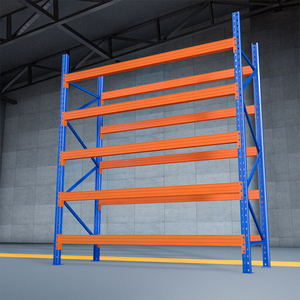
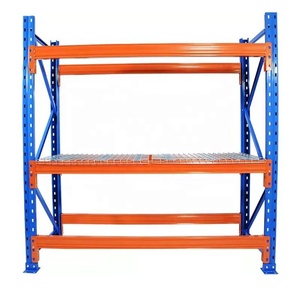
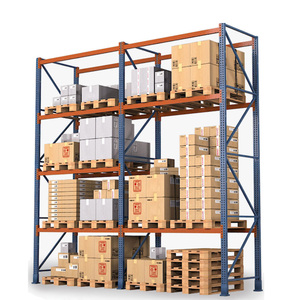
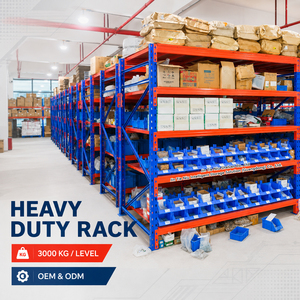
Why Premier Global Procurement Teams Partner with Our Manufacturing Plant
From structural finite element calculations to automated powder coating engineering, we deliver uncompromised reliability for heavy-duty industrial storage environments.
CE EN 1090-1 & CPR Compliance
Our structural manufacturing execution complies strictly with Construction Products Regulation (CPR) 305/2011. Every welded beam and cold-formed upright frame bears certified factory production control (FPC) trace codes, ensuring seamless European market clearance and audit compliance.
FEA Structural Optimization
Using advanced Finite Element Analysis (FEA) software, we stress-test column profile configurations under simulated seismic loads (Eurocode 8) and sway conditions. This guarantees optimal yield strength usage without excessive steel dead weight.
Automated Electrostatic Coating
Components undergo multi-stage degreasing, iron-phosphate pretreatments, and automated electrostatic thermosetting powder coating (60-80μm thickness). Tested to withstand 1,000+ hours of salt spray exposure (ASTM B117) for cold storage and high-humidity performance.
Industrial Insight: The Criticality of CE Marking in Structural Storage Systems
In modern industrial logistics, specifying warehouse racking is no longer merely a purchasing decision based on unit cost—it is an exercise in structural safety engineering and regulatory risk management. Under European Standard EN 15512:2020 (Steel static storage systems - Adjustable pallet racking systems - Principles for structural design) and EN 1090-1 (Execution of steel structures), warehouse racking is recognized as primary structural framework. Non-certified racking systems introduce massive liability risks, including structural collapse under dynamic forklift impact, unmitigated material fatigue, and immediate failure during seismic activity.
This whitepaper provides supply chain executives, warehouse engineering managers, and B2B procurement directors with an authoritative technical roadmap for evaluating, procuring, and deploying CE-certified industrial racking and shelving systems.
1. Engineering Standards & Metallurgy: Cold-Rolled Q235B vs. High-Yield Q355B Steel
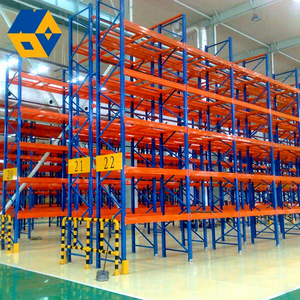
The structural load-bearing threshold of any selective or high-density pallet rack system relies fundamentally on the mechanical properties of its steel substrate and profile design. Modern factory suppliers utilize cold-formed thin-walled steel profiles to engineer upright frames, load beams, and secondary bracing elements.
Yield Strength & Profile Geometry
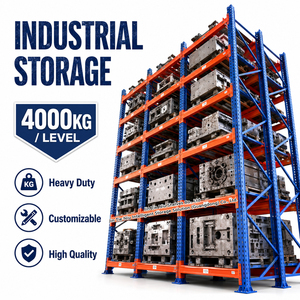
While standard warehouse shelving often uses Q235B steel (nominal yield strength of 235 MPa), heavy-duty selective pallet racking designed for 3,000kg to 4,000kg per layer utilizes high-tensile Q355B structural steel (yield strength of 355 MPa). The higher yield point allows column profiles to maintain structural stability under combined bending and compression stresses without suffering permanent plastic deformation.
Additionally, multi-ribbed column profiles—featuring 11 to 13 distinct bending folds along the upright section—significantly elevate the polar moment of inertia ($I_z$) and torsional stiffness, mitigating the risk of torsional-flexural buckling during eccentric loading events.
| Steel Grade | Yield Strength ($R_{eH}$) | Tensile Strength ($R_m$) | Primary Application |
|---|---|---|---|
| Q235B (S235JR) | ≥ 235 MPa | 360 - 510 MPa | Light/Medium Duty Shelving, Span Beams |
| Q355B (S355JR) | ≥ 355 MPa | 470 - 630 MPa | Heavy-Duty Uprights, High-Bay Racks, AS/RS |
| SS Grade 50 | ≥ 340 MPa | ≥ 450 MPa | Seismic Base Plates & Anchor Interfaces |
2. Structural Engineering Benchmarks Across Racking Architecture
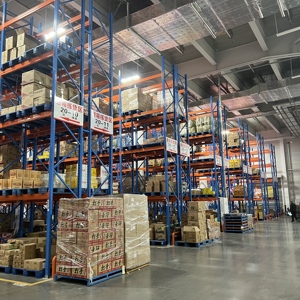
Procurement teams must select racking configurations tailored specifically to SKU density, inventory turnover velocity, and material handling equipment (MHE) constraints. Below is a comparative structural overview of core industrial racking topologies:
| Racking Topology | Structural Selectivity | Volumetric Cube Efficiency | Max Load Capacity / Level | LIFO / FIFO Operational Mode | Eurocode Seismic Suitability |
|---|---|---|---|---|---|
| Selective Pallet Racks | 100% Direct Access | 35% - 40% | Up to 4,500 kg | Flexible (Any Rotation) | High (Easily Braced) |
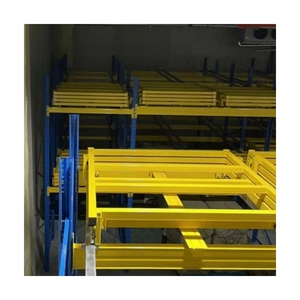
| Push Back Pallet Racks | 25% - 50% Selectivity | 65% - 75% | Up to 1,500 kg / Pallet Cart | LIFO (Last-In, First-Out) | Medium (Requires Cart Locks) |
| Drive-In / Drive-Thru Racks | 15% - 20% Selectivity | 75% - 85% | Up to 1,800 kg / Pallet Rail | LIFO (Drive-In) / FIFO (Drive-Thru) | High (Requires Top/Back Bracing) |
| Pallet Flow Racks | Lane-Based Selectivity | 80% - 85% | Up to 1,200 kg / Roller Position | Strict FIFO (First-In, First-Out) | High (Integrated Speed Controllers) |
| Automated AS/RS Structures | System-Controlled | 85% - 92% | Up to 2,000 kg / Crane Cell | Algorithm-Driven FIFO/LIFO | Maximum (Engineered Tolerances) |
3. Future Procurement Trends in Industrial Storage Infrastructure
As logistics operations transition toward Industry 4.0 automation and rigorous ESG (Environmental, Social, and Governance) targets, the specification guidelines for industrial shelving and racking are evolving rapidly:
3.1 Decarbonized Steel & Closed-Loop Sustainable Manufacturing
Leading global buyers now prioritize racking suppliers that utilize electric arc furnace (EAF) recycled steel and low-VOC powder coating processes. Standardizing on green-steel certified factory partners significantly lowers Scope 3 embedded carbon emissions across global supply chains.
3.2 AGV and AMR Autonomous Interface Integration
The rise of Autonomous Mobile Robots (AMRs) and automated forklifts demands tighter manufacturing tolerances. Conventional beam deflection limits ($L/200$) are being replaced by stringent $L/300$ or $L/400$ deflection thresholds under maximum static load to ensure optical sensors and robotic forks can execute smooth pallet insertion and extraction without collision errors.
3.3 Digital Twin Monitoring & IoT Load Cell Sensors
Enterprise logistics facilities are incorporating real-time telemetry into high-bay racking systems. Embedded strain gauges and IoT inclination sensors monitor beam deflection and column displacement in real time, alerting safety managers to overloading or structural tilt caused by ground settling or minor forklift impacts before catastrophic buckling occurs.
4. Next-Generation Technological Trends in Racking Development
Factory-level R&D is driving critical technical advancements in cold-formed section design and surface durability:
- Seismic Energy Dissipation Connections: Engineered semi-rigid beam-to-column connector locks with internal deformation slots absorb side-sway kinetic energy during seismic shockwaves, preserving the structural integrity of the overall upright frame.
- Nano-Ceramic Surface Pretreatments: Replacing conventional heavy-metal phosphatizing lines with eco-friendly nano-ceramic pretreatments enhances powder coat adhesion bonding by 40%, preventing micro-flaking and sub-film corrosion in refrigerated warehouses down to -30°C.
- Modular Bolt-On Upright Protectors: To mitigate the cost of whole-frame replacement, factories are developing high-yield steel straddle column guards that absorb impact loads independently of the load-bearing frame leg.
Download Our Comprehensive Engineering & Load Capacity Specification Guide
Gain complete structural drawings, material certification matrices, and beam elevation capacity charts verified under EN 15512 standards.
Get Catalog5. Comprehensive B2B Procurement FAQ (User Intent Mining)
Below are authoritative answers to primary technical and regulatory questions encountered by warehouse engineers, project consultants, and global procurement teams during racking procurement:
What specific guarantees does CE Certification under EN 1090-1 and EN 15512 provide?
CE Certification under EN 1090-1 (Execution Class EX2/EX3) confirms that the manufacturing facility operates under strict Factory Production Control (FPC), utilizing certified raw materials, audited welding procedures (EN ISO 3834), and non-destructive testing (NDT). EN 15512 compliance guarantees that all structural load ratings are calculated using validated limit-state design principles, incorporating appropriate safety factors for material yield ($\gamma_M$) and load actions ($\gamma_F$).
How do structural engineers verify upright load capacities and beam deflection limits?
Upright frame capacities are determined through full-scale stub column compression tests, frame sway tests, and connector stiffness calculations. Beam load capacities are calculated based on allowable deflection constraints—typically capped at $L/200$ (beam length divided by 200) for standard pallets, or $L/300$ for automated handling—preventing permanent deformation and ensuring safety pin lock engagement under maximum load.
What is the difference between roll-formed steel and structural hot-rolled channel racking?
Roll-formed racking uses cold-coiled sheet steel passed through multi-stage rolling dies to form open profiles, offering lower unit cost, weight efficiency, and easy tear-drop adjustable beam placement. Structural racking utilizes hot-rolled structural steel C-channels with bolted beam connections, providing extreme impact resistance and high load ratings for heavy industrial environments, outdoor staging yards, and high-impact forklift zones.
How does floor slab thickness and concrete grade impact racking installation?
Anchoring a heavy-duty pallet rack requires a minimum slab thickness (typically 150mm to 200mm) and a concrete compressive strength of at least C20/25 or C25/30. The anchor bolts (wedge expansion or chemical anchors) rely on slab depth to resist tension cone uplift forces generated during overturning moments, seismic activity, or accidental top-beam collisions.
Can damaged upright frames be safely repaired without completely unloading a bay?
Yes. Utilizing engineered bolt-on rack repair kits allows qualified engineers to replace the bottom damaged section of an upright column. A hydraulic jacking system temporarily takes the load of the frame, allowing the damaged leg to be cleanly cut away and replaced with an engineered, heavy-gauge replacement sleeve anchored directly to the slab—restoring full structural rating with minimal operational disruption.
What core technical data must be provided to obtain an engineered layout and quotation?
To generate a precise CAD layout and structural calculation, the buyer should provide: (1) Pallet footprint dimensions (Width x Depth x Height including load), (2) Maximum and average load weights per pallet, (3) Clear height under building trusses and location of fire sprinklers/lights, (4) Forklift model, maximum lift height, and minimum aisle turning radius (AST), and (5) Operating environment temperature range and local seismic zone coefficients.
6. Enterprise Global Supply Chain & Project Execution
As an established factory direct supplier, our manufacturing infrastructure encompasses over 80,000 square meters of production area, equipped with multi-station automatic cold-roll forming mills, robotic laser cutting cells, continuous automatic welding lines, and dual electrostatic powder coating lines. We deliver complete project support from initial layout CAD design and FEA structural validation to containerized export packaging and installation supervision across Europe, the Americas, the Middle East, and Asia-Pacific.
Partner with a Certified Racking Manufacturer
Optimize your warehouse cubic capacity, ensure regulatory safety compliance, and secure factory-direct pricing for your next expansion project.
Get Catalog