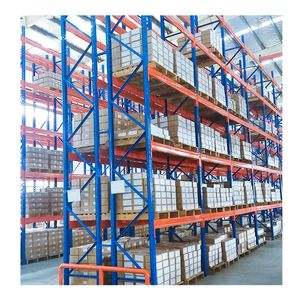
Direct Factory Wholesaler Catalog
High-Capacity Industrial Racking Systems
Explore our EN 15512 CE-certified structural steel warehouse storage systems designed for high-bay logistics centers, cold storage facilities, and heavy-duty industrial distribution hubs.
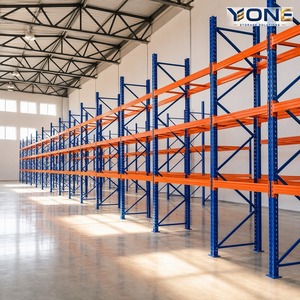
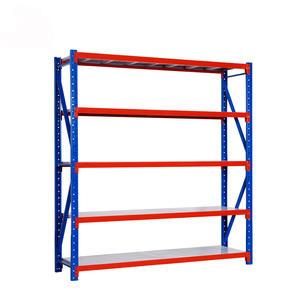
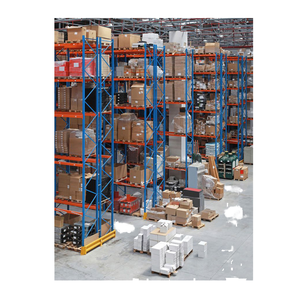
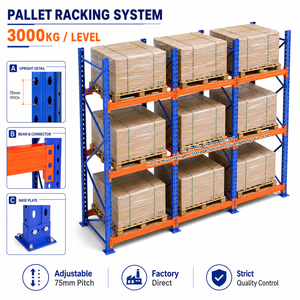
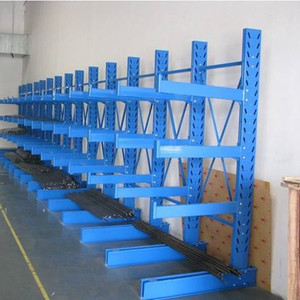
Technical Whitepaper · B2B Procurement Depth
Engineering Compliance, Structural Metallurgy & Seismic Safety in Modern Warehousing
Selecting industrial warehouse racking requires rigorous analysis of structural engineering parameters, material physics, and international compliance standards. For procurement directors, supply chain engineers, and warehouse safety officers, a failure to properly calculate dynamic loading, material yield strengths, or seismic shear forces can lead to catastrophic structural collapse, costly operational downtime, and severe regulatory penalties. As a premier **CE Certified Warehouse Racking Solutions Wholesaler & Wholesalers**, our manufacturing infrastructure is built upon structural integrity, rigorous empirical testing, and raw material traceability.
EN 15512 & CE Certification Rigor
European Standard EN 15512:2020 specifies the structural design requirements for adjustable pallet racking systems. Unlike basic static safety guidelines, EN 15512 mandates accounting for non-linear structural behavior, horizontal placement imperfections, beam-to-upright connector stiffness, and dynamic sway forces. CE marking guarantees that every upright, beam, and baseplate shipped from our facilities meets strict European Union health, safety, and environmental standards.
Q235B vs. Q355B Structural Steel Metallurgy
The foundation of load-bearing safety lies in high-tensile carbon steel chemistry. While standard light-duty racks utilize commercial-grade Q195 steel, our heavy-duty industrial selective racks, drive-in systems, and cantilever columns are cold-formed from certified Q235B (yield strength ≥ 235 MPa) and Q355B / S355 Structural Steel (yield strength ≥ 355 MPa). This guarantees superior ductility, fatigue resistance under cyclic forklift loading, and high resistance to impact deformation.
Seismic Engineering & FEM 10.2.02 Standards
Operating in high-seismic zones (such as Central America, the Pacific Rim, or Southern Europe) requires racking frames capable of absorbing lateral seismic forces without structural yield. Our engineering team utilizes finite element analysis (FEA) software to design frame bracing geometries, high-embedment anchor bolt layouts, and heavy-gauge footplates that comply with ANSI MH16.1, RMI, and FEM 10.2.02 specifications.
Information Gain Insight: The Physics of Connector Rigidity and Deflection Limits
A common failure in lower-tier wholesale racking is excessive beam deflection and connector shear failure under full load. According to EN 15512 standard guidelines, maximum vertical deflection ($\delta$) of any beam span ($L$) under total design load must not exceed $L/200$. Furthermore, our proprietary 3 to 5-claw teardrop and hook connectors utilize high-tensile cold-stamped steel that locks tightly into upright perforations under gravity, creating a rigid moment-resisting joint that minimizes dynamic rack sway by up to 34% compared to standard bolt-together frames.
Technical Matrix: Selective, Drive-In, Cantilever & High-Density Systems
Compare critical operational specifications to optimize cubic floor space, stock rotation protocols (FIFO vs. LIFO), and load capacities across your supply chain networks.
| Racking Architecture | Primary Material Grade | Max Load per Level | Selectivity & Access | Stock Rotation | Seismic & Heavy Duty Suitability |
|---|---|---|---|---|---|
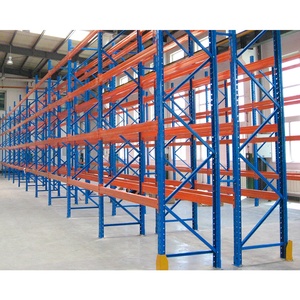
| Selective Pallet Rack | Q235B / Q355B Steel | 1,000 kg – 4,500 kg | 100% Direct Access | FIFO / LIFO | High (with seismic baseplates) |
| Drive-In / Drive-Thru Rack | Q355B Structural Steel | 1,500 kg per lane position | Low (High Density) | LIFO (Drive-In) / FIFO (Drive-Thru) | Very High (Heavy bracing required) |
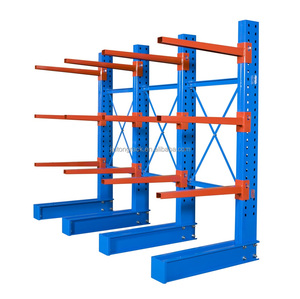
| Heavy-Duty Cantilever Rack | Hot-Rolled H-Beam / Q235B | 500 kg – 3,000 kg per arm | 100% Open Linear Access | Any (Unrestricted by columns) | High (Custom column design) |
| Pallet Flow / Gravity Flow | Cold-Rolled Steel & Reinforced Rollers | 1,000 kg – 2,000 kg / lane | Medium (Dedicated lanes) | Strict FIFO (Cold chain standard) | Medium-High (Brake roller equipped) |
| Push Back Cart System | Heavy-Gauge Steel & Sealed Bearings | 1,000 kg – 1,500 kg / cart | Medium (2-6 Pallets Deep) | LIFO | High (Cart nested frame design) |
| AS/RS Automated High-Bay | Q355B High-Precision Tolerance Steel | Up to 3,000 kg / cell | Automated Stacker Crane / Shuttle | System Controlled (Software FIFO) | Maximum (Engineered to extreme heights) |
Factory Expertise & Enterprise Value
Why Tier-1 Global Procurement Teams Partner with Our Factory
Selecting a direct factory manufacturer and global wholesaler eliminates intermediary markups while granting direct control over material specifications, structural engineering customization, and delivery timelines. Referencing decades of manufacturing heritage in industrial storage fabrication, our multi-facility production base operates under integrated ISO 9001:2015 Quality Management and ISO 14001 Environmental Management frameworks.
Automated Electrostatic Powder Coating Lines
Corrosion protection is vital for maintaining long-term load-bearing capacity, particularly in humid, tropical, or cold-storage environments. Our multi-million-dollar continuous automated powder coat lines subject every component to a 7-stage pre-treatment wash (degreasing, phosphating, and deionized water rinsing) prior to applying thermosetting epoxy-polyester powder. The result is a uniform, scratch-resistant barrier measuring 60 to 90 microns in thickness that withstands chemical exposure, salt spray, and abrasive forklift contacts.
Precision Roll-Forming & Laser Fabrication
Consistency in hole pitch, column linearity, and beam profile geometry is non-negotiable for rapid site assembly and structural stability. Utilizing automated multi-station roll-forming mills, automated CNC punching, and robotic laser welding systems, our component manufacturing maintains strict dimensional tolerances within ±0.5mm. This eliminates installation delays caused by mismatched bolt holes or out-of-plumb frames.
Comprehensive Rack Safety & Damage Prevention
Industrial statistics indicate that over 80% of warehouse rack upright damage occurs within the lower 500mm of the aisle corner frames due to forklift impact. We integrate heavy-duty structural steel column guards, straddle protectors, and end-of-aisle double-guard rails directly into rack engineering layouts. Furthermore, we provide engineered bolt-on repair kits that allow facilities to remediate damaged frame sections quickly without completely dismantling loaded bays.
Strategic Procurement Trends 2025–2030
Future Evolution of Warehouse Storage Racking & Supply Chain Integration
The industrial material handling sector is undergoing a massive transformation driven by rapid e-commerce expansion, rising industrial land costs, labor shortages, and aggressive corporate carbon-neutral mandates. B2B wholesale buyers must look beyond immediate storage demands and specify racking infrastructure ready for automated technology integration and sustainable lifecycles.
1. AS/RS & AMR (Autonomous Mobile Robot) Compatibility
Modern warehouses are transitioning rapidly toward high-bay automated storage and retrieval systems (AS/RS) and pallet-shuttle automation. These systems demand racking structures engineered with tighter mill tolerances, integrated crane runner rails, and high-rigidity guidance channels. As a forward-thinking wholesaler, our engineering department designs hybrid racking frames capable of retrofitting shuttle channels and automated conveyor tie-ins seamlessly.
2. IoT-Enabled Structural Health Monitoring
The future of warehouse safety lies in proactive, sensor-driven asset management. Emerging trends involve embedding fiber-optic strain gauges, wireless tilt sensors, and micro-accelerometers inside primary rack uprights. These smart sensors stream continuous structural health data to warehouse management systems (WMS), alerting safety managers instantly if an impact exceeds yield thresholds or if floor settlement compromises frame verticality.
3. Sustainable "Green Steel" & Circular Economy
Corporate ESG (Environmental, Social, and Governance) policies now heavily weigh carbon footprints in capital equipment procurement. Leading steel suppliers are shifting toward electric arc furnace (EAF) steelmaking fueled by renewable energy, reducing embodied carbon by up to 60%. Our commitment to sustainable wholesale manufacturing includes utilizing recycled scrap content, non-toxic waterborne washing chemicals, and fully recyclable steel profiles.
4. Specialized High-Density Cold Chain Racking
Global demand for temperature-controlled pharmaceuticals, fresh produce, and frozen protein exports requires maximum volumetric efficiency inside refrigerated energy-intensive facilities. High-density pallet flow, push back, and shuttle racking systems maximize cold room utilization up to 85%, dramatically lowering energy cost per pallet position compared to wide-aisle selective racking.
Procurement & Engineering FAQ
Frequently Asked Questions by Industrial Racking Buyers
In-depth technical answers addressing international standards, structural safety, procurement logistics, and installation requirements.
Why is CE Certification and EN 15512 compliance essential when purchasing wholesale warehouse racking?
CE Certification and adherence to EN 15512 ensure that your racking system has been designed, stress-tested, and manufactured according to stringent European structural safety laws. EN 15512 accounts for complex dynamic forces, including global frame imperfection allowances, connection stiffness under heavy beam deflection, and accidental impact loads. Purchasing non-certified racking exposes warehouse operators to structural failure hazards, severe legal liabilities during workplace safety audits, and uninsurable property damage. Our factory provides full CE declaration of performance (DoP) documentation and mill test certificates with every wholesale shipment.
What is the difference between cold-rolled steel and hot-rolled structural steel racking?
Cold-rolled steel racking is produced by passing sheet steel through continuous automated rollers at room temperature to form precise, high-strength profiles (such as teardrop or omega uprights). It offers an exceptional strength-to-weight ratio, crisp structural tolerances, and cost efficiency, making it the industry standard for selective pallet rack, carton flow, and light-to-medium duty storage. Hot-rolled structural steel racking (utilizing structural C-channels or structural I-beams) is formed at elevated temperatures. It features thicker steel walls and offers extreme impact resistance against heavy industrial forklift collisions, making it ideal for high-traffic distribution centers, outdoor cantilever applications, and heavy drive-in configurations.
How do seismic conditions affect the design and floor slab requirements for pallet racking?
In seismic regions, racking systems experience significant horizontal lateral acceleration forces. Seismic design requires installing wider and thicker baseplates, utilizing higher-grade anchor bolts (such as wedge expansion or chemical adhesive anchors), increasing bracing frequency, and often specifying thicker steel gauges for upright columns. Additionally, concrete slab thickness and compressive strength (typically requiring minimum 150mm–200mm depth with 25–30 MPa concrete strength) must be verified by a structural engineer to ensure anchor bolts do not pull out or spall the concrete during a seismic event.
Can damaged upright columns be safely repaired, or must the entire frame be replaced?
Minor damage near the base of an upright column can often be safely restored using engineered bolt-on rack repair sleeves that comply with RMI repair guidelines. These kits replace the damaged bottom section with a heavy-duty structural steel post anchored directly to the slab, eliminating the cost and time required to unload and dismantle the entire racking bay. However, if the damage involves severe column twisting, torn welds, or structural deformation above the bottom level, full frame replacement is mandatory to maintain structural integrity.
What technical data is required to request an accurate wholesale racking quote and CAD layout?
To provide a fully engineered CAD layout and competitive wholesale quotation, our engineering team requires:
- Warehouse building dimensions, clear height below joists/trusses, and floor plan (in DWG or PDF format).
- Pallet dimensions (Width x Depth x Height, including load overhang).
- Maximum and average weight per load-bearing pallet position.
- Forklift specifications (Lift height, minimum aisle turning radius, and mast collapsed height).
- Environmental factors (e.g., ambient temperature, cold storage freezer specs, or seismic location zone).
How does automated powder coating protect racking in high-humidity or coastal logistics hubs?
Industrial facilities located in tropical, humid, or salt-air coastal regions are prone to rapid steel oxidation and rust creep beneath paint layers. Our automated 7-stage chemical pre-treatment removes all mill scale, oil, and contaminants, creating a micro-phosphate conversion layer that ensures maximum electrostatic powder adhesion. The thermosetting powder coating is cured in high-temperature ovens at 200°C, producing a non-porous, highly durable shield that successfully passes 500-hour salt spray testing and resists corrosion far better than standard quick-dry liquid dip paints.
Transform Your Warehouse Storage Efficiency Today
Partner with a trusted tier-1 factory manufacturer and global wholesaler. Get customized CAD layout designs, structural seismic calculations, and factory-direct pricing for your next warehouse expansion project.