Featured Industrial Pallet & Storage Systems
Engineered to rigorous international standards (CE / EN 15512 / RMI) for high-density logistics and heavy-duty warehouse applications.
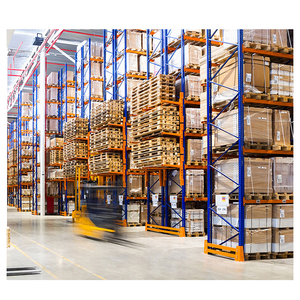
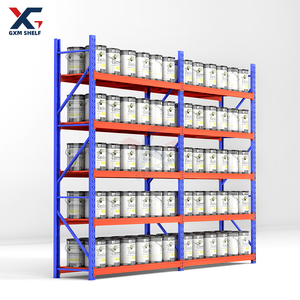
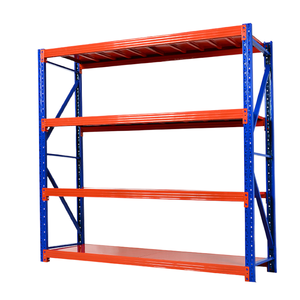
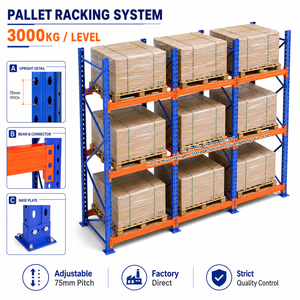
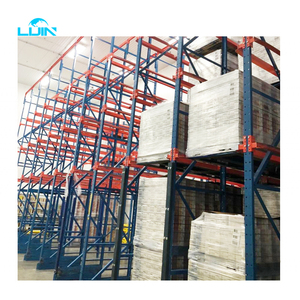
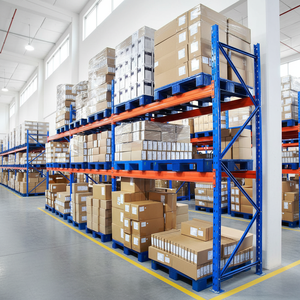
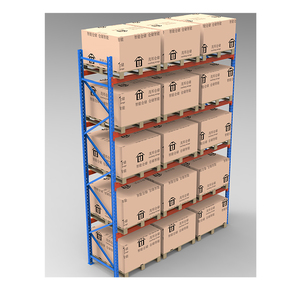
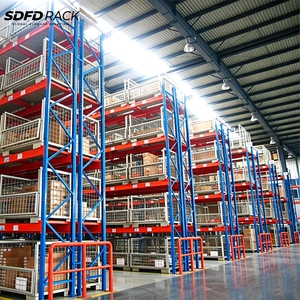
1. Executive Summary & Structural Architecture of Push Back Racking Systems
In modern high-density warehouse logistics, supply chain managers face the continuous challenge of maximizing cubic meter utilization while maintaining operational selectivity and fast pallet throughput. CE Certified Push Back Racking Systems represent the apex of dynamic, gravity-assisted high-density storage solutions. Utilizing a series of nested, low-profile carts that slide along inclined structural steel rails, Push Back racking allows warehouses to store pallets from 2 to 6 deep, automatically presenting the next pallet at the pick face when a front unit is retrieved.
"Unlike static drive-in racking which requires forklifts to physically enter the rack structure—creating severe safety risks and structural impact hazards—push back racking operates strictly from the aisle face. Every lane acts as an independent Last-In, First-Out (LIFO) storage dynamic, offering up to 75% higher density than conventional selective pallet racking without compromising warehouse floor safety."
For enterprise procurement officers, direct-from-factory sourcing requires strict verification of structural integrity. CE marking under European Standard EN 15512 (Steel static storage systems - Adjustable pallet racking systems - Principles for structural design) guarantees that the engineered racking components—including upright frames, nested cart assemblies, bearing rollers, and inclined beam connectors—have undergone rigorous Finite Element Analysis (FEA) and physical stress testing to prevent catastrophic fatigue failure.
2. Dynamic Mechanics & Engineering Innovations in Push Back Cart Systems
To understand the information gain and performance superiority of premier CE-certified factories, B2B buyers must evaluate the mechanical components that separate standard racking from enterprise-grade dynamic systems:
Low-Profile Telescopic Nesting Carts
Manufactured with heavy-gauge Q355B steel, nested carts sit on a precise 1.5% to 2.0% pitch gradient. Carts nest neatly within each other, ensuring minimum vertical height loss per level and maximizing overhead building clear height usage.
Precision Heavy-Duty Bearing Wheels
Industrial-grade sealed bearings housed inside forged steel wheels eliminate friction lockup even under -30°C freezer conditions. Low rolling resistance ensures smooth, controlled push-back forces for forklift operators.
Integrated Anti-Lift & Safety Stop Tabs
CE-mandated mechanical anti-lift tabs lock carts to the inner channel guides. This prevents pallets from dislodging, derailment during erratic forklift staging, or uplift caused by localized seismic forces.
3. Future Procurement Trends in Push Back Racking Systems
As enterprise logistics transitions toward greener, automated, and climate-resilient warehouse environments, wholesale procurement strategies for industrial racking are shifting rapidly. Direct procurement from CE-certified OEMs reflects several major industry trends:
Cold Chain Expansion & Energy Cost Reduction
With cold storage electricity costs soaring, cold room footprints must shrink while holding higher pallet volume. Push Back racking allows cold storage facilities to achieve maximum cubic density without sacrificing SKU turnover speed.
Hybrid Automation (AGV / AMR Compatibility)
Modern factories are retrofitting push back lanes with guidance sensors and magnetic alignment channels tailored for Autonomous Mobile Robots (AMRs) and automated reach trucks, eliminating manual operator error.
High-Grade Sustainable Alloy Steel (SS400 / Q355B)
Wholesalers are demanding lower structural weight with higher yield strength. Upgrading from standard steel to cold-rolled structural steel allows higher beam capacity with lower carbon footprint and reduced shipping costs.
4. Comprehensive Storage System Comparison Matrix
To determine whether Push Back racking is the ideal operational fit for your distribution center, review the comparative technical matrix below against alternative high-density dynamic storage methods:
| Racking System Type | Storage Density | Selectivity | Operational Dynamics | Forklift Damage Risk | Relative Cost / Pallet |
|---|---|---|---|---|---|
| Push Back Racking | High (70-75%) | Good (1 SKU per lane) | LIFO (Last-In, First-Out) | Low (Aisle Face Only) | Medium - High ROI |
| Drive-In Racking | Very High (80%) | Poor (Block Storage) | LIFO (Last-In, First-Out) | High (Enters Bay Structure) | Low Initial / High Maintenance |
| Pallet Flow Racking | Very High (85%) | Moderate (Dedicated Lanes) | FIFO (First-In, First-Out) | Low (Separate Pick/Load Face) | High (Full Roller Bed) |
| Selective Pallet Rack | Standard (35-40%) | 100% Direct Access | Any (Flexible) | Moderate | Low Initial Investment |
5. Why Partner with Our CE Certified Manufacturing Plant
As an established global wholesaler and original equipment manufacturer (OEM), our production facility combines state-of-the-art steel fabrication technology with full compliance across European and American structural codes:
Automated Powder Coating Paint Lines
Multi-million dollar continuous automated powder coat finishing lines deliver an even, 80-100 micron polymer coating. Tested for over 500 hours of salt spray exposure, ensuring extreme resistance against humidity and coastal atmosphere corrosion.
RMI & CE (EN 15512) Engineering Certification
Every rack project is designed using advanced 3D CAD modeling and FEA simulation. Load calculations account for live loading, impact factors, dead weight, and localized seismic zones under severe lateral force specs.
Containerized Export Packaging & Global Logistics
Fully bundled steel components with high-density plastic film, steel strapping, and custom corner protectors prevent transit damage during ocean freight shipments to Europe, North America, and Latin America.
Plan Your Warehouse Push Back Racking Project Today
Contact our senior structural engineers to receive CAD layout proposals, structural seismic calculations, and direct-from-factory wholesale pricing within 24 hours.
Send an Inquiry6. Frequently Asked Questions (FAQ) for B2B Sourcing
Essential engineering and commercial queries regarding CE-certified push back racking manufacturing, factory installation, and bulk procurement:
What specific testing is required for CE Certification under EN 15512?
CE Certification under European Standard EN 15512 requires empirical laboratory load testing of beam-to-upright connectors, upright frame stub column compression tests, bending resistance of cart rails, and finite element structural modeling under dynamic combined load conditions to ensure structural safety factors exceeding 1.5.
What are the depth limitations for a push back racking lane?
Standard push back cart systems operate effectively between 2 and 6 pallets deep. Beyond 6 pallets deep, the cumulative weight of pushing multiple units (up to 6 x 1,500 kg = 9,000 kg total lane resistance) requires specialized heavy forklift power and poses increased risk of driver fatigue and pallet deceleration friction.
How does a push back system perform in cold storage and freezing environments?
Push back racking is exceptionally well-suited for cold storage down to -30°C. Factory options include low-temperature synthetic grease in sealed stainless-steel bearings, specialized cold-galvanized or epoxy powder coat finishes, and high-yield Q355B structural steel that retains impact toughness without embrittlement.
Can push back cart channels accommodate non-standard or damaged pallets?
Nesting carts can be custom-engineered with full perimeter steel plates or cross support bars. This allows the system to hold euro-pallets, GMA pallets, wooden skids, or plastic pallets of varying dimensions, eliminating bottom-board deflection issues that typically plague roller flow tracks.
What floor concrete slab thickness and strength are required?
Due to concentrated point loads under heavy upright baseplates, concrete floors generally require a minimum thickness of 150mm to 200mm with a minimum compressive strength of 25 to 30 MPa (C25/C30 grade), anchored with heavy-duty chemical or expansion anchor bolts engineered for seismic uplift.
What is the typical production lead time for bulk wholesale orders?
Standard factory manufacturing lead times range from 15 to 25 days depending on tonnage, custom powder-coat color specifications, and total linear meters of cold-rolled beam profiles requested.
Ready to Optimize Your Warehouse Capacity?
Get in touch with our engineering team for customized OEM specifications and competitive factory quotation.
Send an Inquiry