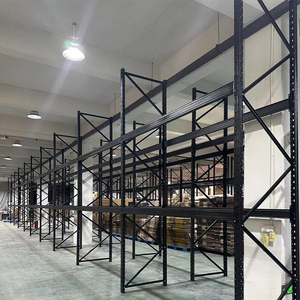
 5-Layer Heavy Duty
Direct Factory Solutions
Heavy-Duty CE Certified Pallet Racking & Storage Series
High-density selective, wire mesh, steel deck, and specialized stillage storage systems manufactured to rigid European structural standards.
5-Layer Heavy Duty
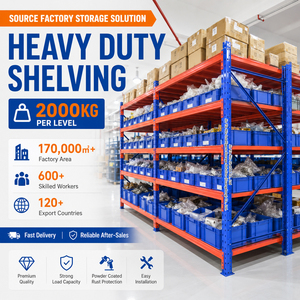 2000KG / Level
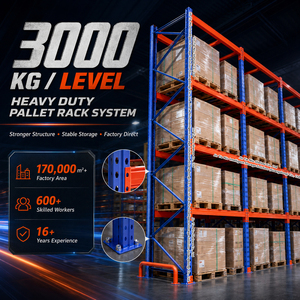 3000KG Capacity
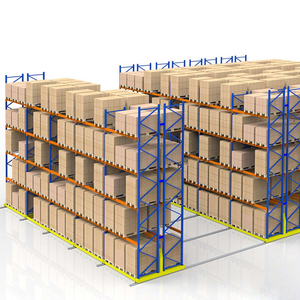 Custom Engineering
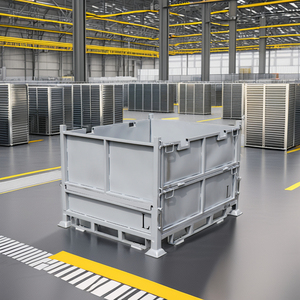 Stackable 4 High
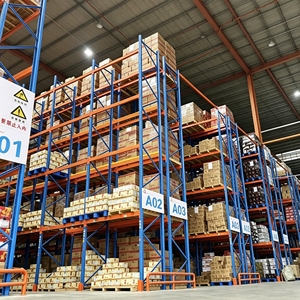 Selective 3-6 Tier
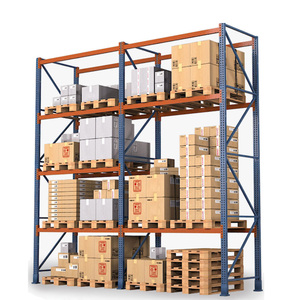 Factory Direct
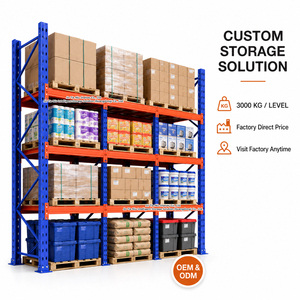 1000KG-3000KG / Level
Technical Whitepaper: Engineering Standards & CE Certification in Structural Pallet Racking
In modern industrial logistics, static storage infrastructure forms the structural foundation of the global supply chain. Choosing a qualified CE certified pallet storage system manufacturer & supplier is not merely a matter of material procurement—it is a critical operational safety and legal compliance decision. CE certification signifies that industrial steel storage racking meets stringent European safety, health, and environmental protection requirements, specifically aligned with the CPR (Construction Products Regulation EU No 305/2011) and EN 1090 structural steel execution standards.
Industrial pallet racking systems, whether deployed as high-bay selective pallet racks, heavy-duty drive-in configurations, automated storage and retrieval systems (AS/RS), or push-back dynamic racking, are engineered static load-bearing structures. Unlike standard commercial shelving, industrial racking must endure combined static loads (pallet cargo), dynamic forces (forklift impact, placement vibration), and environmental stresses (seismic acceleration and wind loads in outdoor or rack-clad buildings). Structural integrity failures carry catastrophic consequences, including inventory destruction, total facility disruption, and severe personal injury.
Figure 1: Fully automated structural steel roll-forming and robotic welding line operating under ISO 9001 and EN 1090-2 execution standards.
Understanding EN 15512: The Engineering Pillar of CE Marking
The technical core of CE certification for pallet racking is governed by EN 15512 (Steel static storage systems - Adjustable pallet racking systems - Principles for structural design) alongside FEM 10.2.02 and RMI (Rack Manufacturers Institute) ANSI MH16.1 specifications. EN 15512 mandates advanced limit state design (LSD) methodologies, incorporating partial safety factors for actions and material resistances. Advanced finite element analysis (FEA) is utilized to simulate column compression, beam flexure, teardrop/hook connection rigidity, and torsional-flexural buckling modes under full load conditions.
Key steel properties required for CE-marked pallet storage systems include verified yield strength (utilizing certified structural steels such as Q235B, Q355B, S355JR, or high-tensile cold-rolled coil stock) and strict dimensional tolerances. Every manufactured batch undergoes destructive mechanical testing—including beam-to-column connector moment testing, upright frame shear testing, and baseplate anchor pull-out verification—to ensure the physical system strictly matches FEA mathematical models.
70+
Years Manufacturing Heritage
100%
EN 15512 & CE Compliant
50K
Tons Annual Production
4000kg
Max Beam Pair Capacity
Factory OEM/ODM Manufacturing Capabilities & Enterprise Advantages
As a global leader in warehouse storage manufacturing, our enterprise combines decades of structural engineering expertise with state-of-the-art automated production technology. We provide comprehensive, one-stop OEM/ODM solutions—ranging from preliminary spatial layout and CAD/BIM modeling to specialized roll-forming, powder coating, container packaging, and international export logistics.
Certified CE & ISO Quality Control
Full traceability from raw steel coil heat certificates to final powder-coated assembly. Certified to ISO 9001, ISO 14001, OHSAS 18001, and EN 1090 CE factory production control (FPC).
Seismic Resilience Engineering
Custom structural design tailored to regional seismic zones (UBC, IBC, and European EC8 codes). Sized baseplates, heavy-duty floor anchors, and reinforced bracing ensure lateral force stability.
Automated Powder Coat Surface Line
Multi-million-dollar automated electrostatic thermosetting powder coating line with pre-treatment chemical washing. Provides superior resistance against humidity, salt spray, and physical abrasion.
One-Stop Custom CAD Layout & FEA
In-house structural engineering team providing free warehouse space optimization, material flow analysis, capacity calculations, and 3D simulation prior to production.
Integrated Rack Safety Protection
Complete product line of impact protection accessories, including heavy-gauge straddle column protectors, wrap-around base guards, tubular end-of-aisle barriers, and wire mesh safety drop decks.
In-Situ Repair & Modular Retrofits
Engineered bolt-on upright repair kits allowing safe, rapid restoration of damaged lower column sections without removing stored pallet inventory or taking down entire bay configurations.
Figure 2: Experienced structural engineering team performing finite element modeling and finite displacement verification for high-bay logistics centers.
Future Procurement Trends in Industrial Pallet Storage Systems (2025–2030)
The global material handling equipment (MHE) and industrial storage market is undergoing a structural transition driven by e-commerce fulfillment pressures, escalating industrial real estate acquisition costs, cold chain expansion, and automated warehouse integration. Industrial procurement officers, supply chain directors, and logistics engineers must align their infrastructure capital expenditure (CapEx) with several long-term structural trends:
1. Shift Toward AS/RS & Automation-Ready Frameworks
Modern distribution centers are rapidly migrating from traditional manually operated forklift racking toward Automated Storage and Retrieval Systems (AS/RS), stacker crane racks, and autonomous mobile robot (AMR) shuttle systems. Procurement mandates now demand ultra-precise manufacturing tolerances (less than ±1.0 mm vertical deflection per 10 meters of height) and high-rigidity beam connections capable of handling continuous 24/7 automated high-speed cycle loads without mechanical fatigue.
2. Advanced Surface Coatings for Cold Chain & Humid Climates
With global agricultural export and pharmaceutical cold chain expansion, storage racking is increasingly installed in sub-zero environments (-30°C freezer facilities) or high-humidity tropical zones. Standard liquid paint fails rapidly under atmospheric condensation and thermal contraction cycle pressures. Future procurement prioritizes automated thermosetting epoxy-polyester powder coating systems, zinc-rich anti-corrosion primers, and hot-dip galvanized (HDG) structural uprights that eliminate micro-cracking and rust creep.
3. Seismic Resilience & Dynamic Structural Code Compliance
International building codes (such as Eurocode 8, US IBC/NFPA, and regional seismic codes) have significantly raised minimum lateral force requirements for industrial racking installations. Modern procurement strategies require certified structural engineering calculations verified by registered local engineers. Requirements include thick baseplate embedment, high-shear anchor bolts (chemical anchors or heavy-duty wedge anchors), and dynamic frame cross-bracing that prevents progressive collapse during seismic events.
4. Sustainability, Circular Carbon, and Modular Retrofitting
Corporate ESG (Environmental, Social, and Governance) mandates are reshaping steel storage procurement. Key metrics include steel recyclability, low-VOC powder coat formulations, and modular rack architecture. Facilities require interchangeable hook/pitch designs (e.g., 50mm, 75mm, 76.2mm pitch standards) allowing bays to be reconfigured, expanded, or repaired using standardized modular repair sleeves rather than scrap-replacing entire damaged frames.
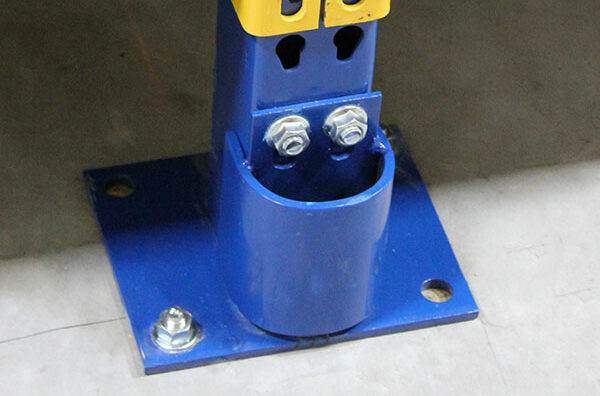
Figure 3: Heavy-duty bolt-on straddle column protector designed to absorb fork truck impacts and prevent structural column failure in high-traffic aisles.
Architectural Comparison & System Selection Matrix
To assist logistics directors in evaluating optimal pallet storage configurations, the matrix below details the structural metrics, volume storage efficiency, pallet accessibility, and application focus across primary industrial racking topologies manufactured in compliance with CE EN 15512 specifications:
| Racking Topology | Storage Density | Direct Selectivity | Max Load / Level | Stock Rotation | Primary Industrial Application |
|---|---|---|---|---|---|
| Selective Pallet Rack | Standard (40-50%) | 100% Direct | 1,000 kg – 4,500 kg | FIFO / LIFO | General logistics, FMCG, wide SKU mix centers |
| Double-Deep Selective | High (60%) | 50% Direct | 1,500 kg – 3,000 kg | LIFO | High-volume reserve storage, staging areas |
| Pallet Flow Rack | Very High (75-85%) | Lane Pick Face | 1,000 kg – 1,500 kg/pallet | Strict FIFO | Cold storage, food & beverage, perishable items |
| Push-Back Cart Rack | High (65-75%) | Front Face Only | 1,000 kg – 1,500 kg/pallet | LIFO (2-6 Deep) | Medium SKU count, high-density bulk storage |
| Drive-In / Drive-Thru | Maximum (85%+) | Lane Level | 1,000 kg – 2,000 kg/pallet | LIFO (Drive-In) / FIFO | Seasonal agricultural export, uniform lot production |
| Automated AS/RS Structure | Ultra High (90%+) | Automated 100% | 500 kg – 3,000 kg | System Managed | High-speed 24/7 automated fulfillment hubs |
Technological Innovations in Component Design
Modern CE certified pallet racking systems integrate advanced architectural enhancements that significantly improve safety and prolong equipment service life:
1. Cold-Formed Perforated Upright Profiles: Engineered with complex multi-ribbed profiles (up to 12-14 bend points along the column cross-section) to dramatically increase moment of inertia ($I_x, I_y$) and torsional rigidity while reducing raw material weight. Perforations are precision-punched via computerized CNC lines to maintain absolute pitch accuracy across 12-meter continuous upright lengths.
2. Multi-Tooth Beam Connector Hooks: Heavy-duty beam connectors feature 3, 4, or 5 drop-forged connector hooks designed to wedge tightly into upright teardrop or diamond slots. This creates a semi-rigid joint resistant to rotational shear. Automatic safety locks (spring-loaded or gravity safety pins) prevent accidental beam dislodgement caused by forklift mast errors.
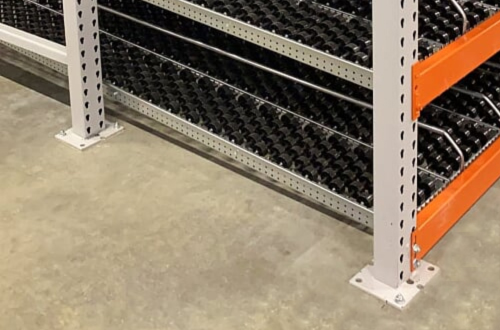
Figure 4: Heavy-duty baseplate installation showing high-tensile concrete anchor bolts designed for seismic shear resistance and vertical uplift prevention.
Comprehensive Technical & Procurement FAQ
Below are authoritative responses to critical engineering, safety, and international purchasing queries encountered during warehouse storage system procurement:
Why is CE Certification essential when purchasing pallet storage systems?
CE Certification ensures that the racking manufacturer complies strictly with European structural health and safety directives, including EN 15512 limit state design rules and EN 1090-1 execution of steel structures. In regulated markets across Europe, the Middle East, Asia-Pacific, and the Americas, uncertified racking poses severe liability risks during municipal safety audits, insurance reviews, or structural failure investigations. CE marking verifies that raw material chemistry, load capacity tables, and manufacturing FPC (Factory Production Control) undergo certified third-party testing.
How do seismic design criteria impact structural racking cost and floor slab requirements?
In high seismic acceleration zones (e.g., UBC Zone 3/4 or high $a_{g}$ ground acceleration regions), racking frames must resist intense lateral horizontal loads and vertical ground vibration. Seismic engineering increases column wall thickness, requires heavy-duty horizontal/vertical bracing channels, utilizes enlarged footplates, and mandates deeper anchor bolt embedment (often requiring a minimum 150mm–200mm slab thickness with 30 MPa+ reinforced concrete). While seismic-rated systems carry a 10%–25% higher component cost, they prevent catastrophic total structure collapse during earthquake events.
What is the difference between Roll-Formed teardrop racking and Structural C-Channel racking?
Roll-formed pallet racking is manufactured from gauge-thin coil steel cold-rolled through automated dies into open-profile columns. It is cost-effective, versatile, easy to adjust, and suitable for standard commercial warehousing. Structural pallet racking is fabricated from heavy hot-rolled C-channel steel profiles bolted together. Structural rack offers superior impact resistance against heavy forklift strikes, makes it ideal for rough industrial environments, high-bay freezer operations, and heavy loads exceeding 3,000 kg per level.
What critical parameters are required to generate an optimized warehouse layout CAD design?
To design a precise, safe racking layout, our engineering team requires: (1) Warehouse clear height to roof trusses or sprinkler drop lines; (2) Detailed floor slab specifications including thickness, rebar arrangement, and concrete compressive strength; (3) Exact pallet dimensions (Width x Depth x Height including cargo overhang) and maximum/average pallet weights; (4) Forklift specifications including aisle width turning radius (AST), maximum lift height, and mast height collapsed; (5) Environmental conditions (temperature ranges, humidity, seismic classification).
How does thermosetting powder coating protect steel racking in cold storage and high humidity?
Standard paint finishes can peel or flake under moisture intrusion and freezing cycles, exposing raw steel to rust. Our multi-stage automated coating process involves chemical degreasing, iron-phosphate nano-wash pre-treatment, electrostatically applied epoxy-polyester powder, and high-temperature oven baking at 200°C. This creates a dense, non-porous polymer shield that prevents oxygen and water vapor from reaching the steel surface, guaranteeing long-term corrosion resistance in high-humidity or sub-zero environments.
Can damaged racking columns be safely repaired without dismantling full storage bays?
Yes. Utilizing certified bolt-on structural rack repair kits, engineered column repair sleeves can be safely installed. The process involves temporarily supporting the upper bays with a hydraulic lifting jack system, cutting out the damaged bottom column section (typically the lower 400mm–1000mm affected by fork trucks), and bolting a heavy-duty structural steel replacement sleeve securely anchored to the floor slab. This restores full EN 15512 structural load capacity while saving up to 70% in repair labor and avoiding facility downtime.
Transform Your Facility's Storage Capacity & Safety Compliance
Connect directly with our senior structural engineering team to request factory-direct pricing, custom CAD floorplan optimization, and full technical specifications for CE certified pallet racking systems.