Featured Industrial Racking & Storage Systems
Explore our CE-certified, heavy-duty racking portfolio engineered for global logistics centers, free trade zones, and industrial manufacturing plants.
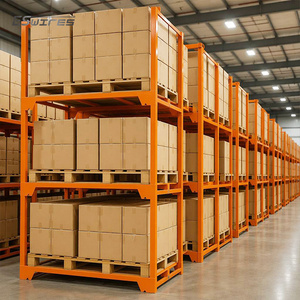
Heavy Duty Warehouse Industrial Storage Nestainer Metal Portable Steel Racks Pallet Stacking Frames
View Details →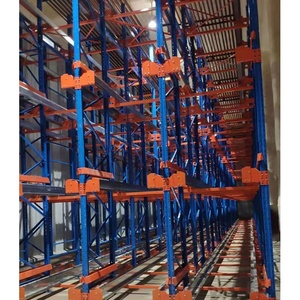
Customized Steel Pallet Rack Stacking Racks & Shelves Warehouse Storage Rack Heavy Duty Shuttle Racking for Industrial
View Details →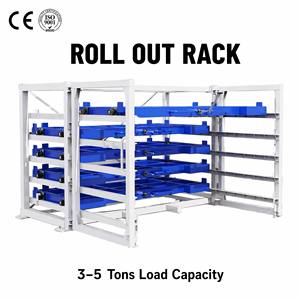
Industrial Heavy Duty Customizable Foldable Corrosion Resistant 8-Layer Powder Coated Carbon Steel Warehouse Rack Cantilever
View Details →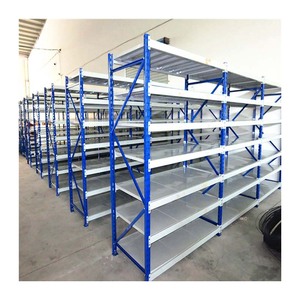
Mracking Light Duty Warehouse Selective Shelf Metal Steel Customized Warehouse Rack Warehouse Storage System Boltless Racking
View Details →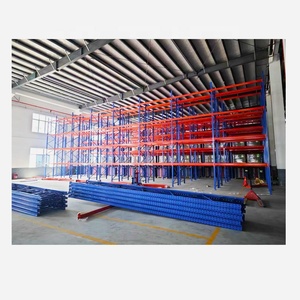
Heavy Duty Warehouse Storage Rack Pallet Racking System Customized Design for Industrial Warehouse
View Details →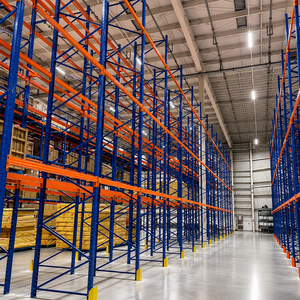
Warehouse Storage Rack 3000kg Selective Racking Adjustable Beam for Steel Pallets Manufacturing Plant 24h CAD Service
View Details →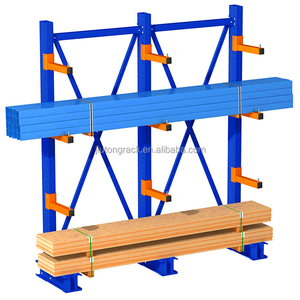
Cantilever Storage Racks Used in Material Handling
View Details →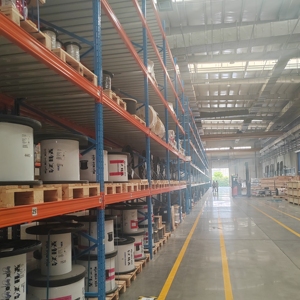
Competitive Price High Capacity Metal Shelves Storage Racks Multi-Layer Industrial Heavy Duty Pallet Racking for Warehouse
View Details →Technical Whitepaper: Engineering Criteria for CE Certified Industrial Pallet Racking
In modern industrial logistics, warehouse racking systems are no longer treated as simple static shelving; they are fully engineered structural frameworks designed to bear multi-ton dynamic stresses, seismic accelerations, and continuous mechanical handling interface forces. Selecting a qualified CE Certified Industrial Pallet Racking Systems Factory & Wholesaler is a vital structural and financial decision for supply chain executives, warehouse engineering leads, and industrial distribution managers.
This technical whitepaper outlines the structural parameters, metallurgical choices, compliance frameworks (EN 15512, FEM 10.2.02, RMI/ANSI MH16.1), and future technological trajectories governing high-density industrial pallet storage systems.
Information Gain Key Insight: Standard roll-formed racking frequently suffers structural fatigue under high-frequency reach-truck impacts. CE-compliant racking manufactured from cold-rolled Q355B structural carbon steel yields a 35% higher ultimate tensile strength compared to baseline Q235 steel, permitting reduced frame deflection ratios ($L/200$) under maximum payload stress.
Q355B Metallurgical Grade
High-yield cold-rolled steel profiles engineered for superior structural integrity, dynamic weight distribution, and resistance to permanent deflection under heavy loads.
CE & FEM Compliance
Fabricated strictly adhering to EN 15512 structural design codes, guaranteeing rigorous horizontal deflection testing, weld integrity, and safety factor margins.
Seismic Lateral Design
Specialized base plate anchoring and column moment connections designed to withstand high seismic forces (Code CSCR / IBC compliance standards).
Enterprise Engineering Advantages: Factory Direct Manufacturing
As a leading OEM/ODM manufacturer and factory wholesaler, our manufacturing facilities operate state-of-the-art continuous cold-roll forming lines, robotic laser welding cells, and automated multi-stage electrostatic powder coating systems. Understanding the engineering details of structural storage systems gives major industrial operators a clear edge:
- Automated 9-Stage Surface Pre-Treatment: Every steel profile undergoes alkaline degreasing, zinc phosphating, and deionized water rinsing to ensure an impenetrable surface bond prior to thermosetting epoxy-polyester powder application. This prevents sub-film corrosion even in high-humidity tropical or cold-chain condensing environments.
- Finite Element Analysis (FEA) Modeling: Prior to steel coil slitting, complex beam-to-column connector geometries and perforation patterns are validated through FEA simulations. This eliminates stress concentrations at upright punching locations.
- 24-Hour Technical CAD Turnaround: Our team of structural civil engineers provides high-precision BIM/CAD structural layouts, load-capacity calculations, and floor slab anchor shear force assessments within 24 hours of site parameter submission.
- Modular Expansion Compatibility: Standardized teardrop and speedlock beam connectors allow seamless horizontal extension and vertical elevation adjustments in 50mm / 75mm pitch increments without compromising overall rack frame stability.
System Selection Engineering Matrix
Selecting the optimal storage methodology requires evaluating trade-offs between SKU selectivity, volumetric cubic density, and material handling automation compatibility:
| Racking Architecture | Maximum Load Capacity | Selectivity Ratio | Storage Density | Optimal Industry Application |
|---|---|---|---|---|
| Heavy Duty Selective Rack | Up to 4,500 kg / Level | 100% Direct Access | Moderate (40-50%) | General Logistics, E-Commerce, Spare Parts |
| Radio Shuttle High-Density Rack | Up to 2,000 kg / Pallet | FIFO / LIFO Managed | Ultra-High (80-90%) | Cold Storage, Food & Beverage Export, FMCG |
| Heavy Duty Cantilever Systems | Up to 6,000 kg / Arm | 100% Linear Access | High for Long Items | Lumber, Steel Pipes, Extrusions, Bar Stock |
| Nestainer & Stacking Frames | Up to 1,500 kg / Unit | Flexible / Portable | High (Stack 4-5 high) | Seasonal Warehousing, Agricultural Harvest |
| Boltless Shelf & Light Duty Rack | Up to 500 kg / Level | 100% Direct Access | Moderate Manual | Pharmaceutical Kitting, Retail Display, Micro-Fulfillment |
Future Sourcing & Procurement Trends in Industrial Storage (2025–2030)
The global material handling equipment (MHE) industry is undergoing a structural transition driven by warehouse automation, rising urban industrial land rents, and stringent regional building codes. Wholesalers and enterprise procurement officers must account for five pivotal trends when specifying structural racking systems:
1. Hybrid Integration with Automated Guided Vehicles (AGVs) and Autonomous Mobile Robots (AMRs)
Conventional selective pallet racks are increasingly being retrofitted or custom-engineered to accommodate AMR under-chassis clearance and AGV laser-guided positioning tolerances. Traditional manual forklift clearances allow for a 15–20mm tolerance margin; however, automated robotic pallet shuttles require strict fabrication tolerances within ±1.5mm across a 12-meter span. Factory-precision roll forming is non-negotiable for automated compatibility.
2. High-Density Radio Shuttle Systems Replacing Traditional Drive-In Racks
While traditional Drive-In racking maximizes volumetric space, it introduces high risks of forklift-to-upright collisions because lift trucks must physically drive inside the rack structure. The market is shifting rapidly toward semi-automated Radio Shuttle storage. In these systems, self-powered shuttles navigate along guide rails inside the channels, eliminating forklift structural impact risks, drastically cutting loading cycle times, and maximizing cold-room energy efficiency.
3. Eco-conscious Green Manufacturing & Low-VOC Powder Coating
International environmental regulations (including EU REACH and RoHS mandates) are driving global supply chain directors to audit the carbon footprint of structural steel procurement. Leading factories now utilize closed-loop water recovery systems in pre-treatment wash bays and thermosetting lead-free powder coatings that emit zero Volatile Organic Compounds (VOCs), allowing logistics centers to earn LEED green building points.
4. Advanced Anti-Seismic and Resilient Structural Anchoring
With major logistics hubs expanding in seismically active regions (such as the Pacific Rim, Central America, and Southern Europe), procurement mandates now require dynamic spectrum modal analysis. Structural base plates feature enlarged footings, thicker gauge steel anchor embedments ($h_{ef} \ge 120\text{mm}$), and ductile moment-resisting beam-to-column locking keys that absorb lateral ground accelerations without catastrophic structural failure.
5. Smart Rack Structural Health Monitoring (IoT Sensors)
The integration of micro-strain gauges, tilt sensors, and wireless impact detectors mounted directly to critical aisle uprights represents the future of proactive warehouse safety. These IoT devices alert facility managers instantly via mobile applications if a forklift impact exceeds the critical elastoplastic deformation threshold, preventing progressive rack collapses.
Industrial Racking Technology & Material Evolution
To fully grasp information gain in racking specification, structural engineers look at the mechanical properties of cold-formed carbon steel. The transition from standard Q235 hot-rolled strips to cold-rolled Q355B structural coil yields distinct engineering metrics:
- Yield Strength ($f_y$): Q235B offers $235 \text{ MPa}$, whereas Q355B provides $355 \text{ MPa}$—a 51% increase in initial yield resistance.
- Tensile Strength ($f_u$): Q355B reaches $470 - 630 \text{ MPa}$, preventing cross-sectional tearing during severe overload conditions.
- Beam Deflection Limits: Standard EN 15512 safety codes require that under full design load $Q_{max}$, the horizontal beam deflection ($\delta$) must not exceed $\frac{L}{200}$, where $L$ is the clear span length between upright columns.
Furthermore, column upright profile geometry has evolved. Modern 10-fold and 12-fold cold-roll profiles feature strategic ribbing along the web and flanges. This multi-flange structural shape boosts torsional resistance ($J$) and radius of gyration ($r$), allowing upright frames to support load heights exceeding 15 meters without requiring bulky structural channel hot-rolled I-beams.
Frequently Asked Questions (Sourcing & Technical Procurement)
Expert engineering answers to common technical queries raised by industrial buyers, structural engineers, and factory wholesalers.
What specific structural standards do your CE Certified Pallet Racking Systems meet?
Our pallet racking systems are manufactured in compliance with European Standard EN 15512:2020 (Steel static storage systems - Adjustable pallet racking systems - Principles for structural design), EN 15620 (Tolerances, deformations and clearances), and FEM 10.2.02 guidelines. Additionally, for North and South American exports, our designs align with RMI (Rack Manufacturers Institute) / ANSI MH16.1 specifications.
How do you calculate safe working loads (SWL) for beam levels and upright frames?
Safe working loads are calculated using finite element analysis (FEA) software corroborated by physical destructive load testing. Beam load capacity ($Q_{max}$) is based on a maximum allowable mid-span deflection ratio of $L/200$. Upright frame capacities depend on the unbraced vertical length (first beam elevation height), aisle depth, and dynamic seismic impact factors. Detailed load capacity plaques are provided with every factory shipment.
What is the difference between Q235B and Q355B steel in racking fabrication?
Q235B is a standard mild structural carbon steel with a yield strength of $235\text{ MPa}$. Q355B is a low-alloy high-strength steel with a yield strength of $355\text{ MPa}$. Using Q355B steel allows us to manufacture racking profiles that are significantly stronger and more resistant to impact and bending while optimizing total material weight and lowering global container freight costs.
Can custom CAD warehouse storage layouts be provided before placing a wholesale order?
Yes. Our dedicated structural design office offers free 24-hour CAD design services. Upon receiving your facility dimensions, concrete slab thickness, forklift turning radius (AST), and pallet parameters (width × depth × height × weight), we provide full 2D layout drawings and 3D isometric engineering visual models.
How do you ensure anti-corrosion protection in high-humidity or cold-storage environments?
All steel components pass through a continuous 9-stage automated chemical cleaning, phosphating, and passivation wash before receiving an electrostatically applied epoxy-polyester powder coat (60–80 microns thick) baked at 200°C. For aggressive coastal salt-air or acidic environments, we offer hot-dip galvanizing (HDG) compliant with ISO 1461, ensuring decades of rust-free service.
What container packaging protocols are used to protect powder-coated finishes during ocean freight?
All upright frames, beams, and shelf components are bundled using automated steel strapping with heavy-duty corner protectors, wrapped in multi-layer moisture-proof bubble film, and set on hardwood or steel skids. Small accessories (base plates, safety pins, row spacers, expansion bolts) are packed into reinforced wooden crates to prevent movement inside sea containers.
Can damaged upright frame columns be safely repaired without replacing the full frame assembly?
Yes. We engineer heavy-duty bolt-on upright repair kits and column protectors. If an upright base suffers localized forklift impact damage, an engineered repair kit can replace the bottom damaged section directly without requiring the full bay to be completely dismantled, saving substantial operational downtime.
Optimize Your Warehouse Volumetric Storage Today
Partner directly with a certified industrial racking manufacturer. Contact our engineering department for rapid 24-hour CAD layout proposals, wholesale price lists, and CE compliance documentation.