0%

A well-chosen Pallet Storage Racking System can make a busy warehouse safer and easier to manage. It can also waste valuable space when the design ignores real picking patterns. Picture a forklift turning beside a loaded aisle, with cartons waiting near the dispatch doors. Small layout decisions matter.

The best system depends on pallet dimensions, load weights, inventory turnover, and available floor space. Selective pallet racking offers direct access to each pallet, while drive-in systems can increase storage density for similar products. But density is not always the answer. Narrow aisles may slow equipment, and a poorly planned layout can create congestion around popular stock. Those trade-offs deserve a close look.

A fictional warehouse systems specialist, Alex Morgan, captures the practical point with this editorial line: “A rack plan works only when the daily workflow works with it.” This is an original illustrative quote, not a verified statement from a real expert. The guide ahead compares leading racking options and explains where each may fit. It also considers load capacity, access, installation planning, and routine inspections. Real warehouses are rarely perfect. A storage plan should leave room for changing inventory, minor errors, and future adjustments.
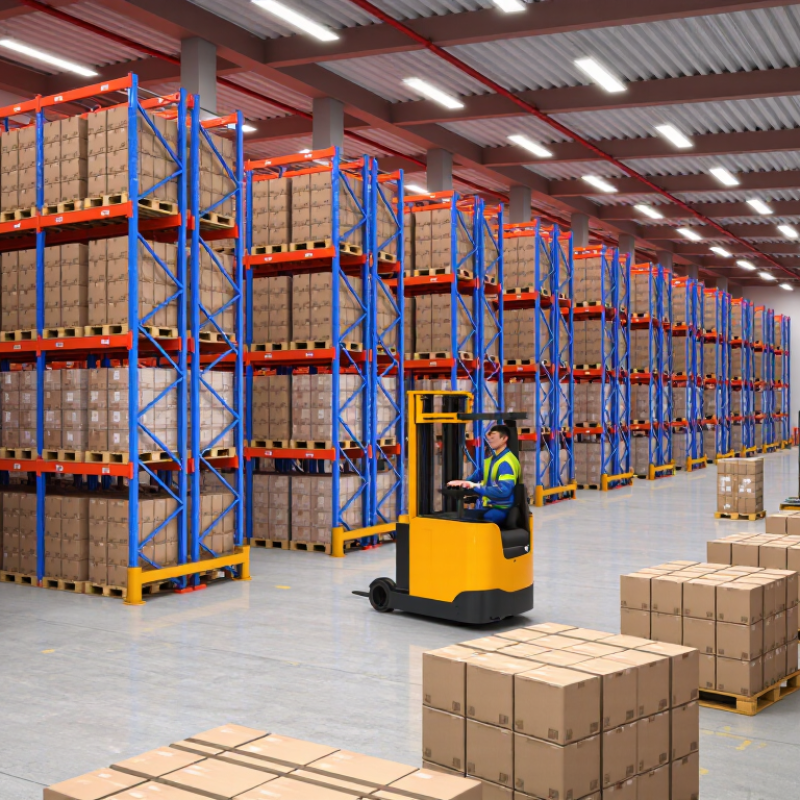
Top Pallet Storage Racking Systems for Warehouses?

Define Pallet Racking: Frames, Beams, Decking, and Rated Loads

Pallet racking is a structural system that stores palletized goods above the floor. Upright frames carry vertical loads, while horizontal beams connect the frames and support each storage level. Diagonal braces help keep frames stable. Anchors secure the uprights to the floor where the design requires them. Small details matter.

Decking sits across the beams and provides a surface for pallets. Common options include wire mesh and solid panels, but the right choice depends on the pallet, stored goods, and handling equipment. Decking does not automatically increase a rack’s capacity. It must be compatible with the beam layout and intended load.

Rated loads describe the limits established for specific rack components or configurations. A beam rating may differ from a frame rating, and changing beam height can affect frame capacity. Read posted load signs carefully, and match them to the actual rack layout. Pallet weight is only part of the picture; load distribution and placement also matter. In a busy warehouse, labels can be easy to overlook or misread. Check for missing signs, damaged members, loose anchors, or beams that are not fully seated. Have a qualified rack professional assess uncertain damage or layout changes before loading the system.

Start with the 48 × 40-Inch GMA Pallet: Sizing Bays and Aisles

The 48 × 40-inch GMA pallet is a practical starting point, not a complete rack specification. The National Wooden Pallet and Container Association’s 2016 Pallet Report estimated 1.8 billion pallets in U.S. circulation, underscoring how common this footprint is. For two pallets across, with the 40-inch sides facing the aisle, a preliminary bay opening might allow 80 inches of pallet width plus clearance between and beyond loads. Treat that as a layout estimate; actual loads may overhang.

Tips: Sketch the pallet, load, beam, and upright dimensions together. Then verify the clear opening against the rack supplier’s engineering drawings. Measure the lift truck’s right-angle stacking aisle with its actual load. OSHA requires safe, clear aisles but does not set one universal aisle width, so turning radius and handling method matter. A drawing can look generous and still fail on the floor.

Before fixing aisle widths, test a loaded truck turning into the tightest bay. Record pallet orientation, load height, and any wrap or carton overhang. Small details change usable clearance. The estimate may need revision after a real handling test; that is normal. Don’t size around an empty pallet alone.

Compare Selective Racking’s 100% Pallet Access with Higher-Density Systems

Selective pallet racking gives forklifts direct access to every stored pallet without moving neighboring loads. That 100% selectivity suits warehouses with many SKUs, mixed order profiles, or frequent picking. It also makes stock rotation and locating a particular pallet straightforward. The trade-off is aisle space: wider aisles can limit storage positions within a fixed building footprint. A layout may look orderly and still waste valuable floor area.

Drive-in, push-back, pallet-flow, and mobile systems can store more pallets in a given area by reducing aisle space or arranging loads more deeply. The gain comes with compromises: some systems limit access to individual pallets, require compatible loads, or depend on specific forklift movements. The Warehousing Education and Research Council’s 2023 DC Measures report benchmarks distribution-center performance, including inventory accuracy and order-picking measures; those operational outcomes matter alongside rack capacity. MHI’s 2024 Annual Industry Report found that 55% of surveyed supply-chain professionals planned to increase technology and innovation investment. That is not a rack-design finding, but it underlines why storage decisions should fit broader operating plans. Count real pick paths, SKU turnover, pallet dimensions, and replenishment moves before choosing. Density can be seductive. Yet a high-capacity layout may create extra handling, and that cost is easy to underestimate.

Match Drive-In, Push-Back, and Pallet-Flow Racks to LIFO or FIFO

Choosing a pallet rack starts with how inventory moves, not how impressive the aisle looks. Drive-in racks usually operate on a last-in, first-out (LIFO) basis. A forklift enters the lane to place or retrieve pallets, so the last pallet stored is typically the first removed. This dense layout can work well for large quantities of the same product. It needs careful lane planning and confident forklift operation.

Push-back racks also generally support LIFO, but pallets sit on nested carts. Loading a new pallet pushes earlier pallets farther along the lane. The arrangement can reduce aisle space while allowing more access than deep drive-in lanes. Still, check pallet sizes and weights against the system’s design. A small mismatch can cause awkward movement. It happens.

Pallet-flow racks are designed for first-in, first-out (FIFO) rotation. Pallets enter one side and travel along rollers toward the picking face on the opposite side. Gravity does the moving, but the system needs suitable pallets and regular checks of rollers and flow controls. FIFO can help with dated goods, though it is not automatically worth the extra complexity for every product. Compare turnover, SKU quantities, building height, and forklift clearances before choosing. A warehouse layout should be reviewed against actual loads and operating practices, not just a capacity estimate.

Top Pallet Storage Racking Systems for Warehouses? - Match Drive-In, Push-Back, and Pallet-Flow Racks to LIFO or FIFO

Racking system Typical inventory flow How pallets are accessed Storage density Best suited for Key planning considerations
Drive-in rack LIFO (Last In, First Out) in a lane loaded and picked from the same end A forklift enters the storage lane to place or retrieve pallets. The last pallet placed is normally the first one retrieved. High, because multiple pallet positions can be stored deep in each lane with fewer access aisles than selective rack. Large quantities of the same SKU, relatively low product turnover, and operations where strict FIFO rotation is not required. Plan lane depth, forklift clearances, pallet condition, and load stability carefully. Deep lanes reduce direct access to individual pallets.
Push-back rack LIFO within each lane Each newly loaded pallet pushes the pallets already in the lane farther back along inclined carts or rails. During picking, pallets move forward toward the aisle. High, with several pallet positions stored deep per lane and fewer aisles than a fully selective layout. Multiple pallets per SKU where faster access than drive-in is useful, while LIFO rotation is acceptable. Lane capacity and pallet compatibility depend on the system design. Keep each lane assigned to an appropriate SKU and follow the rack supplier’s load and operating specifications.
Pallet-flow rack FIFO (First In, First Out) Pallets are loaded at the higher end of a gravity roller or wheel lane and move toward the picking face. The oldest pallet is available first at the discharge end. High, with separate loading and picking aisles and multiple pallet positions stored in depth. Products requiring FIFO rotation, such as dated or lot-controlled inventory, and high-throughput picking of pallet quantities. Requires suitable pallets, controlled loading and unloading, and regular inspection of rollers, brakes, and separators. Lane design must account for pallet weight and product characteristics.
Drive-through rack Can support FIFO when pallets are loaded at one end and retrieved from the opposite end A forklift can enter from both ends of the lane, allowing separate loading and picking faces. High, similar in principle to drive-in rack, with access aisles at both ends of the lanes. Bulk storage where high density is important and two-sided access can support stock rotation. FIFO depends on disciplined one-way loading and picking. The additional aisle at the far end uses floor space, and forklift access within lanes still requires careful operation.

Selection note: LIFO and FIFO describe the usual pallet access sequence within a lane; actual inventory rotation also depends on SKU assignment, loading and picking procedures, and warehouse management practices.

Apply ANSI/RMI MH16.1 Design Criteria and Verify Rack Load Ratings

Top Pallet Storage Racking Systems for Warehouses?

Pallet racking is only as dependable as its design assumptions and verified load ratings. Apply ANSI/RMI MH16.1 design criteria to the actual rack layout, not a generic aisle sketch. Beam length, upright spacing, connection details, and bracing all affect capacity. So do pallet weight, load placement, and the number of loaded levels. Small changes matter. A qualified rack design professional should review unusual configurations, building conditions, and applicable seismic requirements before installation.

Tips: Keep the approved drawings and load plaques accessible. Compare each plaque with the rack’s installed configuration and the loads stored there. A rating for one beam spacing or frame height may not apply after a modification. Check that floor conditions, anchors, and protective devices match the design assumptions. If a plaque is missing or unreadable, do not guess; obtain verified documentation before relying on the rack’s capacity.

During routine inspections, look for bent uprights, damaged braces, loose anchors, and beams that are not fully seated. Record locations and arrange prompt assessment when damage appears. Forklift impacts can leave subtle deformation. Real warehouses are messier than drawings, and inspections can miss details. That is a reason to review the process, not to rely on visual checks alone. Keep changes controlled, and have qualified personnel reassess the rack whenever its layout or loading conditions change.

Top Pallet Storage Racking Systems for Warehouses: Verify Beam Load Ratings

Illustrative planning scenarios assume two equally loaded pallet positions on one beam level. Required beam-pair load is calculated as pallet weight × 2; these figures are not rack ratings or ANSI/RMI limits. Verify the actual rack configuration, load distribution, and manufacturer’s posted load ratings against the applicable ANSI/RMI MH16.1 design criteria before use.

FAQS

What are the main parts of a pallet rack?

Upright frames carry vertical loads. Horizontal beams support each storage level. Braces add stability, and anchors secure uprights where the design requires them.

Does decking increase a rack’s rated capacity?

Not automatically. Wire mesh or solid panels must suit the beam layout, pallets, goods, and handling equipment. Check the approved rating.

What affects a rack’s load rating?

Beam length, upright spacing, frame height, bracing, and connection details all matter. Pallet weight matters too, but so do placement and load distribution. Small changes can count.

How can I check whether a rack’s posted load rating applies?

Compare the load plaque with the installed layout and stored loads. Beam spacing or frame height may differ from the rated configuration. Never guess.

Which rack type supports LIFO inventory rotation?

Drive-in and push-back racks generally use last-in, first-out rotation. Drive-in lanes require forklift entry. Push-back systems use nested carts. Check pallet sizes and weights.

How does pallet-flow racking support FIFO rotation?

Pallets enter one side and roll toward the picking face on the other. Check rollers, flow controls, and pallet suitability regularly. Gravity does the moving.

What should routine rack inspections look for?

Look for bent uprights, damaged braces, loose anchors, and beams that are not fully seated. Forklift impacts can leave subtle damage. Easy to miss.

What should happen if a rack is damaged or its layout changes?

Record the location and arrange an assessment by qualified personnel. Review unusual configurations and changed loading conditions before using the rack. Drawings do not show every warehouse detail.

Conclusion

A Pallet Storage Racking System organizes warehouse inventory using upright frames, horizontal beams, and optional decking. Each component must be selected and installed with its rated loads in mind. Planning should begin with the common 48 × 40-inch GMA pallet, then account for pallet overhang, load dimensions, forklift turning space, and aisle width when setting bay sizes and layout.

Selective racking provides direct access to every pallet, making it suitable for varied inventory and frequent picking, while denser systems trade some accessibility for greater storage capacity. Drive-in and push-back racks typically support last-in, first-out (LIFO) handling; pallet-flow racks are designed for first-in, first-out (FIFO) movement. The right choice depends on inventory rotation, available space, and handling needs. Apply ANSI/RMI MH16.1 design criteria, verify rack and beam load ratings, and ensure the planned configuration safely supports the intended loads.

Ethan

Ethan

Ethan is a professional marketing specialist who combines a deep understanding of the company’s products with a clear focus on customer needs. Through ongoing research and close attention to product features, applications, and industry developments, he turns complex information into practical,......