0%

Choosing the right Pallet Rack Systems begins with the goods, not the catalog. A rack must fit pallet dimensions, load weight, handling equipment, and the building’s clear height. A few inches can matter. So can a floor column, sprinkler line, or turning aisle. Miss one, and a tidy layout can become awkward to operate.

The 2024 MHI Annual Industry Report, produced with Deloitte, found that 55% of surveyed supply-chain leaders planned to increase technology investment. That wider push toward more capable operations makes storage choices worth careful review. Yet a rack is not an automation strategy by itself. It must work with forklifts, inventory software, picking patterns, and actual peak-season volumes. Selective racks offer direct access to each pallet; drive-in and push-back designs can increase storage density, but may reduce selectivity. Trade-offs are real.

Start with a site survey and verified load data. Check pallet overhang, beam capacity, aisle width, and clearance beneath sprinklers. Ask suppliers to document design assumptions, installation details, and inspection needs. OSHA’s warehousing guidance emphasizes keeping aisles clear and storing materials securely; those daily practices matter after installation, too. For seismic or other site-specific requirements, consult a qualified engineer and local authorities. No single layout fits every operation. Even a good plan deserves a second look when products, equipment, or throughput change.
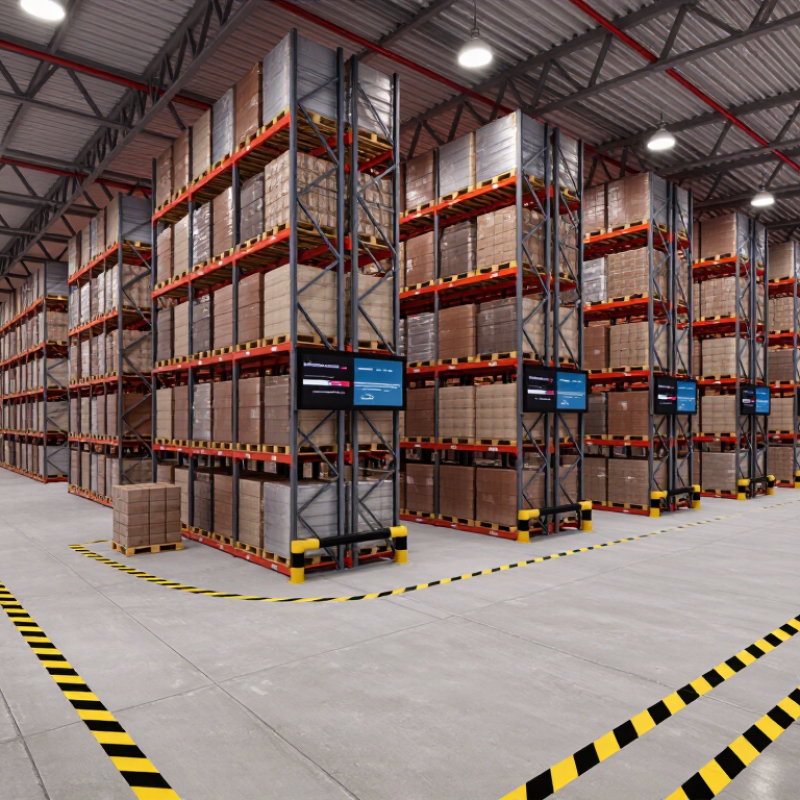
How to Choose the Right Pallet Rack System

Assess Inventory, Throughput, and Handling Requirements

How to Choose the Right Pallet Rack System
Assess Inventory, Throughput, and Handling Requirements

Start with the inventory, not the rack catalog. Record pallet dimensions, loaded weights, and how many product lines need dedicated storage. Note which items move daily and which may sit for weeks. Fast-moving goods often need quick access, while slower stock can use denser storage. Small details matter. A few unusually wide pallets can change aisle and beam requirements.

Then map the real workflow. Watch forklifts turn, load, and replenish during a busy shift. Check whether operators need direct access to every pallet, or whether some stock can be stored in lanes. Measure clear height, aisle width, and door locations. Confirm rack capacities with a qualified supplier or engineer using actual load data. A spreadsheet can miss a seasonal surge; our forecasts are rarely perfect. Revisit them.

Tips: Track picks per day by product, and measure a sample of loaded pallets. Compare the space saved by denser storage with any added handling time. Keep damaged pallets and awkward loads in the assessment, too. They tend to show up when least convenient.

How to read this chart: This normalized example compares four pallet positions per rack configuration. Selective racking provides direct access to all four; the other configurations show the positions reachable from the aisle face without moving another pallet. Actual access and throughput depend on rack layout, SKU mix, equipment, and operating method. Use high-selectivity systems for many SKUs or frequent picks; consider denser systems when inventory is more uniform and space efficiency is a priority.

Measure Available Space and Determine Load Capacity

Measure the usable storage area, not just the room’s outside dimensions. Note columns, doorways, lights, sprinkler lines, and low beams. These details can shrink a seemingly generous layout. Measure twice. Leave working clearance for forklifts to turn and place loads without striking uprights. Check the tallest pallet, including its load, against beam height and overhead obstructions. A few centimeters can matter.

Then calculate the weight of each fully loaded pallet. Include the pallet itself, packaging, and any uneven or shifting contents. Compare that figure with the rack’s stated capacity per beam level and per bay; they are not interchangeable ratings. Loads are often assumed to be evenly distributed across beams, so a heavy item placed at one edge may require a different assessment. It is easy to overlook that.

Also confirm the floor can support the rack’s concentrated loads at each upright. Slab condition, anchors, and rack height all affect the installation. Keep the layout drawing and load figures together, and have the proposed system checked by a qualified rack professional or structural engineer. Real warehouses rarely match a clean sketch perfectly, so remeasure after marking the aisle lines and rack footprints on the floor.

Compare Pallet Rack Types and Storage Configurations

How to Choose the Right Pallet Rack System

Compare Pallet Rack Types and Storage Configurations

Selective pallet rack gives direct access to every pallet, making it useful when product variety changes often. It usually needs wider aisles, though, so it may reduce storage density. Drive-in rack stores pallets several positions deep and suits larger batches of similar goods. Push-back and pallet-flow systems also increase density, but their moving parts and loading rules require careful planning. Higher density is not always better.

Match the configuration to your actual picking pattern. For example, a warehouse handling many small orders may benefit from selective access, while a cooler holding repeated cases may make better use of pallet flow. Measure clear ceiling height, aisle width, pallet dimensions, and forklift turning space before choosing. Check rack load ratings against the heaviest planned loads, and have a qualified professional review the design. A drawing can look tidy while a real forklift struggles to turn.

Tips: Mark proposed aisles on the floor and test the route with your equipment. Keep fast-moving goods close to dispatch, and leave room for safe access and maintenance. Small layout changes can matter. Recheck assumptions as inventory changes.

Check Safety Standards, Access Needs, and Equipment Compatibility

How to Choose the Right Pallet Rack System

Check Safety Standards, Access Needs, and Equipment Compatibility

Before comparing rack layouts, confirm the load limits for each beam and upright. Check that ratings reflect actual pallet weight, including uneven loads. Ask a qualified rack professional to review floor conditions, anchoring, and seismic needs where relevant. Local safety requirements vary, so verify current rules with the appropriate authority. A bent upright is not a small detail. It can signal a larger problem.

Access needs shape daily work. Choose a layout that gives forklifts enough turning space and clear sightlines. If staff retrieve individual pallets often, selective racks may fit the workflow. Measure aisle width, ceiling height, pallet dimensions, and forklift lift height before ordering. Measure twice. Real warehouses are rarely as tidy as drawings suggest.

Tips: Match rack depth to pallet overhang, and confirm the forklift can safely reach the highest beam. Document inspections and train workers to report impact damage promptly. Leave room for maintenance access. Future pallet sizes may change, so allow sensible adjustments. It is easy to overlook this; revisit your assumptions after observing the system in daily use.

Plan Installation, Inspections, and Future Expansion

Before delivery, mark the rack footprint on the floor and check aisle widths, door swings, columns, and sprinkler clearance. Measure the slab and note cracks or uneven areas; a simple drawing can miss both. Confirm the rack layout and load capacities with a qualified supplier or engineer before installation. Small details matter.

I would not pretend a neat plan captures every awkward corner; it often doesn’t. During installation, keep aisles clear and verify that frames are plumb, anchors are installed as specified, and beams are secured. Make sure load signs are visible to forklift operators. Keep the approved layout and installation records where the warehouse team can find them.

Set a regular inspection routine, and inspect again after a rack is struck or changed. Look for bent uprights, loose anchors, damaged beams, and missing safety locks. Record the location and action taken, even when the damage seems minor. For future expansion, leave room for additional bays and consider using consistent bay dimensions. Recheck floor capacity, aisle flow, and load plans before adding sections. A spare space can become useful—or simply wasteful—if operations change.

FAQS

What should I assess before choosing a pallet rack system?

Record pallet dimensions, loaded weights, and product lines. Note which items move daily and which may sit for weeks. Small details matter.

Why measure loaded pallets instead of empty pallets?

Packaging and shifting contents add weight and height. Measure several real loads, including awkward ones. Guessing gets expensive.

How can I check whether a layout fits my warehouse?

Measure usable floor space, aisle width, clear height, columns, doors, lights, and sprinkler lines. Mark rack footprints on the floor, then remeasure.

Which rack type suits frequent access to varied products?

Selective rack provides direct access to every pallet. It may need wider aisles, reducing storage density. Trade-offs are real.

When might denser storage be useful?

Drive-in rack can suit large batches of similar goods. Push-back and pallet-flow systems also save space, but need careful loading and maintenance planning.

How should I compare storage density with handling time?

Track daily picks by product and test forklift routes during a busy shift. A denser layout may add handling time. Check the actual workflow.

Which load capacity details need checking?

Compare fully loaded pallet weights with beam-level and bay ratings. These ratings differ. Consider uneven loads and concentrated weight at each upright.

Who should review the rack design and floor support?

Ask a qualified rack professional or structural engineer to check load data, anchors, slab condition, and the proposed layout. Forecasts are imperfect. Revisit them.

Conclusion

Choosing the right Pallet Rack Systems starts with understanding what you store and how your operation handles it. Review inventory size, weight, turnover, and picking frequency, then measure the available floor area and ceiling height. Confirm that the rack’s load capacity suits both individual pallets and the total storage arrangement, while allowing enough room for safe movement and efficient access.

Compare rack styles and storage configurations based on your space, throughput, and handling equipment. Check that the layout supports safe access, meets applicable safety requirements, and works with your forklifts or other equipment. Before installation, plan for proper assembly and routine inspections, and consider how the system could adapt to changes in inventory or workflow. A well-chosen rack balances capacity, accessibility, safety, and flexibility over time.

Ethan

Ethan

Ethan is a professional marketing specialist who combines a deep understanding of the company’s products with a clear focus on customer needs. Through ongoing research and close attention to product features, applications, and industry developments, he turns complex information into practical,......