Choosing the right Pallet Storage Racks affects more than how many loads fit on a warehouse floor. It shapes forklift routes, picking speed, product access, and day-to-day safety. A rack that looks efficient on a plan may create awkward turns beside a loading bay. Details matter: pallet dimensions, load weight, aisle width, ceiling height, and the condition of the floor should all inform the choice. Small oversights can become expensive.
Warehouse operations scholar John D. Bartholdi III offers a useful lens through his work on warehouse design. The following line is an editorial paraphrase, not a verbatim quotation: “A storage system works best when it supports the flow of goods and the people handling them.” That idea guides this list of the 10 best Pallet Storage Racks for Warehouses. The options include selective, drive-in, push-back, pallet-flow, and other rack styles, each suited to different inventory and handling needs. No single design fits every site.
The comparison considers access, storage density, adaptability, and practical trade-offs. A high-density layout can save floor space, yet restrict access to individual pallets. Selective racks offer direct access, but may use space less tightly. Real warehouses are messier than diagrams. Inventory changes, forklifts need clearance, and damaged components require attention. Use this guide as a starting point, then verify load ratings and layout requirements with qualified rack and facility professionals before choosing a system.
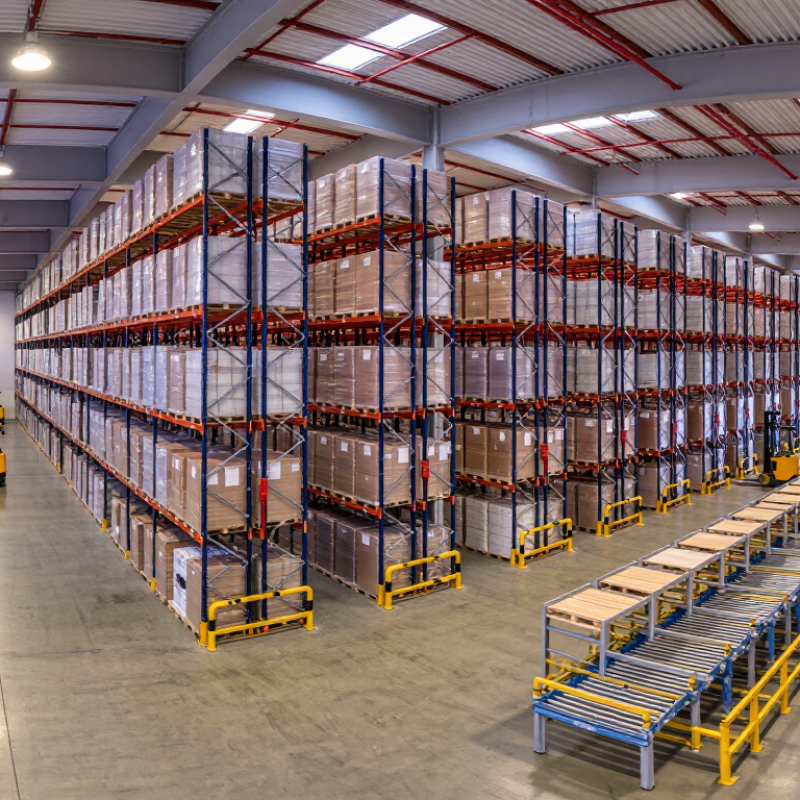
How to Assess Pallet Storage Racks for Warehouse Use
Assess pallet racks against the loads your warehouse actually handles, not a catalog’s best-case example. Record pallet dimensions, maximum weight, beam levels, and the heaviest uneven load. Then compare these figures with the rack’s rated capacity and the current layout. The Rack Manufacturers Institute’s ANSI MH16.1 standard provides design requirements for steel storage racks. Use qualified engineering review when loads, layouts, or building conditions change.
Clearances matter on the warehouse floor. Measure forklift turning space, aisle width, sprinkler clearance, and the gap between stored pallets. A rack that adds storage positions but slows every turn may create a daily bottleneck. Check the floor slab and anchors, too. They are easy to overlook. The U.S. Bureau of Labor Statistics reported 4.8 recordable cases per 100 full-time workers in warehousing and storage in its 2022 Survey of Occupational Injuries and Illnesses. That figure is not rack-specific, but it reinforces the value of safe access and visible inspection.
Inspect uprights and beams for impact damage, loose connections, and missing safety clips. Compare any damage with the rack maker’s or engineer’s repair criteria; do not assume a bent upright is harmless. Keep inspection notes, including photos and dates. A neat spreadsheet helps, but it cannot replace a careful walk-through. Reassess when pallet weights, forklifts, or picking patterns change. Those small changes can quietly make an old layout unsuitable.
10 Best Pallet Storage Racks for Warehouses - How to Assess Pallet Storage Racks for Warehouse Use
| Rack System | Storage Density | Pallet Selectivity | Typical Applications | Forklift and Access Needs | Key Advantages | Points to Assess |
|---|---|---|---|---|---|---|
| 1. Selective Pallet Rack | Low to moderate | High; each pallet is directly accessible | Warehouses with many SKUs, mixed inventory, or frequent picking | Conventional forklift aisles; standard pallet-handling equipment | Simple layout, direct access, and easy stock rotation | Requires an aisle for each rack row; compare aisle width, bay dimensions, and load requirements with the available floor area. |
| 2. Double-Deep Rack | Moderate to high | Moderate; front and rear pallet positions are accessed in sequence | Operations holding several pallets per SKU with moderate inventory turnover | Typically requires a reach truck or another truck configured for double-deep access | Stores more pallets per aisle than single-deep selective layouts | Rear pallets are less immediately accessible; consider SKU quantities, rotation policy, and the equipment’s reach and load capacity. |
| 3. Narrow-Aisle Rack | Moderate to high | High; pallets remain individually accessible | Warehouses seeking selective access while reducing aisle space | Requires compatible narrow-aisle trucks and careful aisle planning | Combines direct pallet access with narrower travel aisles | Check truck turning and guidance needs, floor flatness, rack protection, and whether existing equipment can operate in the aisle. |
| 4. Very Narrow-Aisle (VNA) Rack | High | High; individual pallet locations are accessible | High-bay warehouses with a need for dense, selective storage | Uses specialized VNA trucks, commonly turret or articulated designs; guidance may be required | Uses building height and limits the floor area devoted to aisles | Assess floor tolerances, clear height, truck investment, aisle guidance, and emergency access before selecting this layout. |
| 5. Drive-In Rack | High | Low; multiple pallets are stored in depth within a lane | Large quantities of the same SKU and products with compatible rotation requirements | Forklifts enter the rack lanes; pallets are commonly loaded and retrieved from the same face | Reduces the number of aisles and makes efficient use of floor space | Often operates on a last-in, first-out basis; assess lane depth, pallet consistency, impact protection, and forklift operating practices. |
| 6. Drive-Through Rack | High | Low to moderate; access is from either end of a lane | High-volume storage where goods can move through a lane from one face to another | Forklifts enter lanes from both ends; the layout needs access aisles on both faces | Can support first-in, first-out movement when loading and retrieval are managed from opposite ends | Plan for two-sided access and clear traffic flows; verify that pallet dimensions and load handling suit the lane design. |
| 7. Push-Back Rack | High | Moderate; each lane stores multiple pallets in depth | Several pallets per SKU where faster access than deep-lane static systems is useful | Forklifts load and retrieve pallets from the aisle-facing side; carts or rails move pallets within the lane | Stores multiple pallets per lane while keeping loading and retrieval at one face | Typically follows last-in, first-out lane sequencing; assess pallet condition, lane depth, and compatibility with the handling equipment. |
| 8. Pallet Flow Rack | High | Low to moderate; pallets move through dedicated lanes | High-throughput goods, especially where first-in, first-out rotation is important | Loading and retrieval usually take place at opposite ends; gravity conveyors move pallets through lanes | Supports first-in, first-out rotation and separates loading from picking faces | Requires suitable pallet quality and controlled loads; evaluate lane depth, flow components, maintenance access, and product variability. |
| 9. Mobile Pallet Rack | High | High; access aisle opens at the required rack row | Cold storage or facilities where floor space is costly and access is needed to many SKUs | Rack rows move on powered or mechanically assisted bases; only a limited number of aisles may be open at once | Reduces the number of permanently open aisles while retaining access to rack rows | Assess retrieval frequency, aisle-opening time, floor and rail requirements, safety systems, and emergency egress. |
| 10. Pallet Shuttle Rack | Very high | Low to moderate; access is organized by SKU lanes | High-volume, high-density storage with many pallets per SKU | A remote-controlled shuttle moves pallets within deep lanes; forklifts transfer pallets at the lane entrance | Reduces forklift travel inside rack lanes and can support deep storage layouts | Check shuttle and rack compatibility, lane design, battery and charging arrangements, system controls, and recovery procedures. |
Assessment note: The most suitable system depends on SKU count, pallets per SKU, inventory rotation, required access, building height, floor conditions, forklift capability, and throughput. Rack capacities and dimensions must be confirmed by a qualified designer using the actual pallet loads, equipment, and site conditions.
FAQS
Record pallet dimensions, maximum weight, beam levels, and the heaviest uneven load. Check these against rack capacity and layout.
Measure forklift turning space, aisle width, sprinkler clearance, and gaps between stored pallets. A tight turn matters daily.
The slab must support expected loads, and anchors must match the installation details. Easy to overlook.
Look for bent uprights, loose connections, damaged beam connectors, and missing safety pins. Photograph damage and record dates.
Inspect the affected area, even if damage looks minor. Keep affected bays out of use until a competent person assesses them.
Center loads on beams, and place heavier pallets in designated lower positions. Post visible load limits.
Do not modify rack components. Ask a qualified rack professional to review the fit and proposed changes.
Reassess after changes to pallet weights, forklifts, or picking patterns. A spreadsheet helps, but it can create false comfort without a walk-through.
Conclusion
This guide explains how to assess Pallet Storage Racks for warehouse use, starting with key considerations such as available floor space, ceiling height, load capacity, inventory turnover, and access needs. It introduces common rack designs and describes how each stores pallets, then compares ten options suited to different warehouse requirements, from high-density storage to systems that prioritize quick access and flexible organization.
Readers will also learn how to match a rack system to their inventory, equipment, and facility layout. The final section covers practical installation planning, safe loading and operating practices, routine inspections, and maintenance. Together, these topics offer a clear foundation for choosing and managing a pallet storage solution that supports efficient workflows while making good use of warehouse space.